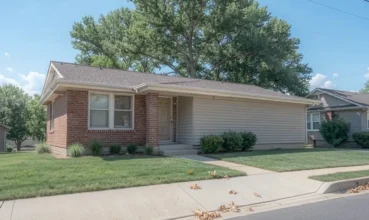
In Tennessee’s fastest-growing county, the gap between what people earn and what homes cost has widened so far that one local official calls it a direct threat to generational wealth. Median family income in Rutherford County has risen 71 percent since 2005. Over the same period, median home prices have risen 213 percent. The math is moving in only one direction, and the families who cannot close that gap never reach ownership at all.
Rob Mitchell, the Property Assessor for Rutherford County, Tennessee, compiled the figures himself. Since 2005, median family income in the county has risen from about $50,000 to roughly $85,000. Over that same period, the median home price climbed from $140,000 to more than $400,000. Mitchell calls this gap “a real tangible difference that shows that affordability in housing and home ownership is the only way to build generational wealth that is in danger.”
Rutherford County sits immediately south of Nashville and Davidson County. Its population has swelled to nearly 400,000, making it either the fourth or fifth largest county in the state. That growth – driven by proximity to Nashville’s job base – has pushed demand for housing far beyond what local wages can support.
The Price-to-Income Ratio Has Broken Away
A family earning the 2005 median income of $50,000 could afford the 2005 median home of $140,000 – a price-to-income ratio under three. Today, a family earning $85,000 faces a median home price above $400,000, pushing that ratio past four. The difference determines who can buy and who cannot.
Mitchell frames this explicitly as a generational wealth problem. His concern is what happens to families who never reach ownership – “if they have nothing that they can pass down to the next generation” so that the next generation has building blocks to start from. Homeownership has historically been the single largest source of household wealth for middle-income Americans, and when the entry price pulls away from wages at three times the rate, fewer families get on the ladder at all.
The concern plays out in Mitchell’s own county. He points to small rental property owners who have been providing affordable housing as a form of community investment. Policy pressure to reclassify those rentals at higher tax rates – raising costs that get passed to tenants – makes the affordability gap worse. Tenants paying higher rents save less, which pushes homeownership further out of reach.
Mitchell describes owners who sold their rental properties rather than raise rents on struggling families. “They simply sold the property, and now they’re going to let somebody else be the bearer of bad news, but they couldn’t do it,” he says. Each sale removes one more affordable unit from the local supply.
Where Mitchell Says the Fix Must Come From
Mitchell acknowledges this isn’t a problem his office can solve alone. Property assessment tracks market value – it doesn’t set it. But he argues the issue demands attention at the state legislative level, and that the conversation needs to start with a direct question: whether a community has decided “if families having clean and safe homes to live in is important to us or not.”
His broader argument is that housing affordability determines whether other community investments – schools, public safety, infrastructure – function at all. “If you fix housing affordability, you fix everything else,” he says.
For prospective buyers in Rutherford County, the gap between earnings and home prices has roughly tripled in relative terms over two decades. With population growth still accelerating – Mitchell expects the county to pull away from Hamilton County (Chattanooga) within the next year – there is no obvious market force pulling prices back toward wages. The pressure, according to Mitchell, will continue until it is addressed at the institutional level.
About the Expert: Rob Mitchell is the Property Assessor for Rutherford County, Tennessee.
This article is intended for informational purposes only and does not constitute legal, financial, or investment advice. The views and opinions expressed herein reflect those of the individuals quoted and do not represent an endorsement of any company, product, or service mentioned. Readers should conduct their own due diligence and consult qualified professionals before making any investment decisions.