The Tampa Bay housing market absorbed one of the country’s largest pandemic-era population surges. Prices climbed sharply as out-of-state buyers competed for limited inventory. Now the correction is underway, and it is not just pushing prices down. It is changing which properties sell, which neighborhoods hold value, and what buyers are willing to tolerate in terms of cost and risk.
Ryan Fernandez, a 14-year real estate veteran with The Fernandez Team at Elevated Realty in Riverview, Florida, works primarily in Tampa Bay’s suburban corridors. Roughly 60% of her business is listings, with a focus on single-family homes. Her read on the current market is blunt: “The last couple of months have been the slowest I’ve seen in years.”
Amenities Are Sorting the Market
In a slower environment, not all inventory is moving at the same pace. Condos and townhomes are sitting longest, weighed down by rising association fees, particularly after two major hurricanes hit the area a couple of years ago. Buyers have grown wary of shared-cost structures where post-storm assessments can arrive without warning.
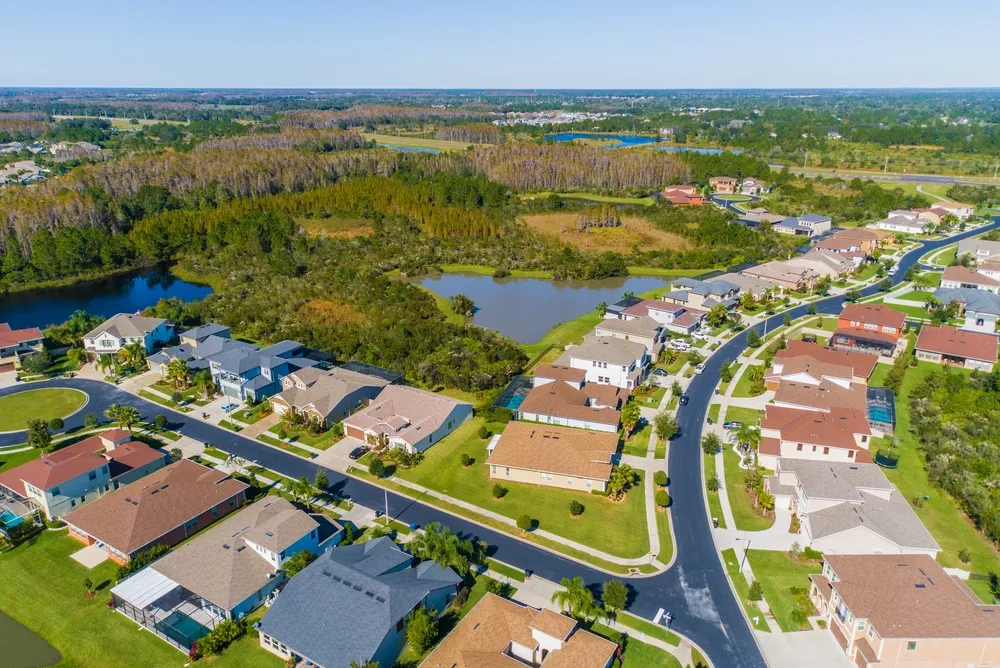
Single-family homes in amenity-rich communities, by contrast, are still drawing interest. Neighborhoods with community pools, splash pads, boatable lakes, and lagoon-style recreation areas are outperforming those without. Fernandez says many buyers relocating from out of state gravitate toward these communities because the shared amenities help them build social connections. “That’s how they meet people,” she says.
Several master-planned communities in the area have become destination neighborhoods. Fernandez describes buyers who move to Tampa Bay specifically for a single community because of its schools and lifestyle programming, while others choose a more affordable option further south where school ratings are lower but the amenity package is similar. The pattern is consistent: families are choosing community infrastructure over proximity to the city center.
School Districts and Affordability
The typical buyer in Tampa Bay’s suburbs is a family looking to settle long-term. The median price for Fernandez’s buyers sits around $550,000, a figure that reflects how much prices climbed during the pandemic-era surge. At that level, a buyer can expect a three- or four-bedroom home with at least two bathrooms, and ideally a pool.
School districts are the primary driver of where families land. The best-rated districts command higher prices, and even in a slower market, homes in those zones move faster than comparable properties elsewhere. But even strong school zones are not immune. “They’re still sitting for 60 to 90 days,” Fernandez says.
That dynamic creates a consistent trade-off. Buyers who prioritize affordability push further into suburbs like Riverview, Brandon, or south toward Bradenton. Sellers aging out of the school-district premium are doing the opposite, seeking quieter, less congested areas where their dollar stretches further.
Insurance and Inspections Are Killing Deals
Insurance costs in Florida are a perennial concern, but the conversation has shifted since the hurricanes. Flood insurance costs have spiked, and buyer preferences have followed. “We are seeing a lot of people who wanted to be on the water. Now we’re seeing people who are saying, ‘Do not put me anywhere near a flood zone.'”
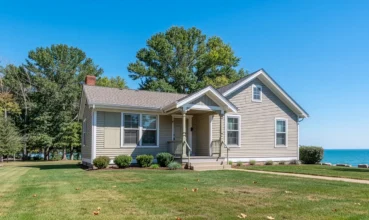
Waterfront properties, once among the most desirable listings in the market, are now sitting. The insurance premium alone is enough to push buyers toward inland alternatives. Roofs remain a persistent friction point as well: insurance carriers are reluctant to cover homes with roofs older than 15 years, creating a cost that neither buyers nor sellers want to absorb.
When deals fall apart, inspections are the most common cause. Buyers who now have leverage are pushing for repairs that would have been non-starters two years ago. “If the AC is 10 years old, they want a new AC put in,” Fernandez says. Sellers, many of whom still expect pandemic-era pricing, are having to adjust. Fernandez says she is spending more time educating sellers that the market has changed. “We’re not in the same time period,” she says.
A Recent Deal That Illustrates the Shift
One transaction captures the speed of the correction. Fernandez listed a property in Brandon at around $410,000, a smaller home with a large yard but no pool. After four months on the market, the sellers needed to move, and the home sold for roughly $40,000 below list price. “It kind of shows the huge shift that we saw even from the spring, March, April, to where we’re at now,” she says.
CDD fees add another layer of cost. In many of Tampa Bay’s master-planned communities, those fees add roughly $2,000 per year to a buyer’s tax bill. Fernandez tells clients not to count on the fees expiring after the typical 30-year window. “I don’t know of a community in our area where those have fallen off, although CDDs are still relatively new compared to their bond maturity dates,” she says.
Where Investors Might Look
For investors considering Tampa Bay, Fernandez points toward the edges of the metro area, Plant City, Lakeland, and areas south of Riverview, where growth is still happening, and prices remain lower. She also sees a narrower opportunity in flood-damaged properties, where some sellers are motivated to exit. “If you have the capital to do it, then that risk may be advantageous for you in the future when people are a little less scared to buy those properties again,” she says.
Fernandez says she is watching interest rates, hurricane season outcomes, and broader economic confidence. A calm storm season, she believes, could bring hesitant buyers back into the market. “I’m hoping that as we get past the holiday weekend, get more into October, November, December, and hopefully into the new year, we start seeing some more confidence and these buyers and sellers coming out.
About the Expert: Ryan Fernandez is a 14-year real estate veteran with The Fernandez Team at Elevated Realty in Riverview, Florida, covering Tampa Bay’s suburban corridors.
This article is based on information provided by the expert source cited above. It is intended for general informational purposes only and does not constitute legal, financial, or real estate advice. Readers should conduct their own research and consult qualified professionals before making any real estate or financial decisions.