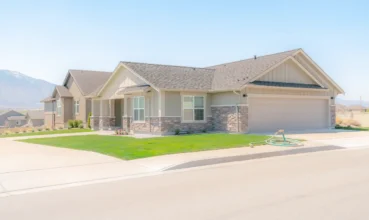
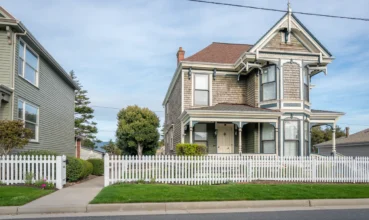
A well-priced home in good condition in central Pennsylvania typically goes under contract within one to two weeks. A home that misses on either variable, overpriced, poorly maintained, or both, begins to stall after three weeks, triggering a reassessment between agent and seller. That gap between fast-moving and lingering inventory is defining the region’s market, even as broader conditions remain favorable for sellers.
Sally Chaplin and her daughter and business partner Maryssa Chaplin of the Chaplin Group have helped more than a thousand families buy and sell in central Pennsylvania since Sally entered the business in 2007. Their read on the current market is that the region is settling into a healthier rhythm after several years of unusually tight inventory, and that the shift is exposing a mismatch between what sellers expect and what today’s buyers will tolerate.
A Balanced Market That Still Favors Sellers
Central Pennsylvania’s inventory has moved from roughly one to two months during the post-2020 surge to approximately four months today, according to Maryssa Chaplin. That places it within the three-to-six-month range generally considered balanced. But the Chaplins still describe the region as a seller’s market, driven by steady inbound demand from a diversified economic base.
The area around Harrisburg, the state capital, draws military personnel through the Army War College, healthcare workers across multiple hospital systems, logistics and distribution employees, Amazon and Chewy both operate facilities in the region, and university staff and students from several colleges. Tourism adds another layer, anchored by Hershey’s theme park and Gettysburg’s historical sites. That breadth of employment has historically insulated the market. “When the market crashed, we did not suffer as other parts of the United States did,” Sally Chaplin says. “We stayed pretty even.”
Relocation buyers are a consistent presence. Central Pennsylvania sits within a few hours of Washington, D.C., New York, Philadelphia, Baltimore, and Pittsburgh, attracting people from higher-cost states who want lower taxes and a slower pace. Maryssa Chaplin says buyers are drawn to the mix of rural space and urban accessibility. “There still are a lot of farms in the area, yet we still have all the major conveniences,” she says.
What Buyers Actually Want
The millennial cohort, roughly ages 30 to 45, is setting the tone for what sells quickly. Maryssa Chaplin describes a buyer who values structural soundness and livability over high-end finishes. “They don’t necessarily care as much about datedness as long as it’s in good condition,” she says. “They’re looking for good bones, a trustworthy house that they don’t feel they’re having to pour money into right off the bat.”
That preference extends to aesthetic taste. Younger buyers are gravitating toward older homes with character rather than new construction uniformity. “A lot of millennials are liking the vintage feel,” Maryssa Chaplin says. “They’re wanting something unique and interesting that’s in good shape.”
Community amenities also factor into neighborhood selection. Maryssa Chaplin describes one family who said what they would miss most about their home was the neighborhood itself, the pool, the community events, the food trucks that came through every other weekend. School district quality remains a primary driver of where families choose to buy, a dynamic both agents describe as consistent across the region’s five-county service area.
The Pricing Conversation Sellers Need to Hear
One of the Chaplins’ sharper observations involves the gap between what they call marketing price and selling price. The marketing price is set based on comparable sales; the selling price is what the home ultimately closes at. In their experience, homes in the region currently sell at 101 to 102 percent of list price.
The tension arises when sellers want to list at the anticipated selling price rather than the comparable-based marketing price. Listing higher limits traffic and discourages competing offers, Maryssa Chaplin says. “A buyer will feel like the seller maybe isn’t reasonable with their pricing.” Listing at the comparable-based price, by contrast, creates room for escalation clauses and multiple bids, which is how the final number climbs above list.
This dynamic has become more pronounced as the market normalizes. Sellers anchored to the 2023–2024 environment, when homes regularly sold ten percent above asking with multiple bids, are finding that today’s buyers are more selective. “The buyers are very savvy these days,” Sally Chaplin says. “If a home is priced a little bit on the higher end of where an appraiser might put it, they may let it sit for a while.”
Investor Opportunities and Constraints
For investors considering the region, Sally Chaplin points to rental demand as the clearest opportunity. Military rotations through the Army War College, university enrollment, and the general flow of professionals into the capital region create a deep tenant pool. “Our rental area or market is huge,” she says. “So many people are looking to rent right now.”
She cautions that investors need to understand local rules before committing capital. Some communities restrict landlord-tenant arrangements, and zoning or HOA rules vary across the region. “You have to make sure you understand the particular community you’re moving into and what the rules and regulations are for it to make sense or even to be allowed,” Sally Chaplin says.
Sally Chaplin also describes a recent transaction that illustrates where she sees value-add opportunity. A couple planning to retire in five years sold their remodeled home for the highest price that neighborhood had ever seen, then bought a newer but poorly maintained home in the Chambersburg area for just over $400,000, roughly half the price of comparable homes in the same neighborhood. The home lacked a deck on a two-story walkout and needed cosmetic work inside. Sally Chaplin advised them to focus their renovation budget on outdoor living space, a deck, fire pit, and lighting, because buyers in the region are increasingly prioritizing outdoor areas for relaxation.
Looking Into 2027
Maryssa Chaplin expects 2027 to track closely with 2026, with a potential slowing in 2028 tied to typical election-year uncertainty. Seasonally, the team sees strength in the year’s final quarter, with December historically their biggest closing month as buyers push to settle before the holidays. Central Pennsylvania’s relatively mild winters help sustain activity through the colder months. “What we tell our sellers in the winter months is you have less competition,” Maryssa Chaplin says. “Same with our buyers, you have less competition.”
For sellers weighing when to list, the Chaplins’ data points to a consistent conclusion: condition and pricing discipline matter more than timing. A well-maintained home listed at comparable value will draw competing offers in most months. A home that tests the market at an aspirational price will sit, regardless of season.
About the Expert: Sally Chaplin and Maryssa Chaplin are a mother-daughter real estate team serving central Pennsylvania, having helped more than a thousand families buy and sell since Sally entered the business in 2007.
This article is based on information provided by the expert source cited above. It is intended for general informational purposes only and does not constitute legal, financial, or real estate advice. Readers should conduct their own research and consult qualified professionals before making any real estate or financial decisions.