As headlines debate whether Las Vegas has peaked, the city’s high-end construction pipeline tells a different story. For specialty contractors working at the top of the market, project books are full, and 2027 is already shaping up to be a record year. The distinction lies in where exactly that activity is concentrated and where it is not.
The split is driven by interest rates. Cash buyers building $15 million homes are unaffected by borrowing costs, while mid-tier developers and buyers face tighter financing conditions that have slowed activity in the middle of the market. That divergence is sharpening now as rates remain elevated and Las Vegas continues attracting wealthy relocators from California.
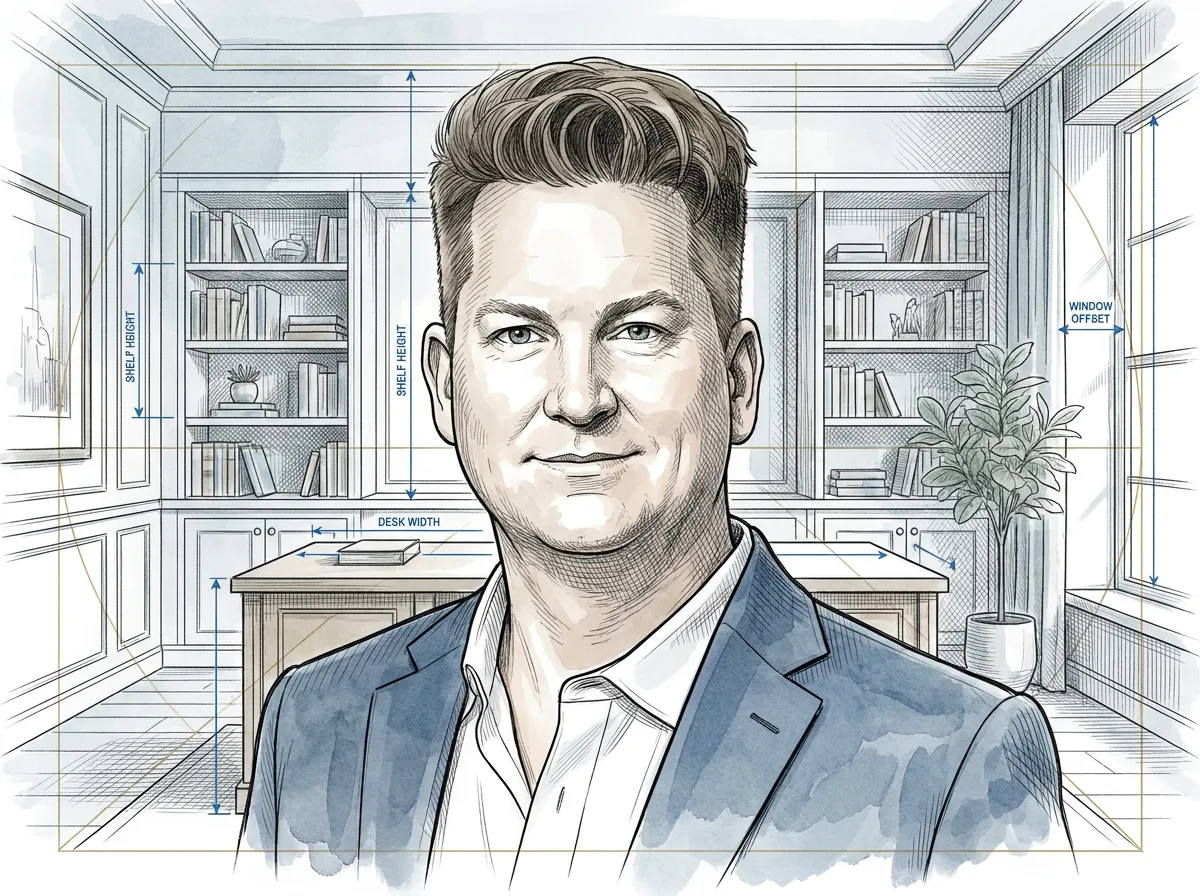
Scott Acton, Founder and CEO of Forté Specialty Contractors, has been building in the Las Vegas, California, and Arizona luxury markets since 2010. With a background in hospitality-grade construction, including significant work for Steve Wynn and projects at The Summit Club, Acton’s firm operates at the intersection of high-end residential and experiential design, typically taking on projects valued at $15 million and above.
A Market That Defies the Headlines
The popular perception that Las Vegas is slowing down does not match what Forté is seeing on the ground. Gaming revenue is still up, and Acton says the slowdown narrative doesn’t square with street-level activity. “A lot of the news out there is that Vegas is suffering, Vegas is dying, attendance is down,” Acton says. “I just can’t see it on the streets.”
That activity is being reinforced by broader demographic shifts. The city’s evolution from entertainment destination to full-service metropolis, anchored by the NFL’s Raiders, the NHL’s Golden Knights, a new MLB stadium, and a likely NBA franchise, is drawing a different kind of resident than it did a decade ago. A steady stream of businesses and high-net-worth individuals relocating from California and Washington has added further demand. As Acton puts it, “Gavin Newsom has been our best salesperson.”
Who Is Actually Building
The clients driving Forté’s pipeline are not relying on financing. Rising interest rates, which have meaningfully squeezed the middle market, have had little effect on the firm’s core clientele. These buyers have already had their liquidity events, selling companies, cashing out equity, and are building what they intend to be permanent homes.
This insulation from rate sensitivity is a defining feature of the ultra-luxury segment right now, and it helps explain why high-end contractors are reporting strong forward books even as broader construction activity remains uneven. Projects in Forté’s pipeline typically run 24 to 48 months, and the firm is already planning 18 to 24 months out, a planning horizon that reflects both the complexity of the work and the confidence of the clients commissioning it.
The Hospitality Blueprint Applied to Residential
Much of what distinguishes Forté’s approach comes from its roots in hospitality construction. The firm’s work on Wynn-affiliated properties has shaped how it thinks about high-end residential builds, not as homes in the traditional sense, but as experiential environments designed to evoke the same feeling as a luxury resort.
“When you go to Wynn, you feel a little taller, you feel a little richer,” Acton says. “People want to live like they’re on vacation.”
This philosophy carries through to projects at The Summit Club, a Discovery Land Company development in the mountains above Las Vegas that has become one of the firm’s primary areas of focus. Properties in communities like The Summit occupy a category that blurs the line between private residence and boutique hotel, a segment where Forté’s hospitality-grade execution is a direct competitive advantage.
Vertical Integration as a Growth Strategy
Rather than remaining solely a build-side contractor, Forté has added a development arm to its business, effectively becoming its own client on select projects. This structure gives the firm greater control over design intent, timeline, and quality, factors that matter considerably at the top of the market, where clients have high expectations and limited tolerance for delays. It also positions Forté to capture more value across the project lifecycle. “We’re becoming our own customer, and that makes things a lot easier to do,” Acton says.
Supporting that growth is a recent leadership move: Travis West, a ten-year company veteran, has been elevated to President and Partner. Acton frames the promotion as part of a longer-term strategic plan timed to match where the business is headed.
Technology on the Job Site
Construction technology is also playing a larger role in how Forté manages complex, multi-year builds. The firm uses AI tools for field inspections, reporting, and clash detection, the process of identifying conflicts between mechanical, electrical, and plumbing systems before they become costly problems during construction. For projects that involve significant coordination across trades over extended timelines, these tools reduce rework and improve scheduling accuracy. “It’s done wonders for field inspections, reports, MEP clash detection,” Acton notes. “It’s a really powerful tool for us.”
Where the Opportunity Sits and Where It Doesn’t
For investors and developers considering the Las Vegas construction market, Acton’s read on the landscape draws a clear line between what’s working and what isn’t. “I think there are two opportunities: affordable housing or ultra luxury,” he says. “I think the middle is a bit stagnant.”
The reasoning is straightforward. Interest rate pressure has made mid-tier development harder to underwrite and harder to sell, while the two ends of the spectrum remain supported by distinct demand drivers. Affordable housing continues to face a structural supply gap, and ultra-luxury is sustained by cash buyers who are largely rate-agnostic.
For Forté, that bifurcation confirms where they have chosen to operate. With a project minimum well above the mid-market range and a client base that does not depend on debt financing, the firm sits in the segment of the Las Vegas market that currently shows the most resilience.
As the city continues to add infrastructure, residents, and institutional credibility, the contractors best positioned to benefit are those who built their capabilities around the kind of quality that cash buyers demand. With projects already booked into 2027 and a development arm expanding the firm’s reach, Forté’s forward pipeline suggests that the top of the Las Vegas market is not cooling; it is deepening, even as the layers beneath it remain constrained by borrowing costs that show no sign of easing soon.
About the Expert: Scott Acton is Founder and CEO of Forté Specialty Contractors, a luxury construction firm operating in the Las Vegas, Nevada, California, and Arizona markets since 2010. His firm focuses on projects valued at $15 million and above, with significant work in The Summit Club development and prior projects affiliated with internationally renowned destinations, including Steve Wynn’s hospitality properties.
This article is based on information provided by the expert source cited above. It is intended for general informational purposes only and does not constitute legal, financial, or real estate advice. Readers should conduct their own research and consult qualified professionals before making any real estate or financial decisions.