Arkansas rarely makes headlines in national real estate conversations, but in Conway, a mid-sized city about 30 miles north of Little Rock, the dynamics playing out offer a clear window into challenges facing supply-constrained markets across the country. With buildable land nearly exhausted, insurance costs climbing, and an estimated housing deficit of nearly 1,000 units, Conway’s market is testing both buyers and sellers in ways that reflect broader national pressures, while remaining shaped by distinctly local forces.
Emily Walter, Executive Broker and Team Lead at The Emily Walter Team with RE/MAX Ultimate, has worked the Conway market for 13 years. She explains that the city is bordered by the Arkansas River on one side and has developed as far outward as possible in other directions. “All of our land is few and far between, so supply and demand comes into play,” she says. “It raises the cost of what land is.”
The downstream effect is significant. Quarter-acre lots now run around $70,000, and when builders factor in the cost of extending Conway Corp utility infrastructure – the city’s cooperative utility system – the economics only pencil out for homes priced at $400,000 and above. That leaves first-time buyers, who typically look in the $250,000 to $300,000 range, with limited options in the city proper.
First-Time Buyers Pushed
The affordability gap mirrors a national trend, but the local version has its own texture. Production builders like D.R. Horton operate in the market, but their offerings are largely standardized and sit at price points that remain out of reach for many entry-level buyers. Custom construction at more accessible price points is effectively nonexistent.
As a result, first-time buyers are increasingly pursuing one of two paths: purchasing older ranch-style homes or downtown properties that need work, or looking outside Conway entirely – in neighboring communities like Greenbrier or Maumelle – to build equity before eventually returning.
“They’re either fixing them up, or they’re having to go outside of Conway to find it and just build equity before they can move back into our town,” Walter notes.
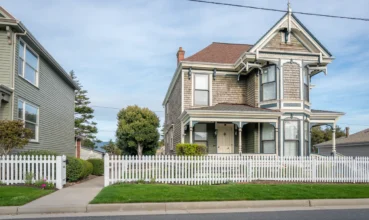
For buyers willing to take on a renovation project, the opportunity is real. Walter’s team has demonstrated this firsthand, purchasing and restoring historic properties – including “The Pink House,” a 1892 home that now serves as an event space and short-term rental – as both a business strategy and a community contribution.
Sellers Adjusting to a Changed Market
While buyers navigate scarcity, sellers are navigating a recalibration of expectations. Conway has moved into buyer’s market territory, and sellers anchored to pandemic-era pricing are finding the adjustment difficult.
Concessions that would have been unthinkable two years ago are now routine. Closing cost contributions, repair credits, and flooring allowances have all become standard negotiating tools. But one issue stands out as particularly consequential: roofing.
Arkansas weather, tornadoes, hail storms, and frequent severe weather events, has driven insurance costs sharply higher. Any roof older than 10 years is now effectively uninsurable, which creates a direct obstacle to closing. Walter now asks about roof age as a standard part of her listing intake process. In one recent case, she informed sellers of a 17-year-old roof that they would need to replace it before any buyer could obtain insurance. “The sellers just knew when we were pricing the home that part of their equity was going to have to go toward a new roof,” she recalls.
This is a concrete example of how insurance market conditions are filtering into individual transactions, adding complexity that sellers and agents must plan around from the outset.
The Inventory Gap
Conway is currently estimated to be around 950 housing units short of what its population requires. With horizontal land development largely exhausted, the market is beginning to respond vertically. Apartment construction has picked up noticeably, allowing developers to stack multiple units on parcels where a single-family home would otherwise stand.
“The only way we can go is up,” Walter observes. “I’ve noticed more apartments are being built because you can stack two or three doors up versus building single-family homes.”
In the meantime, renovation activity is filling some of the gap, with buyers and investors alike turning to older housing stock as a practical alternative to new construction.
Where Investors Find Returns
The university ecosystem creates a fairly clear path to rental income for investors considering the Conway market. Rental demand around the University of Central Arkansas, Hendrix College, and Central Baptist College is consistent and driven by a student population that turns over regularly.
Walter points to her own experience as illustrative: a modest rental property she lived in as a college student, purchased and fully renovated, now generates $1,550 per month – up from the $450 rent she paid as a tenant years earlier. The formula is relatively simple: three-bedroom homes within proximity to campus, positioned to accommodate student roommates, tend to hold their demand regardless of broader market fluctuations.
A Team Built for Speed and Service
Operating in a market where inventory moves quickly, Walter’s team has structured itself around responsiveness. Three professionals cover distinct specializations: Walter on all aspects and specializing in historic and higher-end properties as well as first-time home buyers, her husband Jeremy on land and marketing, and team member Jamie on first-time buyers, and surrounding suburbs, all while keeping track of all of their paperwork for each file. The structure ensures that no client has to wait on availability.
The team also maintains a network of vetted local vendors covering everything from plumbing to roofing to contracting. The idea is that a client relationship does not end at closing. “When I recommend somebody to them, whether six months down the road or two years down the road, they know it’s been vetted by me,” Walter says. We’ve built our business as a true concierge service for Real Estate.
Reading Conway Correctly
For investors and professionals assessing secondary and tertiary markets, Conway’s fundamentals are worth understanding on their own terms. The combination of institutional demand from three colleges, constrained supply, and a growing population creates conditions unlikely to reverse quickly. The constraints are real – land scarcity, insurance complexity, and affordability pressure on entry-level buyers are genuine headwinds – but so is the underlying demand.
The question ahead is whether vertical development and renovation activity can close the 950-unit gap fast enough to keep pace with continued population growth, or whether affordability will continue pushing entry-level buyers beyond the city’s borders. For now, Conway remains a market where durable real estate dynamics unfold quietly, well outside the cities that dominate national coverage.
About the Expert: Emily Walter is Executive Broker and Team Lead at The Emily Walter Team with RE/MAX Ultimate, serving the Conway, Arkansas market for 13 years. Her team of three professionals specializes in historic and higher-end properties, land and marketing, and first-time buyer transactions.
This article is based on information provided by the expert source cited above. It is intended for general informational purposes only and does not constitute legal, financial, or real estate advice. Readers should conduct their own research and consult qualified professionals before making any real estate or financial decisions.