For much of the past decade, demand in many suburban housing markets came from people moving in from somewhere else. That engine has slowed. Higher borrowing costs have made it harder to buy without equity from a previous home, and the remote-work migration that once sent households inland has faded. What remains is a market increasingly driven by people who already own nearby and are moving because their lives have changed: a growing family, an emptier house, a new stage of life. National survey data from the National Association of Realtors points the same way, showing that most purchases now come from repeat buyers and that many sellers are not moving far.
Shannon Yoffie, who leads the Yoffie Real Estate Group with Keller Williams in Folsom, California, sees that shift in who is buying. “There are more people making changes, lifestyle changes within the area, not necessarily leaving or coming from somewhere else,” she says. Growing families are trading up, empty nesters are scaling down, and some owners are moving into active-adult communities before they have retired.
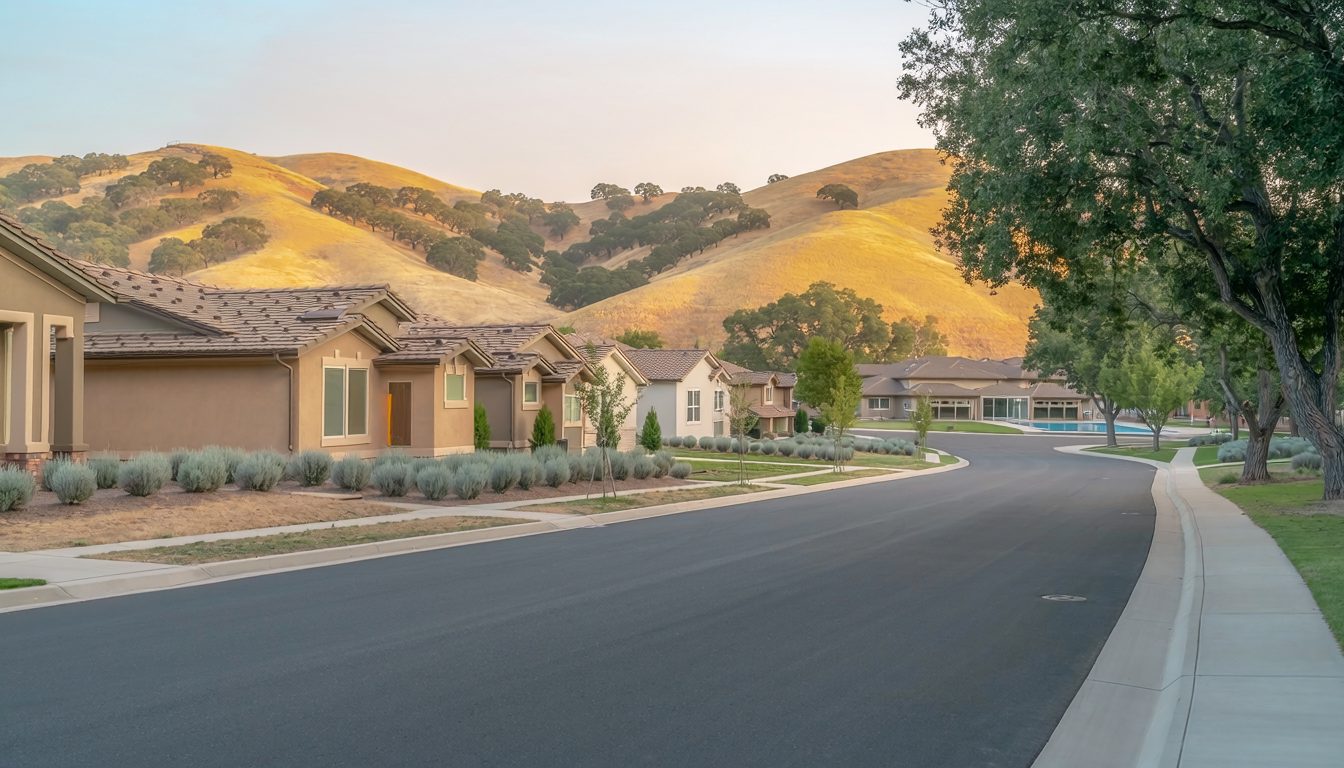
Folsom, about 30 minutes east of Sacramento in the Sierra foothills, is built for that kind of market. Mature neighborhoods, newer subdivisions full of young families, and age-restricted communities sit within a few miles of one another, so a household’s next home is often just down the road. When people don’t have to leave an area to change homes, the reasons they move become more personal.
Community Drives the Move
One of Yoffie’s recent sales shows how personal. About five years earlier, the sellers had bought a new single-story home with a pool and a view and upgraded it throughout. They were not yet retired, but many of their friends were, and the couple found themselves spending more and more time in an active-adult community about five minutes away.
Eventually the neighborhood mattered more than the house. They loved their home, Yoffie says, but wanted to be in that community “to fully immerse themselves in that experience.” The house drew multiple offers, and their new home is being built in the age-restricted community.
The story points to what increasingly sets a move in motion. The house still had everything the couple had once wanted. What it lacked was proximity to the people they spent their time with, and that was enough to make them sell. Nationally, being closer to friends and family is now the most common reason sellers give for moving, according to NAR.
Equity Keeps Sales Moving
When these owners move, they almost always sell. “Most people don’t want to be landlords,” Yoffie says. Most also need the money. “They use those funds to buy the next house.”
That reliance on equity matters more at today’s rates. Owners who have held a home for years can carry their gains into the next purchase, which cushions them from borrowing costs that shut out many buyers without a home to sell. NAR found that more than half of repeat buyers put proceeds from a prior home toward their down payment.
Each of those moves also frees a home for someone else, often a larger family house. With inventory down modestly from last year, that chain of life-stage moves helps keep transactions going. Yoffie says sales in Folsom and El Dorado Hills are up slightly year over year.
Builders Compete for Movers
New construction is competing for the same buyers. Builders in the area can use their own financing to offer mortgage rates well below what a resale buyer can get, which lowers the monthly payment without lowering the price. Some are also building smaller homes at lower prices. For a buyer comparing options, that can make a new home cheaper to own month to month than a comparable existing one.
For owners who bought in the last several years, often at higher prices, that competition is direct. Unless a resale home has a clear advantage, Yoffie says, “the buyers are often choosing the new home.” It has to win on price, location, or condition.
Established neighborhoods still hold real advantages. Newer communities tend to sit on smaller lots without mature landscaping, Yoffie says, while older neighborhoods offer more space, greenery, and long-standing communities where people spend time outdoors. In a market shaped by people moving for the sake of community, that matters.
Scarce Homes Hold Value
Many buyers, especially those coming from elsewhere, arrive with the same wish list: a newer single-story home on a flat lot with a view. In the foothills, that combination is hard to find. “El Dorado Hills is in the hills,” Yoffie says, and even Folsom has its share of slopes. Larger single-story homes on level ground are among the scarcest properties in the area.
That scarcity is why national headlines about a slowing market don’t tell the whole story here. Buyers who expect a discount often lose out on a few offers before adjusting, Yoffie says. Her team presents a choice: accept that “if I want the same thing everybody else wants, I’m probably going to have to pay a little more for it,” or buy a home others have passed over and make it their own.
The pressure is unlikely to ease soon. With the buyers driving the market getting older, demand for single-level living reflects more than a passing preference.
Fewer Buyers From Outside
Relocation hasn’t disappeared. Buyers still come from the Bay Area and Southern California, drawn by a bedroom community within 30 minutes of an international airport, with Folsom Lake nearby and Lake Tahoe within reach. Some are former Californians returning after moves to Texas or Arizona. “They like the lifestyle of the Sierra foothills,” Yoffie says.
The flow also runs the other way. A few households who arrived during the remote-work years are now selling as return-to-office requirements make Bay Area commutes impractical. Those moves show how much of the pandemic-era inflow depended on flexible work, and why buyers who already live here have become the steadier source of demand.
What Sellers Should Know
Buyers who already live in the area know it well, can compare options closely, and have little appetite for projects. “Buyers are really picky,” Yoffie says. “They don’t want to do a bunch of repairs when they move in.”
Her team recommends inspections before listing so there are no surprises, and some clients remodel kitchens or bathrooms before selling, an investment Yoffie says they almost always recoup. A home that arrives updated can compete with new construction on more equal footing. One that needs work has to be priced for it.
In a market driven by people who aren’t in a hurry to leave, the homes that sell are the ones that give a local buyer a reason to move.
About The Expert: Shannon Yoffie leads the Yoffie Real Estate Group with Keller Williams in Folsom, California, a collaborative team she runs with her husband and four other agents. Licensed for nearly 20 years, she works with buyers and sellers across Folsom and El Dorado Hills.
This article is based on information provided by the expert source cited above. It is intended for general informational purposes only and does not constitute legal, financial, or real estate advice. Readers should conduct their own research and consult qualified professionals before making any real estate or financial decisions.