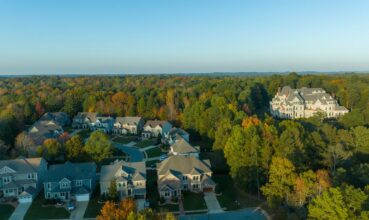
For most of California’s housing history, homeowners insurance was something buyers arranged in the final days before closing. That has changed. As carriers have pulled back from wildfire-exposed areas across the state, coverage has become something buyers must secure before they can commit, and in some neighborhoods it now determines whether a sale happens at all.
Brett Smith, broker at Notch Luxury Properties, has watched that shift reach Laguna Niguel, the South Orange County city where he has worked since the early 2000s. “I have lost sales because we simply could not get insurance on the property,” he says. Several insurers have stopped writing policies in the area because of fire risk, according to Smith, including his own, which dropped him from a home he has owned for more than 25 years without a single claim.
The pressure is landing in a market that has historically held up better than most. Laguna Niguel sits within a resort corridor anchored by the Ritz-Carlton, the Montage, and the Waldorf Astoria, where a standard single-family home starts above $2 million and many properties are second homes. Smith describes the area as having lived in something of a bubble, insulated from shifts that hit other markets harder. Insurance is a different kind of pressure, because it doesn’t depend on whether buyers can afford a home. It depends on whether anyone will agree to protect it.
Views That Draw Buyers
Smith says the hardest homes to insure sit on the outer edges of neighborhoods, backing onto natural brush, canyons, and even developed open space like parks. The sales he has lost were hilltop homes with ocean or canyon views.
That overlap is the core of the problem. The features that have long defined value here, elevation, open views, and proximity to undeveloped land, are the same features insurers now read as exposure. Laguna Niguel has seen why: in 2022, the Coastal Fire moved across coastal bluffs lined with multimillion-dollar homes and destroyed about 20 of them.
For owners, this means a home’s appeal and its insurability can move in opposite directions. A property can be among the most desirable in its neighborhood and still be among the hardest to sell, because a financed buyer’s lender will require coverage that buyer may not be able to get.
When Coverage Disappears
One of the hilltop properties Smith couldn’t close eventually sold to a buyer who went around the problem entirely. “In other words, they bought it with cash and just decided to risk it themselves,” he says. Homeowners insurance isn’t legally required to own a home; lenders require it to protect the loan. A buyer without a mortgage can choose to go uninsured and absorb any loss directly.
That outcome shows how insurance reshapes who can take part in a sale. When private coverage isn’t available, homeowners can turn to the California FAIR Plan, the state’s insurer of last resort, and FAIR Plan enrollment in Orange County has multiplied since 2021. But those policies cover a narrower set of risks and cap residential coverage at $3 million, well below what it would cost to rebuild many homes in this corridor. For a financed buyer at these prices, the fallback often isn’t enough.
What remains is a buyer pool that narrows toward people who can pay cash and carry the risk themselves. In an area with this much wealth, those buyers exist; Smith is currently working an all-cash $5 million deal. But fewer eligible buyers generally means homes take longer to sell and sellers have less leverage, even when demand for the location itself stays strong.
Condos Inherit Building Coverage
Condominium owners face the same issue at the scale of an entire complex. “Even condos are facing the problem because many are having trouble getting their overall insurance policy,” Smith says, referring to the master policies associations carry for their buildings.
That makes the association’s insurance part of each unit’s value. Fannie Mae tightened its condo insurance and review standards in 2026, and lenders now look more closely at a building’s master coverage before approving a loan. A complex that can’t secure qualifying coverage can lose access to conventional financing, which affects every owner in it, regardless of how well any single unit has been kept.
Those pressures stack on costs already rising for other reasons. Many complexes in Laguna Niguel are about 25 years old and need significant maintenance, and California’s balcony inspection and repair laws have added expense; Smith says dues at some associations have doubled. “It’s very difficult to sell a condo when you have thousand-dollar-a-month HOAs, and you’re not really getting anything for that,” he says. In gated single-family communities, where dues pay for visible services like 24-hour security, buyers have been more willing to absorb the cost.
Insurability Shapes Home Value
Taken together, these pressures point to insurability becoming a property attribute buyers weigh alongside location, size, and condition. “It definitely is causing a problem with most every single property around here,” Smith says.
For sellers in fire-exposed areas, that makes coverage something to understand before listing rather than something a buyer discovers during escrow. Whether a home can be insured, by whom, and at what cost now shapes how quickly it sells and who is able to buy it. For buyers, the question extends past the purchase price to whether the home can be protected for as long as they plan to own it.
Laguna Niguel’s resort appeal and deep base of wealth have helped it hold value through difficult cycles before. Insurance tests that resilience in a different way, because it limits who can buy rather than what buyers are willing to pay.
About The Expert: Brett Smith is the broker at Notch Luxury Properties in South Orange County, California, which he founded about three years ago after more than 20 years with Berkshire Hathaway. He has worked the Laguna Niguel market since the early 2000s and holds an NMLS mortgage license.
This article is based on information provided by the expert source cited above. It is intended for general informational purposes only and does not constitute legal, financial, or real estate advice. Readers should conduct their own research and consult qualified professionals before making any real estate or financial decisions.