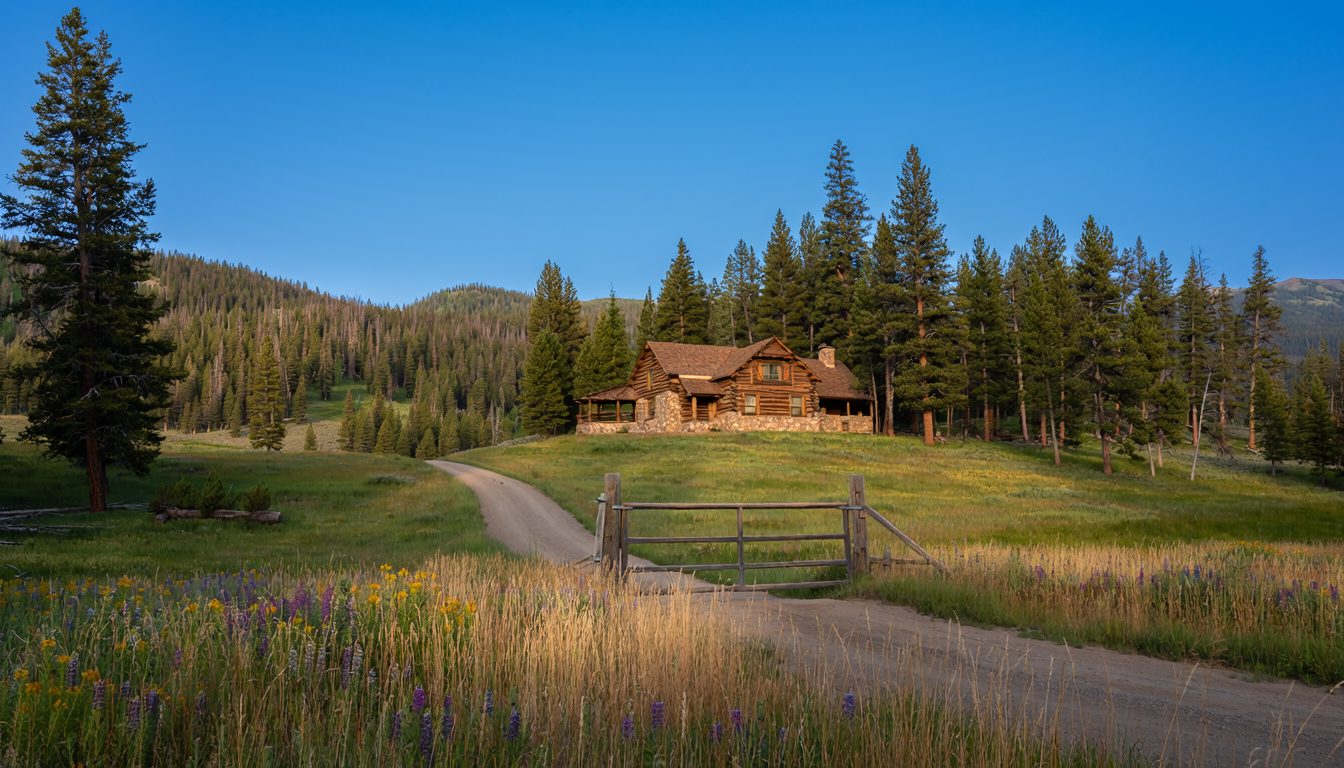
Most alpine real estate markets in the United States follow the same arc: they start affordable, draw seasonal visitors, get discovered, and then price out the buyers who made them popular. Flagstaff and much of the Colorado high country took that path. Arizona’s eastern White Mountains, around the small high-elevation town of Alpine, have not yet. Prices there remain accessible compared with similar mountain settings, according to DJ Calvin, a broker with Hayden Outdoors Real Estate who built his career in Colorado before opening the firm’s first Arizona office.
That affordability comes with conditions metro buyers rarely anticipate, from wildfire insurance pullbacks to legal access questions rooted in how Arizona’s land was first parceled out. Calvin focuses on rural and ranch properties statewide, including the larger rural estate homes found in the White Mountains, where the market’s current correction is shaping how deals move.
A Second-Home Market
Most White Mountains buyers come from Phoenix and Tucson, looking for a summer escape from desert heat within driving distance. Out-of-state buyers are less common and usually already have some tie to Arizona, because few people elsewhere know the state has high alpine country at all. “It is not widely known across the country that Arizona has a high alpine segment to its borders,” Calvin says.
That narrow demand keeps prices down, but it also leaves the area exposed when the market turns. Without a local job base to bring in a steady flow of buyers, demand rests largely on second-home and retirement purchases, which are the first to pull back. Prices rose with the rest of the country during the pandemic-era surge, and Calvin says the correction since has hit harder here. Homes now take longer to sell than in the metro areas, a pace local sellers have long accepted because there are simply fewer buyers looking.
The Insurance Problem
The single biggest constraint facing the White Mountains market right now is not price correction or interest rates. It is wildfire insurance. Carriers have pulled back from insuring homes in alpine areas across the country, and lenders will not finance purchases without coverage.
“That’s a nationwide concern about insurance in alpine areas,” Calvin says. Combined with elevated interest rates, the insurance dynamic is suppressing buyer activity in ways that the market’s pricing alone does not explain. Buyers who find affordable properties cannot close on them if they cannot secure insurance, and in fire-prone alpine zones, many cannot.
Calvin sees both issues as cyclical rather than permanent but acknowledges the timeline is unpredictable. The market could look very different a year or two from now, he says. “It’s really tough for us to predict where that’s going to head.”
Access and Easements
Arizona’s land ownership structure creates a complication that buyers from other states rarely expect. Only 18 percent of the state is in private hands. The rest is held by the state, the federal government, national forests, and tribal nations. That concentration of public land means many private parcels were accessed informally for decades: owners simply drove to their property without formal legal easements in place.
Calvin says correcting those legacy access arrangements is a routine part of his practice. “People getting access to the property was just kind of, well, I just go there, and I get there. But they don’t legally have those easements,” he explains. For buyers unfamiliar with rural Arizona transactions, discovering that legal access is not guaranteed can stall or complicate a deal that appeared straightforward on paper. The issue is not whether the property can be reached physically. It is whether the right to reach it is legally documented.
Water Is Simpler
Calvin, whose water rights experience comes from two decades in Colorado, says Arizona’s system is more streamlined. Most White Mountains properties are serviced by wells drawing from underground aquifers, which provide more consistent supply than surface water systems that fluctuate with annual rainfall. Calvin says water concerns in the area are long-term rather than immediate, since there is not enough population pressure in the White Mountains to create near-term scarcity.
In Calvin’s experience, mineral rights are usually straightforward as well. “It’s rare that the minerals are detached from the property in Arizona,” he says. That is not a universal rule. Large areas of Arizona were homesteaded under a 1916 federal law that granted settlers the surface while the federal government kept the minerals beneath, so buyers should confirm what a title actually conveys.
Where mineral rights are held separately, the surface owner must allow the rights holder access to the property. Calvin describes that as an inconvenience, but in a split estate the mineral owner’s rights generally take priority over the surface owner’s, which makes the question worth settling before closing.
A Growth Timeline
Calvin sees the White Mountains following a trajectory similar to what Flagstaff and Pinetop-Lakeside experienced before them: gradual discovery followed by sustained interest. Pinetop-Lakeside, about 75 miles west of Alpine, is already drawing increased attention as Flagstaff has grown more expensive. “That eventually is just going to transfer on over to Alpine,” Calvin says, “but a couple decades away from that.”
For buyers considering the White Mountains now, the calculus is straightforward: the area offers alpine living at prices that have not caught up to the setting, but closing a deal requires navigating insurance constraints, verifying legal access and mineral ownership, and accepting a market where resale timelines are measured in months rather than weeks. “People are generally pretty surprised when they find out the prices and how beautiful it is there,” Calvin says. “It’s just about educating the country that it’s there.”
About The Expert: DJ Calvin is a broker with Hayden Outdoors Real Estate, a farm, ranch, and rural property specialist. Licensed in both Colorado and Arizona, he opened the firm’s first Arizona office six years ago.
This article is based on information provided by the expert source cited above. It is intended for general informational purposes only and does not constitute legal, financial, or real estate advice. Readers should conduct their own research and consult qualified professionals before making any real estate or financial decisions.