In most housing markets, homes change hands as families grow, relocate, and scale down. In the rolling countryside of Chester County, Pennsylvania, west of Philadelphia, some properties come up only once in a generation. When they do, the sale often happens quietly, among people who already know one another.
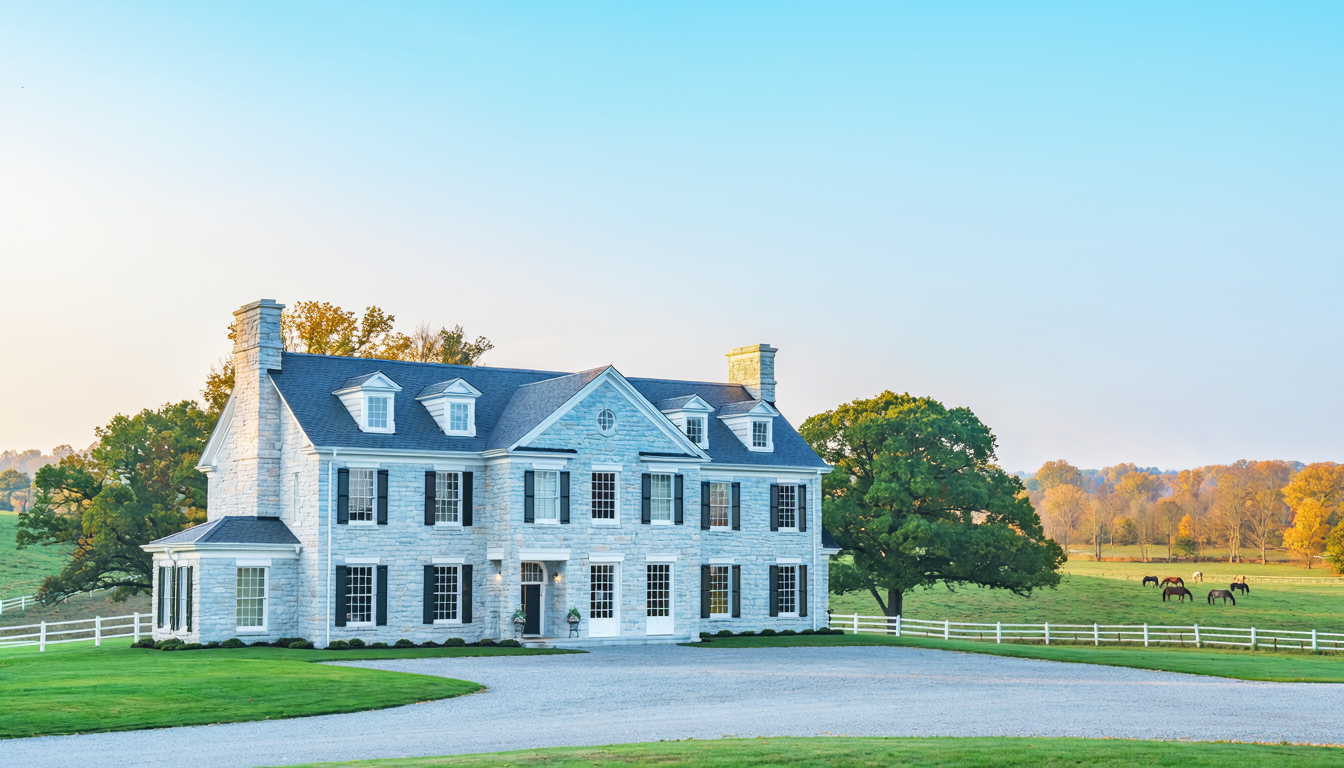
Stephen Gross of the Holly Gross Group, affiliated with Berkshire Hathaway Fox & Roach in West Chester, works in that world of farms, country estates and old stone houses. This year he represented the buyers of a large farm near his own home that was never publicly listed; the sale was arranged privately. The selling family had owned the land for decades, and the buyers were old friends of Gross’s family, so the farm passed from one set of familiar hands to another.
Sales like that are not unusual here. Some properties, Gross says, come along when “maybe it hasn’t been on the market for a long time, maybe for generations,” and the right buyer moves immediately, knowing the chance may not come again.
A Culture Written Into the Land
Chester County has long been horse country. The area is home to accomplished riders, including Olympic equestrians, and families who set out to build a horse farm and spent their lives in that world. “There’s a lot of fox hunting,” Gross says. “It’s always been a thing around Philadelphia.”
That tradition maps closely onto the county’s most valuable land. The areas Gross names as carrying some of the highest values each sit in hunt country: Willistown, home of the Radnor Hunt; Chester Springs, where the Pickering Hunt once rode, and the Kimberton Hunt rides today; and the Unionville area of the Cheshire Hunt. Riding to hounds depends on open, connected countryside, and those same landscapes now hold the county’s largest clusters of permanently protected land.
Protection as a Promise Between Neighbors
A large and growing share of Chester County is now protected by conservation easements, and preservation groups hope to bring much more of it under protection in the coming decades. Nearly every sizable farm or estate Gross sells carries one.
An easement is a legal agreement in which an owner permanently gives up certain rights, most often the right to subdivide or develop, usually in exchange for a tax benefit. A conservation organization then holds those rights and ensures the land stays open. Buyers meeting one for the first time often resist, since it limits what they can do with their own property. But the effect depends on what surrounds it. On an isolated parcel hemmed in by development, an easement can weigh on value. Among other protected properties, it does the opposite. “When it’s in clusters, it will actually enhance value,” Gross says, because owners know the farm next door will never become a subdivision.
At Seven Bittersweet, a community of multi-acre lots, a single easement covers every property. Each household knows no lot will be split and no neighbor will clear-cut their land, which makes the restriction feel less like a limit than a shared agreement about what the place will remain.
Who Buys Into This Life
Most buyers of these properties come from nearby. Gross says the most common pattern is local households upgrading or changing how they live, rather than newcomers from far away. Many of the farm buyers are equestrians. Others have never owned a horse but, as Gross puts it, “they want to have a country way of life.”
For the historic estates closer to West Chester, the buyers tend to be successful professionals, such as lawyers who work in Wilmington or Philadelphia. Some arrive from farther afield, including executives relocating to work for one of the area’s large employers. What they share is a search for homes tied to this particular landscape, the kind that cannot be found anywhere else.
Places That Need Explaining
These are not properties a buyer can understand from a listing sheet. A serpentine stone farmhouse, a barn converted into a residence, or a house built by a 19th-century writer to echo the European estates he had visited all carry histories that shape how they live and what they are worth.
That is why the sale process remains personal. Gross calls real estate “an old school business,” and his team attends most showings, and every showing at its most unusual properties, because buyers often need someone to walk them through what they are seeing. “They want to see the properties,” he says.
The market around these homes has cooled from its post-pandemic peak, with more inventory and more price reductions at the top end. But for land that comes up once a generation, timing matters less than fit: the right buyer, often someone who already knows the neighbors, and a landscape that will look much the same for the family that comes after them.
About the Expert: Stephen Gross is a member of the Holly Gross Group, affiliated with Berkshire Hathaway Fox & Roach, based in West Chester, Pennsylvania. The group specializes in farms, country estates, historic homes, and land across Chester County and neighboring areas of Pennsylvania, Delaware, and Maryland.
This article is based on information provided by the expert source cited above. It is intended for general informational purposes only and does not constitute legal, financial, or real estate advice. Readers should conduct their own research and consult qualified professionals before making any real estate or financial decisions.