Philadelphia’s homeownership rate fell from 57.5% in 2005 to 52.4% in 2023, according to the Federal Reserve Bank of Philadelphia, a steeper decline than the nation’s and those of most East Coast peer cities.
Chris Somers, a partner with KW Empower and leader of The Somers Team, says first-time buyers are feeling that squeeze most. He points to a 2019 change in the city’s tax abatement as a major reason the entry-level new construction that once drew them has thinned. The full 10-year exemption on improvements for new homes became a phase-down that loses 10% of its value each year, roughly five and a half years of full benefit.
In Somers’ view, a change meant in part to raise school funding has instead deepened a supply shortage that makes ownership harder for the residents it was supposed to help.
A Fast-Tracked Vote
Somers was president of the Greater Philadelphia Association of Realtors (GPAR) in 2019, when City Council unanimously passed the change at its term’s final session. Then-Council President Darrell Clarke said up to 55% of the new revenue would go to the School District of Philadelphia. Council rejected amendments from GPAR and the Building Industry Association to slow the phase-down, and Somers, who met with council members and testified, believes the outcome was settled in advance. “All that was just a charade because it was already agreed upon,” he says.
The new rules were originally set to begin in 2021. A backlog of abatement applications and COVID-related delays pushed the start to January 1, 2022. Somers says he asked council members who wanted to abolish the abatement outright what would happen when the economy changed. Soon after came the pandemic and inflation, and Somers says new single-family construction in the city has plummeted since. “It’s just so sad to see that these unintended consequences could be so severe,” he says.
How the Abatement Built Neighborhoods
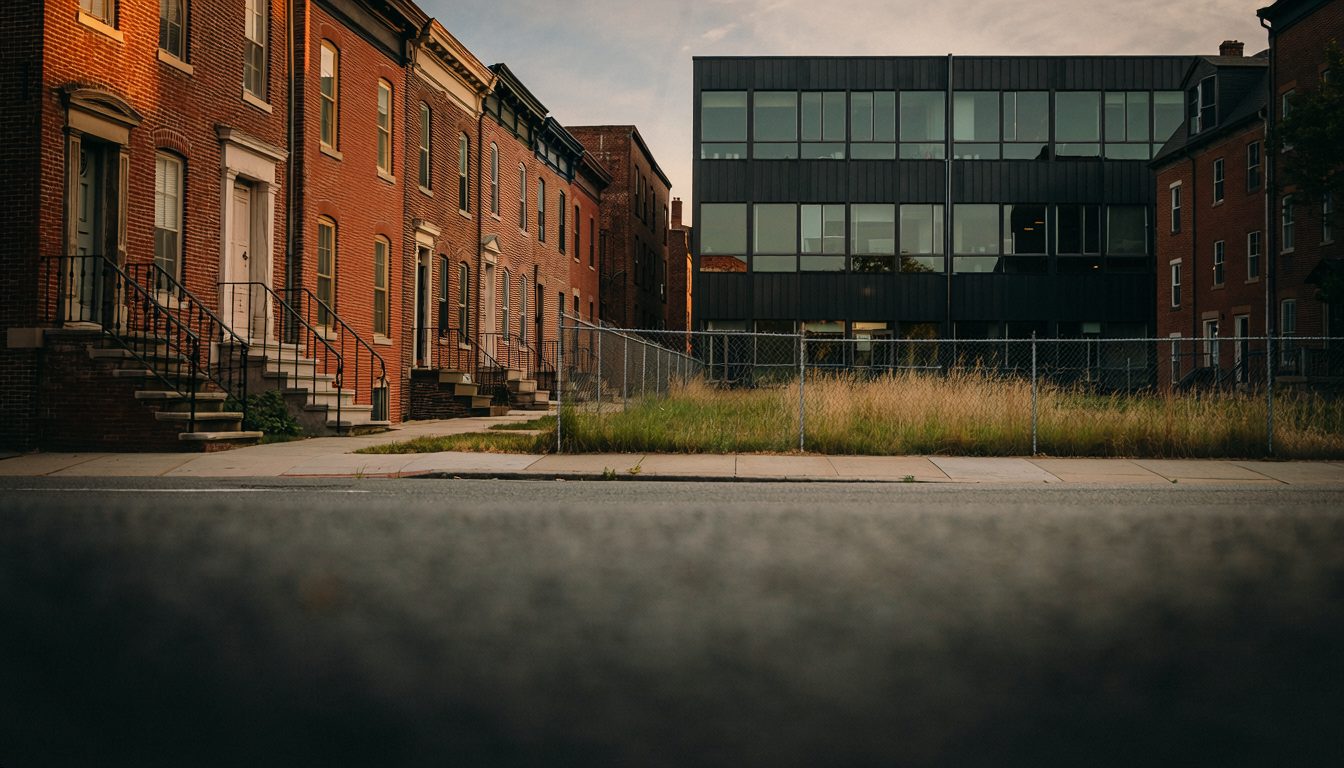
Philadelphia created a 10-year abatement for commercial-to-residential conversions in 1997 and extended it to all new residential construction in 2000, when Center City had little residential demand. Development followed. Somers says new construction spread outward into Fishtown, Northern Liberties, South Kensington, Point Breeze, and Brewerytown, neighborhoods with enough vacant land to build on. Homes priced from under $400,000 to around $600,000 went up with full abatements, drawing buyers who might otherwise have looked to the suburbs.
The common criticism is that the abatement mainly served developers and luxury buyers. “The misnomer was like, oh, so just for millionaires at million-dollar properties, which wasn’t the case at all,” Somers says. He acknowledges developers benefited, but argues that without the abatement, many projects would not have been built at all. Buyers, in turn, got lower monthly payments.
The city also collected more as abated properties rolled onto the full tax rolls. The City Controller’s office counted $83 million in 2017 tax payments from properties whose abatements had already expired.
The Pricing Gap
In neighborhoods like Fishtown and Northern Liberties, Somers says the abatement shows up in prices. His rule of thumb: a well-kept three-story rowhome without an abatement might sell for around $500,000, while comparable new construction with one could bring roughly $100,000 more. The premium reflects the buyer’s lower carrying costs for the years that remain.
That math also shapes when owners sell. Somers sees many owners, including some who rented a property out first, time a sale for when two or three years of abatement remain. “It does position that individual property owner to be able to offer something that a lot of other homeowners can’t,” he says.
Which version a home carries matters, and not every buyer knows the difference. Some listings tout a “2021 abatement,” though the new rules took effect in 2022. Somers prefers a simpler split: old versus updated. A resale built under the old rules with five years left may offer about the same benefit as a brand-new home on the graduated schedule, so buyers should confirm the version and years remaining before closing.
A Market Waiting on Policy
Somers describes a four-year real estate recession in the city, even as the suburbs stay active. Drexel University’s quarterly reports bear that out: first-quarter 2026 sales were the lowest since early 2015. With construction costs up since the pandemic, he says the reduced abatement makes tight project economics even tighter. The city, he says, has gone “from why lease when you can own to why own when you could lease.”
Longer abatements have been floated. In 2016, Allan Domb, then a council member and a past GPAR president, proposed a 20-year abatement for lower-priced homes. Mayor Cherelle Parker is now pushing one for converting empty offices and vacant schools into housing, though Somers notes those projects would more likely produce rentals than owner-occupied homes.
“I haven’t really seen any policy yet or anything come out of city council that does really anything for homeownership,” Somers says. He credits the Parker administration for backing Turn the Key, which gives income-qualified first-time buyers up to $75,000 in mortgage buydown help plus a $10,000 grant on new homes built on city-owned land. It helps, he says, but reaches a narrow group. The larger constraint, he argues, is jobs: many big employers choose the suburbs or New Jersey for their friendlier tax structure, which keeps housing demand in the city flat.
What to Watch in 2027
Whether entry-level construction returns now depends largely on City Hall. Parker’s 20-year conversion abatement still needs a bill and a Council vote. The only pending proposal to restore the full 10-year abatement, filed in November, would cover just three historic districts: Old City, Society Hill, and Washington Square West.
All 17 Council seats are on the ballot in 2027, and in a city this heavily Democratic, the May primary will likely settle most races. Somers plans to back candidates who understand real estate and growth. Until policy changes, he argues, the neighborhoods that grew under the original abatement are unlikely to see a new wave of starter homes.
About the Expert: Chris Somers is a partner with KW Empower in Philadelphia, where he leads the Somers Team, a 30-agent residential group working with buyers and sellers across the city and its surrounding suburbs. He served as president of the Greater Philadelphia Association of Realtors in 2019.
This article is intended for informational purposes only and does not constitute legal, financial, or investment advice. The views and opinions expressed herein reflect those of the individuals quoted and do not represent an endorsement of any company, product, or service mentioned. Readers should conduct their own due diligence and consult qualified professionals before making any investment decisions.