Brooklyn’s residential real estate market has shown quiet resilience over the past few years, even as rising interest rates and tight inventory have reshaped buyer behavior across much of the country. Other markets have seen sharper corrections. Brooklyn continues to draw first-time buyers, relocating renters, and investors seeking value in a borough where housing demand rarely slows.
Adam Hamdan, licensed broker and co-founder of the GAMA Team, has been working the South Brooklyn and Staten Island markets for nearly fifteen years. His team of ten splits its business roughly between apartment rentals and residential sales. This ground-level view offers a useful read on where the market actually stands heading into mid-2026.
Rate Fears Fade
After nearly two years of elevated mortgage rates, buyer psychology in Brooklyn has caught up with reality. For much of 2023 and 2024, many would-be buyers stayed on the sidelines waiting for rate relief that was slow to arrive. Now, buyers appear to be accepting that rates may not return to pandemic-era lows anytime soon. “The shock factor is gone with the rates today,” Hamdan says. “Serious buyers are still buying.”
The common refrain – that buyers should commit to the home and refinance later once conditions improve – has taken hold among those still getting married, growing families, and relocating for work.
Rental prices are also pushing people toward ownership. Inventory for rentals in Brooklyn remains slim relative to demand, and rents have climbed to historically high levels. For renters who have built up savings, the math of continuing to rent versus buying has started to favor purchasing.
Where Demand Sits
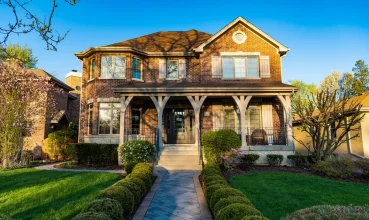
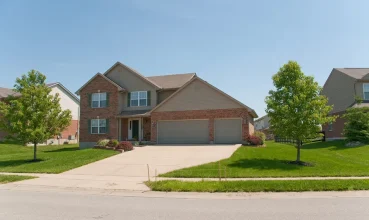
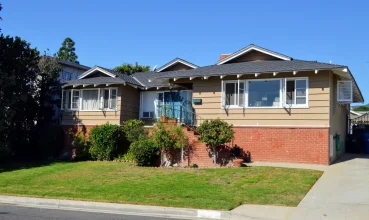
Within the South Brooklyn and Staten Island markets that make up the bulk of GAMA Team’s business, the strongest activity centers on single and two-family homes priced between $650,000 and $1 million. “There’s a much bigger buyer pool for these types of homes,” Hamdan explains. “They’re more affordable in today’s market.”
Once listings cross the million-dollar threshold, two factors noticeably compress demand. The first barrier is qualification. Most lenders require a 20% down payment on properties at that price point, limiting eligible buyers. The second is New York State’s mansion tax, a 1.5% levy on purchases over $1 million. On a $1.1 million home, that adds $16,500 to the buyer’s closing costs, pushing some buyers to look for options just below that line.
Co-ops, which make up a significant share of Brooklyn’s housing stock, are also moving more slowly than condos or single-family homes. The board approval process and restrictions on subletting or financing make them less attractive to a broad pool of buyers. Co-op buyers are purchasing shares in a corporation rather than real property, which narrows the buyer pool and extends time on the market.
Buyer Migration Trends
The composition of buyers in South Brooklyn reflects broader changes in how people think about where they live and work. Hamdan estimates that roughly 90% of the team’s sales activity involves local buyers, many of whom are renters transitioning to ownership. But a growing segment is migrating from higher-priced areas like Manhattan and downtown Brooklyn, drawn by the prospect of more space for their money.
Remote and hybrid work arrangements are accelerating this movement. Buyers who no longer commute daily are reconsidering what they pay for proximity to office districts. Instead, they are prioritizing square footage, parking, and neighborhood livability – amenities that South Brooklyn delivers more affordably. Parking, notably, registers as a genuine amenity in Brooklyn, not a given.
Bay Ridge Investment Case
For investors considering where to deploy capital in the borough, Bay Ridge stands out as a market worth watching. Inventory is persistently tight, with roughly 30 homes listed at any given time, while demand has climbed as buyers move south from pricier neighborhoods.
The opportunity, as Hamdan sees it, lies in distressed or as-is properties. Bank-owned homes, or those sold by owners unwilling or unable to renovate, present entry points at below-market value. The exit strategy is straightforward: buyers increasingly want turnkey homes and are willing to pay a premium for move-in-ready condition. “An investor comes in, makes it come to life, a buyer comes in looking for a home like it and appreciates the quality of work,” he says.
Why Deals Collapse
Even in a market with healthy demand, transactions fall apart – and Hamdan’s experience points to two recurring culprits. The first is appraisal gaps. Because prices in South Brooklyn have risen sharply over the past five years, finding comparable sales to justify a contract price has become more difficult. When an appraiser values a home below the agreed purchase price, the deal requires renegotiation or a second appraisal to move forward.
The second issue is buyer behavior during the contract period. In a higher-rate environment where lenders work with tighter margins, even modest changes in a buyer’s financial profile can derail a closing. Hamdan describes a transaction that nearly unraveled when a buyer purchased a vehicle between signing and closing. That purchase increased their debt load and threatened their mortgage qualification. “We try to educate buyers: if your numbers are tight when it comes to down payment, salary, and qualifying, try to minimize debt as much as possible,” he says.
Adapting to Market Shifts
Brooklyn’s real estate landscape is rewarding those who stay technically current. AI is reshaping how listings are marketed and how buyers search for properties, compressing the window between a listing going live and a serious inquiry coming in. In a market where well-priced inventory moves within two to three weeks, the ability to reach buyers quickly has become as important as the pricing strategy itself.
The shift toward remote and hybrid work has also changed what buyers expect from their agents. Because more buyers are relocating from higher-priced neighborhoods rather than simply moving within the same area, the education component of a transaction has deepened. Buyers entering South Brooklyn from Manhattan or downtown Brooklyn are often unfamiliar with the neighborhood’s pricing dynamics, co-op restrictions, and closing cost structures – including the mansion tax – making agent guidance more consequential than in a purely local market.
After thirteen years in the business, Hamdan’s read on Brooklyn remains direct: the market is not flashy, but it is durable. Inventory stays tight, demand stays broad, and well-priced properties continue to move within weeks. For buyers and investors watching from the sidelines, the signal is less about dramatic momentum and more about consistency. In this market, fundamentals hold even as the rules of engagement continue to tighten around rates, lending standards, and affordability thresholds. That steadiness, in a city where housing demand never pauses, may be the most reliable indicator of long-term value in Brooklyn.
About the Expert: Adam Hamdan is a licensed real estate broker and co-founder of the GAMA Team, focused on South Brooklyn and Staten Island, with over a decade of experience in the Brooklyn market. His practice spans both residential sales and apartment rentals, with the team headquartered in Bay Ridge, Brooklyn.
This article is based on information provided by the expert source cited above. It is intended for general informational purposes only and does not constitute legal, financial, or real estate advice. Readers should conduct their own research and consult qualified professionals before making any real estate or financial decisions.