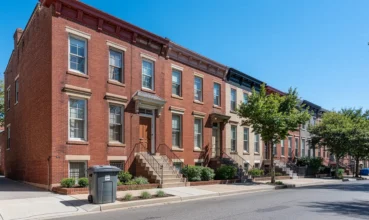
Thirteen miles from Manhattan, Montclair, New Jersey, has spent the better part of a decade defying the typical rhythms of suburban real estate. While broader market reports point to normalizing inventory and cooling competition across New Jersey’s suburbs, conditions on the ground in Montclair tell a different story, one of persistent demand, thin supply, and buyers who still need to come prepared to compete.
Ann McCarthy, a Sales Associate at Prominent Properties Sotheby’s International Realty who has worked the Montclair market for eleven years, has watched this dynamic hold steady throughout her career. “For that entire time, it has really been a seller’s market that has really not changed,” she notes.
A Market That Rewards Preparation
In a town where demand consistently outpaces supply, sellers might assume their homes will move regardless of condition or presentation. McCarthy directly pushes back on that assumption, calling it one of the more common misconceptions she encounters. Only homes that are positioned correctly from the start generate the strongest responses.
Her team, which includes longtime partner Frede Mirenda, who has been selling real estate in Essex County for over thirty years, invests heavily in the presentation of each listing. Dusk and daytime photography, 3D and 2D floor plans, video, drone footage, and standard stills are all part of their process. The drone work serves a specific purpose for Montclair’s buyer pool: many prospective buyers are relocating from New York City, and aerial shots that capture both the property and the distant Manhattan skyline reinforce the town’s proximity. “Being able to see it from some of our higher elevations throughout town really makes them feel like it’s very much a flavor of the city, even though it’s a suburb,” McCarthy says.
That connection to the city is central to Montclair’s appeal. With six train stations and a roughly thirty-five-minute commute to Midtown, the town sits in a practical sweet spot for professionals being called back to offices part-time, close enough for convenience, far enough to offer space, character, and value that simply isn’t available at comparable price points in Brooklyn or Manhattan.
Who’s Buying and Where They’re Coming From
The typical Montclair buyer, according to McCarthy, tends to be a dual-income household, often with one or two young children. Many come from Brooklyn, Manhattan, Jersey City, and Hoboken. A newer trend in the buyer pool is people returning from Los Angeles, a trend she expects to grow as three major film studios open in New Jersey. Montclair’s own film festival, held each October and drawing significant attention for its programming, makes the town a natural draw for that industry community.
Beyond the entertainment sector, the town’s broader lifestyle package continues to attract buyers who might not have initially considered suburban New Jersey. Jazz and reading festivals, an art museum, well-regarded restaurants, proximity to beaches and mountains, and easy airport access all factor into the decision. McCarthy, who moved to Montclair somewhat reluctantly herself, puts it plainly: “People like myself, who maybe moved here reluctantly, are now really happy living here, and now here I am selling the town.”
Navigating a Competitive Buyer Environment
For buyers, the Montclair market requires patience and realistic expectations. Homes regularly sell above asking price, and it is not uncommon for buyers to lose several offers before landing a home. McCarthy draws on the Sotheby’s auction analogy to help clients understand the dynamic: much like bidding on art, what a buyer is willing to pay is shaped by what a property means to them personally, not just what comparable sales suggest.
“You have to figure out what it’s worth to you,” she says. Factors like school registration deadlines, job relocations, or simply having lost a few prior bids can all influence how aggressively a buyer moves. McCarthy’s approach is to keep buyers educated and grounded, reminding them that losing a house often leads to a better outcome. “Nine times out of ten, they’ll be like, ‘Oh my goodness, I’m so happy I didn’t get that house.'”
Waiting, however, carries its own cost. McCarthy has seen buyers who held off for a year end up paying upward of $50,000 more for a comparable home. “When I read those articles about inventory normalizing, I’m always like, not here,” she says. “We still don’t have enough inventory.”
Why Sellers Stay Put
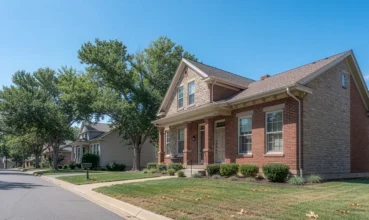
Part of what keeps inventory constrained is that many long-time Montclair homeowners simply don’t want to leave. Empty nesters, in particular, are staying in town, especially as their own adult children look to return to the area to raise families. The town’s architectural stock, largely built in the early 1900s and ranging from Victorian homes to Craftsman bungalows, adds another layer of attachment. These are homes with history, and buyers increasingly want that story alongside modern updates.
“You see a lot of people mixing in the old with the new,” McCarthy observes. Buyers are drawn to the character of early-twentieth-century construction but expect contemporary kitchens, bathrooms, and systems, a combination that commands strong prices when done well.
For those who do decide to sell, the math is straightforward but often sobering. Unless a seller is moving to a significantly less expensive area, the equity gains largely get reinvested in the next purchase. “You buy high, you sell high, you buy low, you sell low,” McCarthy says. That reality, combined with genuine affection for the town, keeps many would-be sellers in place and inventory tight.
The Local Expertise Advantage
McCarthy’s broader advice for anyone entering the Montclair market centers on local knowledge. She recommends buyers and sellers work not just with a local agent, but with a local lender and local attorney as well, a combination she views as foundational to a smooth transaction. Her team also maintains a firm policy of not representing both buyer and seller in the same transaction, a choice rooted in a belief that every party deserves independent advocacy.
That philosophy extends to how they treat buyers at open houses, even when those buyers are represented by other firms. “We want them to feel that same sense of we’re pulling for you,” McCarthy says.
As Montclair heads into the second half of 2026, with new studio development on the horizon and the return-to-office trend continuing to push city dwellers toward well-connected suburbs, the conditions that have defined this market for over a decade show little sign of easing. For buyers, that means coming prepared to move quickly and bid competitively. For sellers, it means recognizing that even in a strong market, presentation and pricing still separate the listings that spark bidding wars from those that linger. The fundamentals remain strong, and the competition, as ever, is real.
About the Expert: Ann McCarthy is a Sales Associate at Prominent Properties Sotheby’s International Realty, working exclusively in the New Jersey West Essex area, focusing on Montclair, Verona, Glen Ridge, Cedar Grove, Bloomfield, and The Caldwells, for 11 years. She works alongside business partner Freddie Miranda, covering residential sales in Essex County.
This article is based on information provided by the expert source cited above. It is intended for general informational purposes only and does not constitute legal, financial, or real estate advice. Readers should conduct their own research and consult qualified professionals before making any real estate or financial decisions.