For years, luxury buyers in the hills around Los Angeles prioritized views, acreage, and privacy. Insurance was a line item, not a deciding factor. That era appears to be ending. In the West Valley and surrounding fire-prone areas, insurance costs have climbed so steeply – and coverage has become so difficult to secure – that the expense is reshaping which neighborhoods buyers will consider and which types of homes they pursue.
Nathaniel Getzels, a partner at Getzels Group, a Calabasas-based real estate team with nearly two decades in the market, says the shift is unmistakable. Insurance and safety have risen above almost every other factor in buyer decision-making, according to Getzels. “It’s now its own contingency on our contract because it’s become such a big problem,” he says. Insurance is no longer just a cost absorbed after closing – it is a deal point that can kill a transaction.
A $40,000 Quote on a Sub-$4 Million Home
Getzels points to a deal his team is currently working on where the buyer received an insurance quote of roughly $40,000 per year on a home priced under $4 million. With many national carriers having pulled out of parts of Los Angeles, buyers in fire-adjacent zones are increasingly forced onto California’s FAIR Plan – the state’s insurer of last resort – plus an umbrella policy. That combination drives premiums far above what the same buyer would pay in a lower-risk area.
The financial math changes the calculation for anyone considering a hillside or canyon property. Getzels says buyers are not just grumbling about the cost – they are reconsidering entire neighborhoods. He believes rising premiums “will long term have a negative effect on their values” in high fire zones.
That effect has not fully materialized yet. Getzels notes that enough buyers are still purchasing in fire zones to support current prices. But premiums are not falling, and the pressure runs in only one direction.
Where Demand Is Redirecting
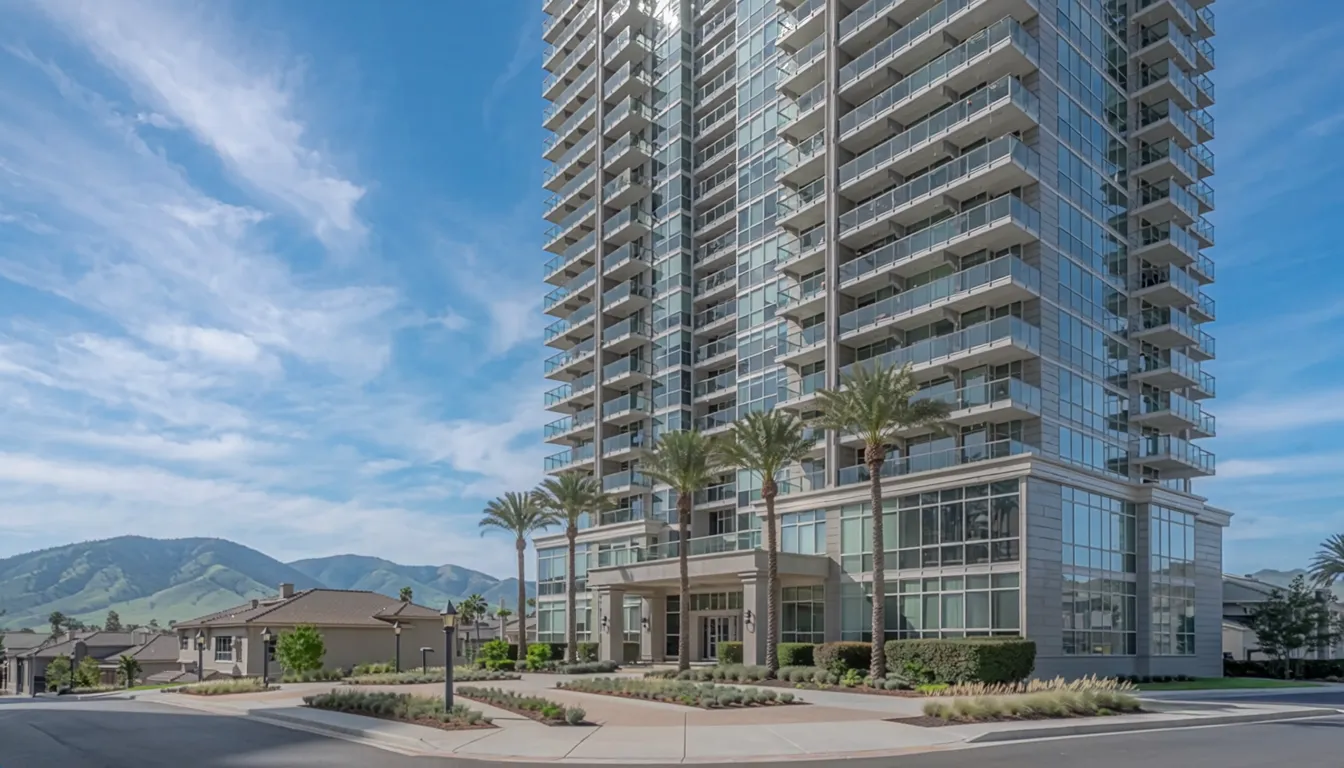
One visible consequence is the surge in Los Angeles’s luxury condo market. Getzels points to condos above $10 million as a segment performing sharply, with year-over-year gains he estimates at around 22 percent. The appeal is straightforward: a high-rise with 24-hour security staff and no wildfire exposure addresses both concerns – safety and insurance – that now top buyer checklists. “Was someone coming with a helicopter to jump in your window? I don’t think so,” he says.
In the West Valley itself, Calabasas benefits from being an incorporated city with its own police force and a reputation for tighter security. That positioning gives it an edge over hillside communities where fire risk and coverage gaps are more acute. But even in Calabasas, insurance costs are climbing, and buyers are factoring premiums into what they will pay for a home.
A separate shift is happening inside the homes themselves. Getzels describes growing buyer appetite for health and wellness amenities – cold plunges, infrared saunas, air filtration systems, barometric chambers, meditation rooms. “The new luxury is health,” he says. One of his clients recently built out a full home gym with an infrared sauna, a barometric chamber, and specialized air purification equipment.
Fire-hardened construction features, which could reduce insurance costs, have not yet generated the same buyer demand. Getzels says the rebuilt homes that would showcase those features are still largely under construction. Buyers will gravitate toward features that lower their insurance premiums, he says, but the homes demonstrating those savings are not yet on the market. Until they arrive, the premium is going to wellness, not resilience.
What This Means for Sellers in Fire Zones
For homeowners in fire-prone parts of the West Valley and greater Los Angeles, the insurance environment introduces a competitive pressure that did not exist five years ago. A property in a high-fire zone now competes not just against other listings in the same neighborhood, but against secured condos and lower-risk communities that did not used to be in the same buyer’s consideration set.
Getzels says that anything saving buyers money on insurance premiums draws interest, but the homes that would prove the value of fire-hardened construction are still being built in places like Pacific Palisades, where reconstruction is underway. The Palisades is “actually on its way to come back versus on its way down,” he says, with new building activity generating excitement about the area’s future. As those homes reach the market, they will offer the first real test of whether fire resilience commands a measurable premium – or whether buyers continue directing their spending toward wellness and security instead.
About the Expert: Nathaniel Getzels co-leads the Getzels Homes Group in Calabasas, California, covering the Calabasas and Woodland Hills area. He also serves as a director on the Calabasas Chamber of Commerce.
This article is intended for informational purposes only and does not constitute legal, financial, or investment advice. The views and opinions expressed herein reflect those of the individuals quoted and do not represent an endorsement of any company, product, or service mentioned. Readers should conduct their own due diligence and consult qualified professionals before making any investment decisions.