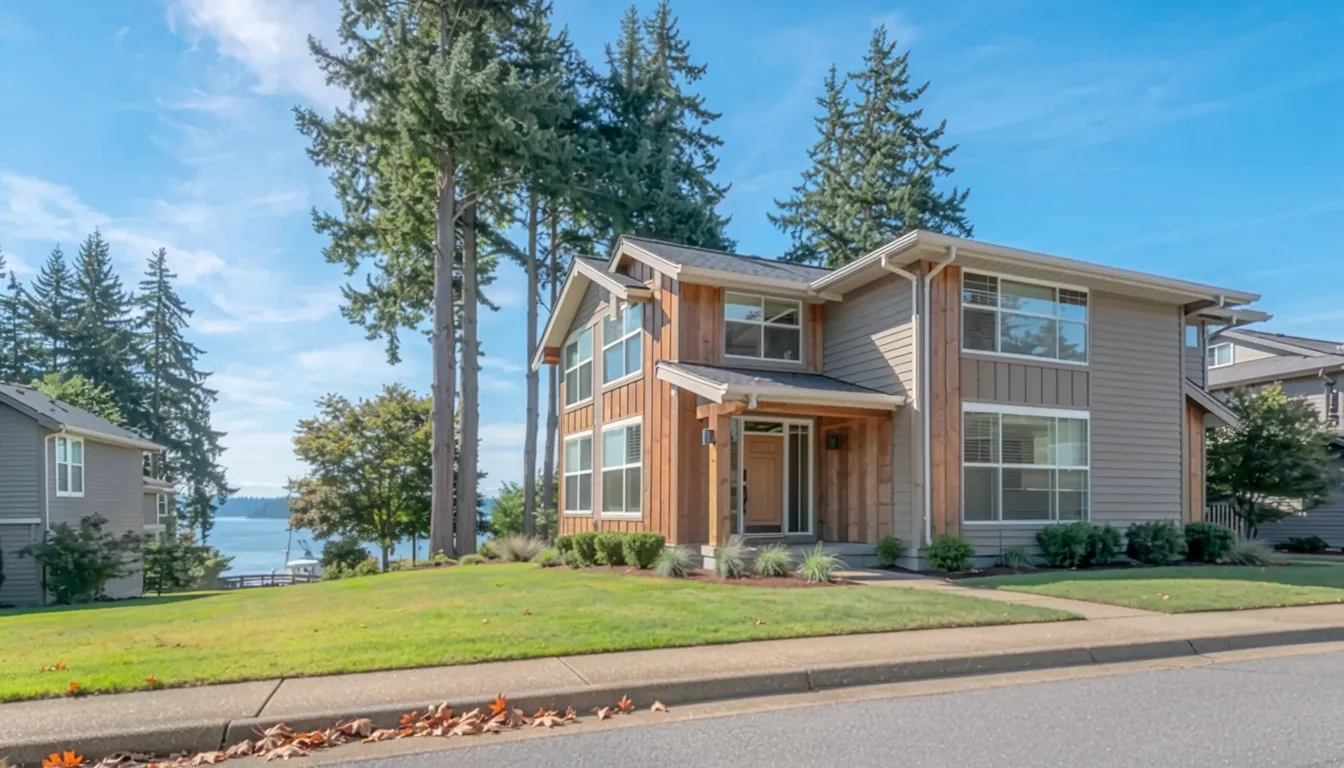
In Pierce County, Washington, cash offers used to mean leverage. Investors could close fast, skip financing contingencies, and walk away with a discount. That trade-off has broken down, according to Josh Barnard of The Barnard Group with Real Broker – and the shift is rewriting how investors need to approach acquisitions in this market.
Barnard, who has worked in the Puyallup, Orting, and surrounding communities for over 21 years, says sellers now demand full market pricing regardless of how a buyer pays. His team receives cash-offer solicitations daily, but the gap between what investors need to pay and what sellers will accept stays wide. Unless a seller faces genuine financial distress, the speed of a cash close is not enough to justify a meaningful discount.
“They still want the market value with a cash offer,” Barnard says. “And that doesn’t always work out.”
For investors who built strategies around acquiring below-market properties quickly and flipping them within weeks, the math no longer holds – not just because the discount has vanished, but because the exit side has slowed dramatically.
The Holding Period Problem
During the 2020–2021 seller’s market, investors could acquire a property, renovate, and sell within days. That speed made thin margins work.
That timeline no longer exists. Barnard says homes in Pierce County now sit on the market for 30, 60, or 90 days before closing – a holding period that adds carrying costs and increases exposure to further price declines.
“We had investors that were putting it on the market in 2020, 2021, and it sells in two days,” Barnard says. “Well, right now we’re looking at 30, 60, 90 days on the market. So you have to factor those numbers in on your back end as well.”
For fix-and-flip investors, the extended timeline hits hardest. Renovation costs, financing expenses, property taxes, and insurance accumulate during a longer hold, and any further softening in prices during that period eats into the return that justified the purchase.
Discipline Over Speed
Barnard’s guidance to investors reflects what the current market rewards: patience and pricing discipline rather than speed and volume.
“You’re going to make your money on the purchase,” Barnard says. “So when you buy the home, you’ve got to have an understanding of what that’s going to net you down the road. Don’t fall in love with the house until you get the right number.”
Rather than moving quickly to secure a deal before competing buyers arrive, Barnard says investors should be willing to walk away from any acquisition that doesn’t meet their criteria – even if that means passing on multiple opportunities before finding one that works.
The current market is filtering capital. Investors who built models around fast exits are finding those models no longer function. Those who can absorb longer holds and underwrite conservatively are better positioned to generate returns.
Geographic Variation Adds Complexity
Pierce County adds another layer for investors: the same strategy may produce very different outcomes depending on the specific submarket. Orting sits in a valley between two rivers at the base of Mount Rainier, and Barnard says many homes there require flood insurance because of their flood zone designation. That additional cost, combined with buyer hesitation about lahar risk, affects resale timelines differently than properties in other parts of the county.
Downtown Puyallup, by contrast, has little room left for new development. South Hill has largely been built out as well, though the southern edge of Puyallup near Graham still has new construction – which, according to Barnard, fetches higher prices than resale homes in the area. Gig Harbor, at the higher end of the county’s market, remains somewhat more insulated from broader pricing pressure, though Barnard says even those homes must be priced correctly to sell.
Barnard says understanding which neighborhoods are still seeing new construction, which are largely built out, and which carry environmental or insurance costs that shrink the buyer pool is essential to identifying deals that will actually perform.
“Be patient,” Barnard says. “The biggest thing you can do when you’re investing in real estate from an investor standpoint is make sure that you’re purchasing it at the right price.”
A Tighter Window Ahead
Barnard is watching Pierce County’s months of inventory closely – currently around 3.36 months. If that figure climbs toward four months, buyers gain even more choices and sellers face longer timelines, which would further compress investor margins on the exit side.
For investors considering Pierce County, the conditions that eroded the cash-offer advantage show no signs of reversing. Sellers are not under enough pressure to discount, holding periods have stretched well beyond what fast-flip models assumed, and each submarket within the county carries its own cost structure and buyer dynamics. Selective, well-underwritten acquisitions may still produce returns. But the secondary-market discount that many investors expected to find here is, for now, gone.
About the Expert: Josh Barnard is with The Barnard Group at Real Broker, serving Puyallup, Orting, Bonney Lake, Sumner, and surrounding communities in Pierce County, Washington.
This article is intended for informational purposes only and does not constitute legal, financial, or investment advice. The views and opinions expressed herein reflect those of the individuals quoted and do not represent an endorsement of any company, product, or service mentioned. Readers should conduct their own due diligence and consult qualified professionals before making any investment decisions.