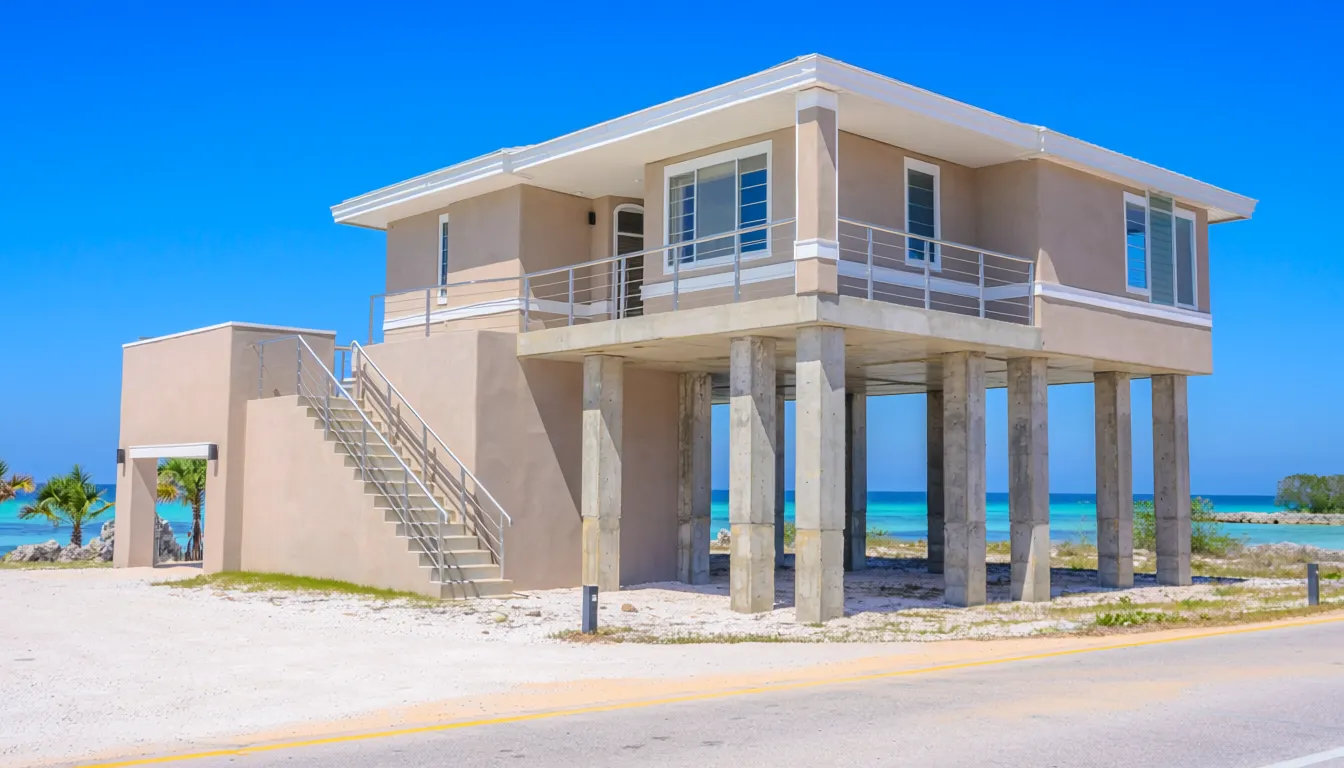
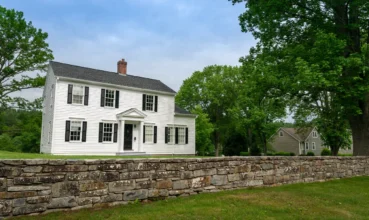
Building a new concrete home in the Florida Keys now costs $700 to $1,200 per square foot, according to Lisa Ferringo, who leads the Lisa Ferringo Group, a six-person real estate team in the Keys. Ferringo says those prices reflect a shortage of labor and the difficulty of getting materials to the islands. Homes must also meet some of Florida’s strictest wind codes. At the same time, Ferringo says the Keys have run out of new building permits. Together, these conditions have raised the value of well-built existing homes and of land that already has a home on it, including teardowns.
“Our local builders are now starting at $700 a foot for concrete, and the good ones are at $1,200 a foot,” Ferringo says. “That shows up in the resale price.”
Strict Wind Codes
Those codes date to 2012, when the Keys’ wind-load requirement rose from 155 to 180 miles per hour. Wind load is the force a building must be able to withstand from wind. Ferringo says the change gave the Keys the highest wind standard in Florida, and buyers now weigh it when choosing a home.
“After 2012, our building codes went to 180-mile winds,” Ferringo says. “We were the highest wind code in the state of Florida.”
Every new home must meet the 180-mile-per-hour standard, whether it is built with concrete, wood framing, or modular (factory-built) sections. Costs still vary widely. Ferringo says modular homes cost far less than concrete, at $200 to $250 per square foot.
Concrete is the most popular choice, especially in the higher price range, according to Ferringo. Buyers see it as better protection against hurricanes.
No New Inventory
The permit shortage has changed where a property’s value lies. Because no new homes can be built, much of a Keys property’s value now sits in the land itself, according to Ferringo.
“The Keys is under a building moratorium. There’s going to be no new permits given out for at least a year,” Ferringo says. “So it makes the teardowns or the fixer-uppers that more desirable because you can’t build new right now.”
For investors, this reverses the usual thinking. A property that would normally be seen as a costly repair job becomes an opportunity, but only for buyers who can handle the construction costs and delays. Ferringo says the Keys are “very short on labor,” and getting materials to the islands is difficult. The drive from the mainland to Key West crosses 42 bridges.
Ferringo shares an example of how high costs have climbed. Homeowners on Sugarloaf Key recently asked for a quote to add a master suite, a ground-level addition of about 1,000 square feet. The estimate came back at $1 million.
Adding a second story would have cost even more because of structural requirements, according to Ferringo. At these prices, buying a home that needs work and improving it is hard to justify unless the land value alone supports the purchase price.
Concrete Holds Value
High construction costs, limited permits, and buyer preference for concrete give existing well-built homes a lasting advantage. Ferringo says some high-end cash buyers with concrete homes don’t carry homeowners, wind, or flood insurance, though she adds that concrete construction offers “no guarantees.” Buyers who finance a purchase don’t have that option, because lenders require coverage.
Ferringo says well-built, updated homes that are priced right and in a good location sell quickly. Today’s buyers are selective and willing to wait for the right property.
That does not mean every older home is in demand. Ferringo says dated homes that need work are common and often sit on the market. Most buyers are purchasing second homes and want to use them right away.
“No one wants to come down here and do work,” she says. “They want to go fishing.”
Pricing and Preparation
For buyers, the purchase price of a fixer-upper is only part of the total cost. Adding a contractor’s renovation estimate to the asking price shows what the finished home will actually cost.
Ferringo says deals in the Keys usually fall apart for one of two reasons. Buyers are surprised by the full cost of insurance and financing, or a home inspection reveals poor maintenance. Maintenance problems are common in second homes whose owners don’t live there full time.
Sellers face a similar test. “You have to have your house maintained, and you have to price it properly,” Ferringo says.
About the Expert: Lisa Ferringo leads the Lisa Ferringo Group, covering the Florida Keys market since relocating from Miami.
This article is intended for informational purposes only and does not constitute legal, financial, or investment advice. The views and opinions expressed herein reflect those of the individuals quoted and do not represent an endorsement of any company, product, or service mentioned. Readers should conduct their own due diligence and consult qualified professionals before making any investment decisions.