

Falling Averages in Collin County, Texas, Don't Mean What They Seem to


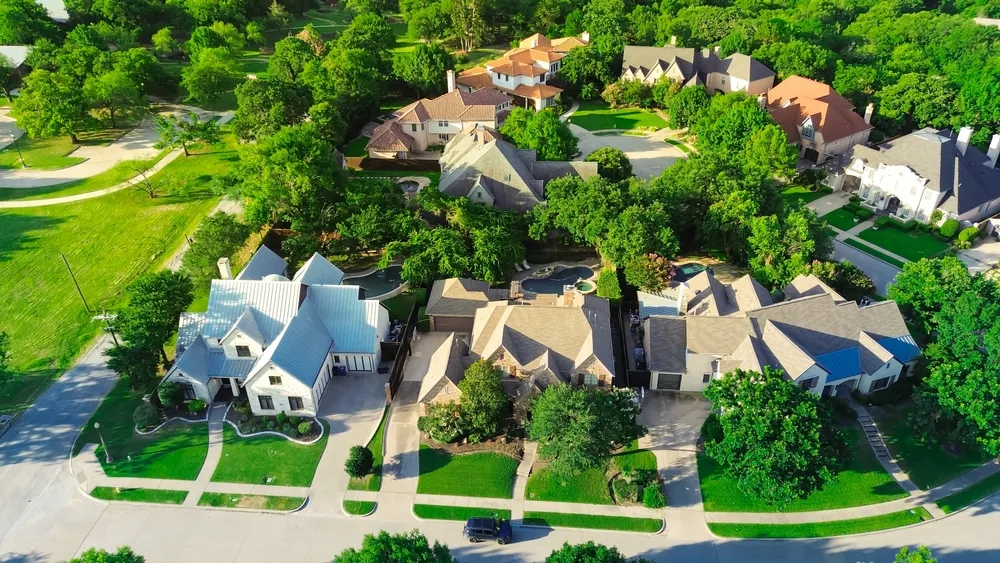
When average home prices dip in a county-level report, the natural instinct is alarm. Your home is losing value. The market is softening. But in Collin County, Texas – one of the fastest-growing counties in North Texas – the headline numbers are telling a misleading story, according to one team that has been working the data closely. The average is dropping not because individual homes are worth less, but because buyers are clustering at lower price points and pulling the math down with them.
Sean Elliott, team leader at the Grisak Group at Keller Williams Realty in central Collin County’s Fairview-Lucas-Parker corridor, has been tracking this pattern through 2026. His team has operated in this market for roughly 25 years, and Elliott says the current dip in averages reflects a shift in buyer behavior, not a decline in property values.
The Math Behind the Drop
The mechanism is straightforward. When more transactions happen at $1.1 million than at $1.5 million, the average sale price falls – even if no individual home sold for less than it would have a year ago. “More people are buying the lower priced options,” Elliott says. “So obviously when you put those averages together, the average is going to be a little bit lower.”
He draws a firm line between that statistical effect and actual depreciation. “It doesn’t mean that home values have really fallen. It just means people are going after the cheaper options.” For homeowners trying to determine whether their equity is shrinking, the distinction is critical. In many cases, the composition of sales has changed, not the value of the homes themselves.
A county-wide average blends everything from starter homes to multi-million-dollar estates into a single number. When budget-conscious buyers dominate a given quarter, the average moves even if prices on comparable properties held steady.
Where Real Price Drops Are Happening
Not every part of Collin County is immune from genuine price pressure. Elliott points to Celina, a community north of the county’s core that saw rapid development in recent years, as a place where prices have actually declined. Residents who bought during the growth phase are now reckoning with the commute. “People have lived up there for a while and they realize how far away it is,” Elliott says. “They’re starting to sell and move a little bit more central to Dallas.”
Celina’s situation is a reminder that a town’s rapid growth phase does not guarantee sustained price appreciation once the distance from employment centers and amenities becomes a daily reality.
McKinney, by contrast, has seen sales tick upward in 2026 after a period of softening, even though it carried heavy inventory. The difference between McKinney recovering and Celina sliding comes down to proximity and infrastructure – factors that do not show up in a county-wide average but determine whether a specific home holds its value.
What the $1.3–$1.6 Million Range Reveals
Elliott identifies a specific segment where market conditions have tightened. During the 2020–2022 surge, homes in the $1.3 to $1.6 million range moved quickly in his area. Now that segment is one of the harder ones to sell.
The reason is a squeeze from both sides. Younger families who might have stretched to $1.3 million during the boom are now buying closer to $1.1 million as costs have risen. Meanwhile, buyers shopping at $2 million and above are not stepping down into the $1.6 million range – they are pursuing a different type of property entirely. “That 13 to 16 range is kind of tough right now,” Elliott says, “just because there’s a lot of homes out there and they’re too expensive for the newer buyers and they’re not expensive enough for the ultra luxury buyers.”
The result is a pocket of elevated inventory in a price band that, on paper, still looks like a strong market. Buyers above $2 million and below $1.1 million are less affected, according to Elliott, because those segments face less direct competition from the oversupplied middle.
What This Means for Buyers and Sellers
For homeowners in Collin County watching price averages drift lower, the first question is not whether the market is declining. It is whether the homes actually comparable to theirs – same size, same condition, same neighborhood – are selling for less than they were a year ago. The answer may be no, even if the county average says otherwise.
For buyers, a falling average might suggest a deal, but if they are competing in a stable pocket of the market, prices on the homes they actually want may not have moved.
Elliott says Collin County remains healthy overall, with historical appreciation running in the range of three to five percent annually. The county’s population, currently around 1.3 million residents, is projected to approach 2 million within the next decade. But that growth will arrive unevenly. Communities close to Dallas with established infrastructure will hold value differently than those on the far edges where commute fatigue is already pushing residents back toward the center.
About the Expert: Sean Elliott is Team Leader of the Grisak Group at Keller Williams Allen, serving central Collin County, Texas.
This article is intended for informational purposes only and does not constitute legal, financial, or investment advice. The views and opinions expressed herein reflect those of the individuals quoted and do not represent an endorsement of any company, product, or service mentioned. Readers should conduct their own due diligence and consult qualified professionals before making any investment decisions.
Similar Articles
Explore similar articles from Our Team of Experts.


So you’re moving to a new city, and the research has already begun. You can learn a metro’s prices, tax rates, and school ratings from a thousand miles away. What the research can’t show you is which neighborhood fits the life you’ll actually lead there. Helping you close that gap is now central to a ...

The Department of Veterans Affairs has narrowed the list of property conditions that can hold up a VA-backed purchase. Under an update to the VA’s Lender’s Handbook, appraisals ordered from May 1, 2026, no longer require repairs for peeling paint on homes built in 1978 or later, or for defects in detached sheds and garages. ...
When 60 to 70 percent of buyers in a market are spending accumulated real estate wealth rather than current earnings, the market operates by different rules than national economic indicators suggest. In Santa Barbara, that disconnect between price levels and income-based affordability is not a temporary distortion – it is the market’s defining feature, according ...
In most of Bucks County, Pennsylvania, the housing market runs on familiar suburban logic: limited inventory, competitive bidding, and first-time buyers stretching to qualify. In Pipersville, at the county’s northern edge, the math works differently. Farms outnumber listings, acreage is measured in dozens rather than fractions, and the buyers who show up are coming from ...
Prospective homebuyers waiting for mortgage rates to fall may be waiting for conditions that only a major global crisis would create. Current 30-year fixed mortgage rates of about 7.25% are not an anomaly, according to Jason Huerkamp of Huerkamp Home Group in the Twin Cities. That figure matches the historic 50-year average. The low rates ...

