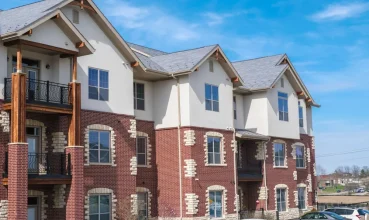
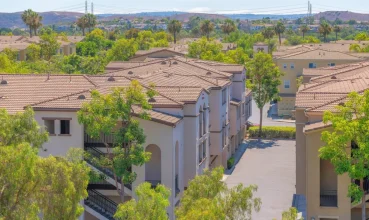
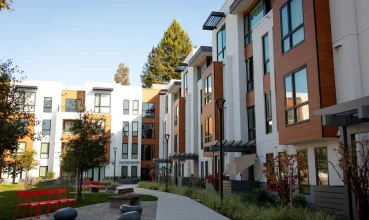
While housing affordability dominates headlines and rectangular apartment blocks multiply across urban landscapes, one development firm is charting a different course. Cedar Street Partners is prioritizing thoughtful design, mixed-use functionality, and community benefits in ways that serve multiple stakeholders simultaneously.
“We’re focused on creating places that people will enjoy and savor. We don’t have enough of those around, so it’s about establishing that sense of place that people can truly appreciate,” says Jonathan Curtis, Managing Partner at Cedar Street Partners, a development firm taking a distinctive approach to urban redevelopment projects.
From Legal Expertise to Development Vision
Curtis brings a unique perspective to development, having started his career in law. A UCLA Law School graduate, he began at Paul Hastings before eventually heading the real estate land use group for Sheppard Mullin, both large international firms. After serving as chief legal officer for a major company, Curtis ventured into the business side of real estate.
“I still practice law and stay current, but my development focus with Cedar Street is different,” Curtis explains. “We’re not the largest company, but we emphasize creating a sense of place rather than building the rectangular boxes of apartments you commonly see.”
This philosophy manifests in projects that blend residential, commercial, and hospitality elements with thoughtful design that considers both aesthetics and functionality.
Mixed-Use Development with Purpose
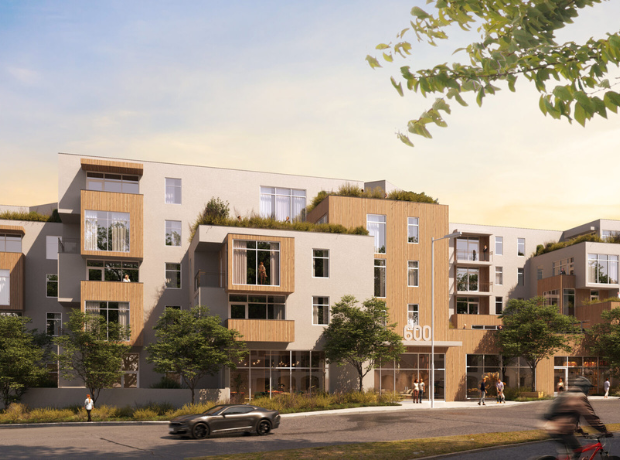
Cedar Street’s current project in La Cañada Flintridge, an affluent area near Los Angeles, exemplifies this approach by addressing several community needs simultaneously.
“La Cañada has completed only three multi-family housing projects in 25 years. Just three units total in 12 years,” Curtis notes, highlighting the resistance to multi-family housing that characterizes many wealthy communities.
The development includes 80 residential units (with 10% designated as affordable housing), 16 hospitality units, and 7,500 square feet of office space. Rather than creating a standard rectangular block, the design features strategic cutouts so “the building goes in and out, so that every unit on the outside will literally have a corner unit” with beautiful views.
What makes this project particularly innovative is how it serves the surrounding community. The hospitality units address a specific need for nearby Jet Propulsion Laboratory (JPL), a government facility operated by Caltech.
“Many scientists from foreign nations come to JPL to collaborate on experiments,” Curtis explains. “Because it’s a government facility, they can’t stay there and work. Our development provides both limited office space and accommodations.”
The affordable housing component is strategically designed to serve teachers, helping the top-rated local school district attract and retain talent in an expensive housing market.
Navigating California’s Housing Politics
When La Cañada Flintridge denied Cedar Street’s application, Curtis employed a little-known legal tool called “builder’s remedy” to overcome local opposition.
“We filed for builder’s remedy, becoming the first to use this approach,” Curtis says. “If a city doesn’t have a compliant housing element in their general plan, developers can pursue alternative approval pathways.”
The result was a legal battle that saw four lawsuits filed against the city by Cedar Street, California YIMBY, California Housing Defense Fund, and even the state Attorney General. The city lost all four lawsuits and eventually backed down after a judge ordered them to put up a $14 million bond.
This case illustrates the tension between local control and state housing mandates in California. While many communities resist new housing development, the state legislature has been increasingly proactive in creating tools to overcome local opposition.
“The legislature typically imposes more restrictions, but they’re doing the exact opposite right now,” Curtis observes. “Housing is a priority for the Democratic-controlled legislature and governor. This housing shortage is a nationwide issue that continues to worsen.”
The Disconnect in Housing Development
Despite widespread acknowledgment of the housing crisis and developers eager to build solutions, progress remains slow. Curtis identifies several factors contributing to this disconnect.
“It usually comes down to politics,” he explains. “There’s significant NIMBY sentiment, though organizations like YIMBY have been effective in public education. Nevertheless, some communities simply oppose additional housing, citing local control.”
Financing presents another significant challenge. “Financing remains extremely difficult with interest rates at 7%, and no significant drops expected over the next year,” Curtis notes.
Untapped Opportunities: Church Conversions and Public-Private Partnerships
Looking ahead, Curtis sees significant untapped potential in two areas: church conversions and public-private partnerships.
“Converting excess retail into other uses presents real opportunities,” Curtis says. “But what’s being overlooked is churches, an area with potential to meet church needs, city requirements, and community demands simultaneously.”
Curtis is referring to churches that are undergoing foreclosures, not fully-operating churches. Churches that are undergoing foreclosures represent an underutilized asset that could help address housing needs while providing income to religious institutions facing financial challenges. “The number of church closures would astonish most people,” Curtis notes. “Churches are an untapped potential resource.”
Public-private partnerships offer another avenue for innovative development. Though California abolished its redevelopment agencies, Curtis points to alternative financing mechanisms like Enhanced Infrastructure Financing Districts (EIFDs) and climate resilience districts that can help fund infrastructure improvements necessary for redevelopment.
“Numerous tools exist,” Curtis says, adding that California’s legislature has shown unprecedented openness to solving housing problems. “I’ve never experienced this level of receptiveness. Their willingness to solve problems is remarkable.”
A New Paradigm for Urban Development
Cedar Street Partners represents a fresh approach to development, one that balances economic viability with community benefits, thoughtful design with practical functionality, and private enterprise with public good.
By focusing on creating a genuine sense of place rather than simply maximizing units, and by leveraging innovative legal and financial tools to overcome obstacles, Curtis and his team demonstrate that development can serve multiple stakeholders simultaneously.
As communities across the country grapple with housing shortages, affordability crises, and the need for vibrant, walkable neighborhoods, Cedar Street’s approach offers valuable insights for developers, policymakers, and community advocates alike.
This article was sourced from a live expert interview.
Every month we conduct hundreds of interviews with active market practitioners - thousands to date.
In a market where mortgage rates have squeezed monthly budgets, buyers on Chicago’s West Side are making a trade that would have seemed unlikely a few years ago. They are choosing homes that need work over homes that are move-in ready. A lower purchase price means a lower mortgage payment. For many buyers, picking up ...
Buy a home in the San Francisco East Bay for $1.3 million, rent it for $4,500 a month, and the yield looks thin next to what lower-cost markets across the country deliver. This yield gap sends many investors elsewhere. Lisa Doyle argues they are using the wrong measure. A real estate professional at The Doyle ...
The fix-and-flip playbook that worked across the Ozarks for the past several years is breaking down. Homes are sitting close to 90 days on the market and closing roughly $10,000 below list price, according to Rachel Countryman, a residential and commercial agent with eXp Realty who works across southern Missouri. With buyers demanding move-in-ready condition ...
Small investors eyeing Orange County often default to the most familiar playbook: buy a single-family home, rent it out, build equity over time. But at Orange County’s current entry-level prices – $1.5 million to $2 million for a starter-to-mid-range home, according to Kathy Thomson, a residential agent with eXp Realty who has worked across Orange ...
Home prices across Chicago’s western suburbs remain high enough that short-term investors cannot execute the buy-low half of a flip. With roughly one and a half months of single-family inventory across DuPage County, according to Debbie Pawlowicz, owner and designated managing broker at DPG Real Estate Agency in Lisle, Illinois, sellers have little reason to ...
Buildings that broke ground during the low-rate environment of 2020 to 2022 are completing at once. The resulting inventory surge is pressuring landlords who expected to hold pricing power. Philadelphia’s rental market is absorbing this wave of new apartment inventory. Developers set it in motion years ago, when they locked in favorable financing during the ...