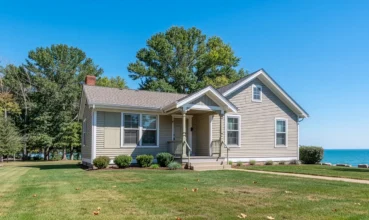
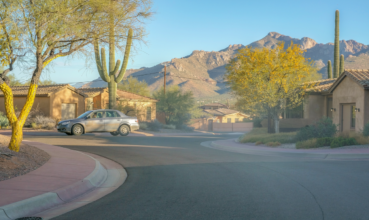
The math is straightforward: a buyer priced out of Orange County can cross into Corona, pick up a single-family home with a yard, and accept a commute in exchange for ownership. That trade has been available for years, but the current market is making it more attractive than usual, not because prices have dropped, but because the pace has slowed enough to let buyers negotiate rather than scramble.
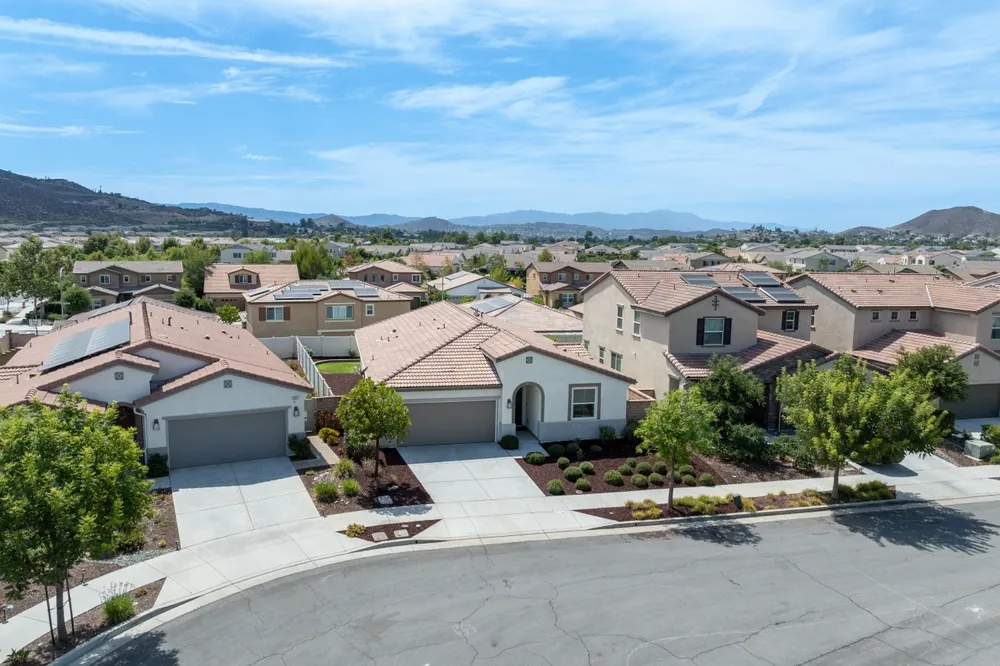
Corona’s median home price sits at roughly $747,500, according to Shelly Larez, a real estate associate with RE/MAX Partners who has worked the area for 14 years. That figure buys considerably more space than neighboring Orange County, where condos alone can carry property tax rates approaching 2%. At the entry level, condos in Corona start in the $500,000 range, while buyers willing to push further into Riverside County can find options around $450,000. At the top end, $1.5 to $2 million delivers upward of 4,000 square feet on a half-acre to a full acre.
A Market That Rewards Patience
Two years ago, the Corona market moved fast enough that buyers had to write offers during showings. That urgency has faded. Larez describes a market where buyers can sleep on decisions, bring family back for second looks, and negotiate on both price and inspection findings.
“It’s not that trigger reaction that you have to put in the offer the minute you’re walking through the house,” she says. “You can take your time and see if this is a good fit for you.”
Homes priced aggressively still move. Those that aren’t sit for roughly 60 days. Some sellers, particularly retirees who own their properties outright and are relocating out of state, are comfortable with that timeline and list at higher prices, willing to wait for the right offer rather than discount immediately.
For buyers, this slower pace translates directly into leverage. Larez says buyers now feel they have negotiation power for the first time in a long time, a shift that allows for more deliberate decision-making rather than reactive offers driven by fear of losing out.
The Buyer Profile
The typical Corona buyer falls into one of two categories, according to Larez: first-time purchasers looking for a starter condo, or move-up buyers who sold a condo in LA or Orange County and want a house. Both are drawn by the same basic proposition: more space for less money, with reasonable highway access to employment centers in multiple directions.
Corona sits just outside Orange County, with corridor access to LA through Chino Hills, Rancho Cucamonga, and Ontario, and a 45-minute drive to Temecula. Larez describes the city as a connector between San Diego County, Orange County, and LA County. Buyers can work in Orange County and come home to a yard – a lifestyle trade that condos in coastal markets cannot offer at the same price.
Families are often pulled toward specific neighborhoods based on school programs. The Corona-Norco Unified School District offers specialized tracks including engineering programs, 4H, and a dual-immersion language program that starts at a young age. “Parents are actually looking for that,” Larez says. “They’re looking for community.”
Hidden Costs
For buyers entering the market for the first time, the sticker price tells only part of the story. Larez emphasizes that property tax rates vary significantly by property type and age. Newer builds in the area carry rates of 1.75% to 2%, compared to the base 1% rate on older properties, a difference that adds meaningfully to a monthly payment.
She also flags the supplemental tax bill, a charge that arrives separately from the mortgage payment several months after closing and catches many first-time buyers off guard. “I get that phone call four or five months later, and they said, ‘Hey, I just got this bill,'” she says. PMI for buyers putting down less than 20% adds another layer that needs to be factored before committing to a purchase price.
Larez says educating first-time buyers about these recurring costs is essential. A pre-approval letter tells a buyer what they can borrow, but it does not tell them what ownership actually costs month to month once taxes, insurance, and PMI are included.
What Makes Deals Fall Apart
When transactions collapse in this market, Larez points to agent dynamics more often than financing or inspection issues. She describes a pattern where newer agents approach negotiations as zero-sum rather than collaborative, making it harder to find the middle ground that keeps both parties moving forward.
“The other agent is not my enemy or somebody I need to win or beat,” she says. “It’s a situation where we need to work together as a team to make this a win for both the seller and the buyer.”
Larez notes that seasoned agents understand this collaborative approach, but newer agents tend to be more reactionary, focused on winning for their client without considering what the other side needs to keep the deal alive. For buyers and sellers, the practical consequence is that the agent on the other side of the transaction can determine whether a workable deal reaches closing or falls apart over a solvable disagreement.
ADUs and Tax Portability
Two policy-driven trends are shaping decisions in the area. Riverside County now permits accessory dwelling units on residential properties that meet certain requirements, and Larez reports growing interest from homeowners adding rental units to their own lots.
The second is property tax base portability, a proposition allowing older homeowners who’ve held property for decades to transfer their lower tax rate to a new home. For someone sitting on a 1% rate in a large family home and considering downsizing to one of Corona’s 55-and-older communities, the ability to avoid resetting to a 1.75% or 2% rate removes a significant financial barrier to moving. “I think that is a great advantage for somebody who’s been in their home 40, 50 years and they’re downsizing,” Larez says.
Together, these two policies address opposite ends of the ownership lifecycle. ADUs give current homeowners a way to generate rental income without selling; tax portability gives long-term owners a financial reason to sell and downsize. Both have the potential to increase available inventory in a market where many homeowners have stayed put because the alternatives were too expensive.
About the Expert: Shelly Larez is a real estate associate with RE/MAX Partners, with 14 years of experience serving the Corona and Riverside County market in Southern California.
This article is based on information provided by the expert source cited above. It is intended for general informational purposes only and does not constitute legal, financial, or real estate advice. Readers should conduct their own research and consult qualified professionals before making any real estate or financial decisions.