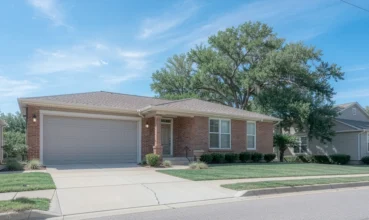
Nationally, housing inventory is rising, and leverage is shifting toward buyers. Chicago is not following that pattern. Inventory remains tight, particularly in single-family homes, and the structural reason is straightforward, according to Zohaib Khurshid, a listing agent with RE/MAX Premier: homeowners locked into mortgage rates of two or three percent have little financial incentive to sell. That dynamic is compressing supply in ways that affect different segments, condos versus single-family, premium suburbs versus outer-ring communities, in distinctly different ways.
“A lot of people are trapped into these two or three percent interest rates that they just don’t want to give up,” Zohaib says. He argues that unlocking supply will require some form of program or incentive that lets those homeowners move without forfeiting the rate advantage they currently hold.
Affordability Relative to Peer Cities Is Still Pulling Buyers In
One of the less obvious forces sustaining demand in Chicago is its pricing relative to other large American cities. With average home prices still in the $400,000 to $450,000 range, according to Zohaib, Chicago offers what he describes as “one of the best city lives” at a cost well below New York or Los Angeles. A substantial job market gives buyers the income to transact, which keeps the city attracting a broad mix of purchasers.
That buyer pool breaks down into a few distinct groups: families moving for school districts, older homeowners looking to downsize and cash out accumulated equity, and millennials entering the market as they start families or settle into careers. First-time buyers represent roughly 20 to 30 percent of transactions in Zohaib’s estimation, with the larger share of activity coming from existing homeowners repositioning, upsizing, downsizing, or relocating within the metro.
The Single-Family and Condo Markets Are Diverging
The inventory picture is not uniform across property types. Single-family homes in desirable school districts remain scarce, and well-priced, move-in-ready listings in those areas routinely draw multiple offers. Condos, by contrast, are seeing supply build. Zohaib attributes the divergence partly to financing: insurance costs and special assessments have made condo lending more stringent, discouraging some buyers and prompting current owners to list. “Lenders are becoming a little bit tighter when it comes to offering financing on those condos,” he says.
That gap in market conditions is also showing up in seller concessions. In the single-family segment, sellers in high-demand suburbs like Park Ridge or Hinsdale who have multiple offers have little reason to negotiate. In the condo market, and for single-family listings that are overpriced or lack updates, Zohaib says sellers have become more open to concessions over the past month or two.
School Districts Are the Primary Sorting Mechanism
Across the Chicago suburbs, the neighborhoods generating the most consistent buyer interest share one feature above all others: strong school districts. Hinsdale, Oak Brook, Naperville, and Park Ridge appear repeatedly as the areas where inventory moves fastest. “Parents don’t play about their kids,” Zohaib says. “Their kids are probably going to be their best investment.”
For buyers priced out of those premium suburbs, Zohaib points to Schaumburg and Bartlett as areas that still offer a reasonable balance of affordability, school quality, and commute distance. “You get more bang for your buck, and you’re not too far out from the city,” he says, a practical consideration for households where at least one member commutes downtown.
Overpricing Remains the Biggest Seller Mistake
Despite the tight inventory, not every listing succeeds. Zohaib says expired and canceled listings are a regular occurrence, driven largely by sellers anchored to 2021 price expectations. “We’re no longer in that market where we have two or three percent interest rates, where you put a home on the market and within a couple of days you have multiple offers,” he says. Buyers today are more disciplined about what they will pay, even in competitive conditions. Well-priced homes in strong locations still draw multiple offers, but overpriced listings sit, regardless of how tight the broader market is.
The properties that do sell quickly share a consistent profile: recently renovated, move-in ready, competitively priced, and located near good schools and public transit. When deals fall apart, the causes Zohaib sees most often are financing problems, unexpectedly high property taxes or HOA fees, and inspection disputes where neither party will compromise.
Investors Are Targeting Fix-and-Flips
The same inventory shortage creating frustration for buyers is also creating opportunity for investors. Zohaib says the most common investor strategy he sees in the Chicago market right now is the fix-and-flip: purchasing older homes at a discount, often from elderly owners downsizing or moving to assisted living, renovating them fully, and reselling into a market where updated, move-in-ready inventory is scarce. The lack of competing supply means a well-executed renovation in a desirable area can command strong offers.
Multiple-offer situations have pushed some buyers to look for properties before they hit the open market. Zohaib says he regularly hears from buyers seeking off-market deals as a way to avoid bidding wars. The logic is straightforward: fewer competing offers means a better chance of securing a home at a manageable price. From the seller’s perspective, however, the incentive to go off-market is limited – most sellers want maximum exposure to get the highest price.
Seasonal Dynamics
Looking ahead to the fall and winter months, Zohaib expects the usual seasonal pullback in seller activity, but sees a potential opening for persistent buyers. As some sellers pull listings and buyer competition thins, those who have been consistently outbid may find less resistance. “Most people just don’t want to move during winter,” Zohaib says. For buyers who have lost out repeatedly in multiple-offer situations, the seasonal slowdown may offer their best chance to secure a home without the same level of competition that defines the spring and summer months.
About the Expert: Zohaib Khurshid is a listing agent with RE/MAX Premier in Chicago, Illinois.
This article is based on information provided by the expert source cited above. It is intended for general informational purposes only and does not constitute legal, financial, or real estate advice. Readers should conduct their own research and consult qualified professionals before making any real estate or financial decisions.