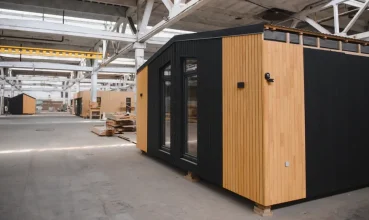
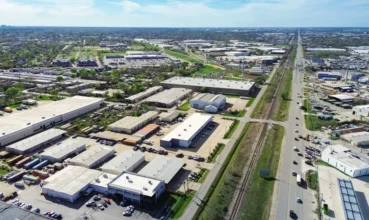
As Chicago considers expanding its Accessory Dwelling Unit (ADU) program citywide, the question remains: can this housing strategy make a meaningful impact in one of America’s densest urban environments? While cities like Los Angeles have embraced ADUs aggressively, permitting over 7,000 in 2022 alone, Chicago’s more cautious pilot program has yielded just 109 approvals during a comparable period.
“If you’re looking at ADUs to solve the housing crisis, you’re going to be disappointed. But if you’re looking at it as a way to add more supply in a relatively low-cost way, compared to building a whole new building, then ADUs can accomplish that,” explains Geoff Smith, Executive Director of the Institute for Housing Studies at DePaul University.
Chicago’s Unique Urban Challenges
This stark disparity stems from fundamental differences in urban form. “The built environment in Chicago is different than places like San Diego where you have more opportunities for coach houses,” Smith notes. Chicago’s housing stock, characterized by older multi-unit buildings on smaller lots, creates distinct retrofitting challenges that cities dominated by single-family homes don’t face.
These physical constraints are compounded by financial barriers. “The challenge in Chicago is just that it’s not cheap to do,” Smith emphasizes. “Any ADU development, especially when you’re trying to retrofit older buildings and meet building codes, they have been relaxed somewhat, but it’s still not cheap.”
Current estimates place ADU construction costs in Chicago at approximately $150,000, a substantial investment for most homeowners. High permit fees ($1,575-$2,075) and lengthy approval processes (averaging 121.6 days) further discourage adoption.
Beyond Zoning: The Parking Requirement Barrier
While zoning modifications have been central to Chicago’s ADU pilot, Smith highlights an often-overlooked regulatory hurdle: “One way that some people don’t really think about is parking requirements. When you build a new building, in many cases, there’s a one-to-one match, or required number of parking units.”
This observation aligns with Chicago’s “Cut the Tape” initiative, which proposes eliminating parking requirements for ADUs, a change that could significantly reduce development costs, particularly in transit-rich neighborhoods where car ownership is less essential.
“If you reduce parking requirements in certain locations, you may allow for more development because the cost makes housing development more affordable, or you can apply those savings to reduce the cost of the development and make the units more affordable,” Smith explains.
A Tool in the Affordability Toolbox
Despite these challenges, political momentum for ADU expansion is building. Alderman Bennett Lawson has proposed an ordinance to remove pilot area limitations, potentially opening ADU development to all Chicago neighborhoods and legalizing previously unauthorized units.
Smith cautions against viewing ADUs as a comprehensive solution to Chicago’s housing challenges: “You’re creating new housing, but the number might look small compared to the priority of the need.”
Instead, he advocates for understanding ADUs as one component of a broader strategy: “It can, over time, make a small dent in these issues, but it’s one of those strategies that you pair with community land trusts and other tools.”
Measuring Success Beyond Numbers
As Chicago contemplates citywide expansion, defining success metrics becomes increasingly important. While the raw number of units created matters, equally significant is who benefits from these new housing opportunities, both property owners generating additional income and renters gaining access to housing in otherwise unaffordable neighborhoods.
The city’s ability to develop financial support mechanisms for lower-income homeowners will largely determine whether ADUs become a tool for broad-based community wealth building or primarily benefit those with existing capital access.
Chicago’s ADU program represents an important step toward creating housing within the existing urban fabric, working with the city’s distinctive built environment rather than against it. While ADUs won’t solve Chicago’s housing affordability crisis alone, they offer an incremental approach that, combined with other strategies, can contribute to a more diverse and accessible housing ecosystem.
This article was sourced from a live expert interview.
Every month we conduct hundreds of interviews with active market practitioners - thousands to date.
Every time a home goes on the market in the United States, the listing data – price, photos, square footage, descriptions – enters a multiple listing service. From there, that data gets copied. According to Tim Dain, President & CEO of NorthstarMLS, the regional MLS serving Minnesota, some MLS databases get replicated hundreds or even ...
The skilled-trade shortage in U.S. construction has persisted for years, but the industry’s response is taking a specific new form: developers are moving production into factories, and those factories are increasingly being built on American soil. For buyers in markets where labor constraints have slowed new housing and driven up prices, domestic factory production could ...
The company has already published over 5,000 articles in collaboration with over 1,800 market experts across all 50 states, powered by a tech-forward approach to research and reporting. MIAMI, FL – July 28, 2026: KeyCrew Media, the expert-sourced real estate news network, today unveiled KeyCrew Local, a network of local real estate news sites and ...
A 57-year publishing legacy joins forces with a modern editorial studio to deepen coverage and reach a new generation. SANTA FE, N.M. – July 23, 2026: Leading Estates of the World, the original luxury estates and lifestyle publication, today announced a partnership with KeyCrew Media to strengthen and elevate its coverage of the world’s finest ...
If you have ever watched an empty lot sit untouched for months, permit sign flapping in the wind, no workers in sight, and wondered what is taking so long, the answer may have less to do with lumber prices or labor shortages than you think. A growing number of development professionals argue that a quieter ...
Interest rates get most of the blame when commercial real estate deals stall. But in Houston’s industrial market in 2026, a different problem is collapsing deals that survive months of due diligence: federal policy that changes direction without warning. According to Shahin Naghavi, Managing Partner and Principal Broker at Riverside Equity Group, a boutique firm ...