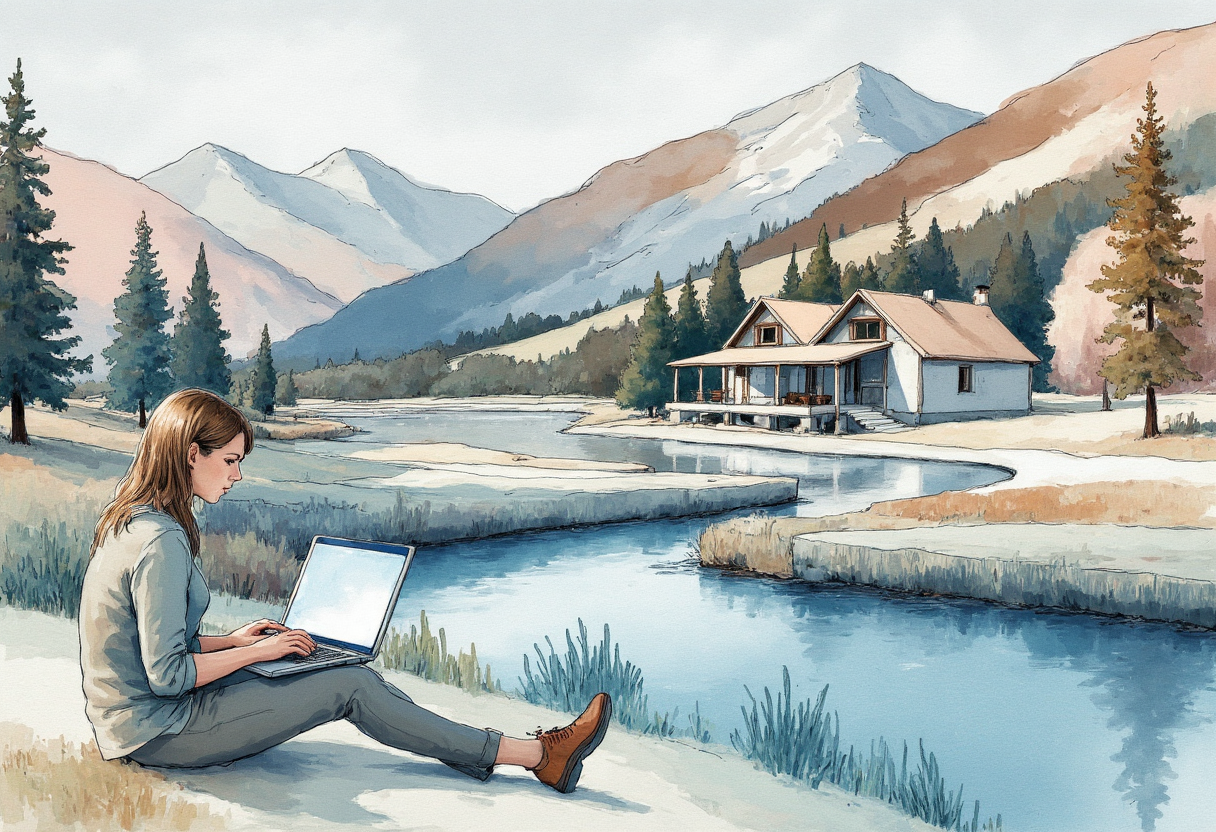
Remote workers are fundamentally transforming Montana’s rural real estate landscape, with properties offering substantial acreage and outdoor amenities seeing unprecedented demand, according to Hannah Bruha, broker at Clearwater Montana Properties.
The Rural Premium
“Most of them are from busier areas, wanting to just escape and be out in nature and kind of experience what Montana has to offer,” says Bruha, who specializes in southwest Montana properties. The appeal extends beyond just scenery, Bruha notes that buyers can find “a decent home on 20 acres for under a million,” with amenities like “a creek running right through your backyard” and forest service land across the road for hunting and fishing.
This value proposition is particularly attractive to buyers fleeing higher-priced markets like Missoula and Bozeman, Bruha observes. The combination of relative affordability and natural amenities is creating a distinct migration pattern that differs from traditional real estate moves.
The Technology-Enabled Shift
According to Bruha, the remote work revolution is the key enabler of this transformation. “We found that a lot of our buyers work remote,” she says, noting that local employment opportunities in smaller towns like Anaconda (population 9,000) are limited primarily to the hospital, mining operations, and power companies.
This demographic shift represents a significant change for rural Montana communities. Rather than being constrained by local employment options, buyers are now choosing locations based on lifestyle preferences and natural amenities, Bruha explains.
Market Response and Community Impact
The influx of remote workers is already reshaping local communities. “Anaconda area has grown a ton. We have a lot of new businesses coming in, and it’s just thriving. We have a newer hospital,” Bruha says, describing the economic ripple effects of this migration.
However, the transformation hasn’t been without challenges. Bruha notes that returning locals are often shocked by the price appreciation: “They’ve been gone for 20-30 years, and they can’t believe how expensive it is there now.”
Looking Forward
While the current market shows signs of moderation, “We have quite a bit of inventory right now. Our listings are sitting a little bit longer than we’re used to,” Bruha says, the fundamental appeal of rural Montana to remote workers appears sustainable.
The combination of technology enabling remote work, relative value compared to major markets, and the enduring appeal of Montana’s natural amenities suggests this transformation of rural real estate markets may be more than just a temporary trend, according to Bruha.