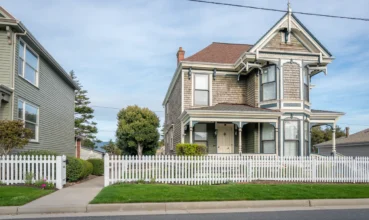
While much of the country’s housing market has cooled – with sellers accepting below-ask offers and inventory slowly building – Central New Jersey remains intensely competitive. Coastal desirability, steady migration from New York City, and persistent supply constraints have kept the region’s post-pandemic dynamics largely intact, even as national conditions soften.
Caroline Masse (Garguilo), founder of CG Realty Group at Keller Williams, has spent two decades working the Monmouth, Ocean, and Mercer County markets. Her team’s recent experience captures current conditions: a Bricktown listing attracted 15 offers and sold for $100,000 above asking price. That outcome, she notes, was not unusual.
An estimated 70% of New Jersey is still experiencing low inventory and strong buyer demand, according to Masse. “There is no shortage of sellers receiving multiple offers,” she says.
Geography Drives Demand
Part of what makes Central New Jersey resilient is its geographic position. The region sits within roughly an hour of New York City, Philadelphia, and Atlantic City, while offering both coastal access and rural pockets. That combination continues to draw buyers who might otherwise stay in higher-cost urban centers.
The influx of New York City residents has been a consistent driver of demand, and Masse sees no sign of that slowing. Dissatisfaction with city governance in New York could push more residents across the state line in the coming months. Meanwhile, the wave of New Jersey residents who relocated to Florida during the pandemic appears to be tapering off.
Within the region, each county serves a distinct buyer profile. Monmouth County draws those prioritizing school districts and proximity to the shore, while Ocean County offers more space and lower taxes for buyers priced out further north. Mercer County appeals to those working in Philadelphia or seeking a more rural setting.
Buyer Profile Shifts
The first-time buyer segment has aged noticeably. Where first-time purchasers once skewed toward the late twenties, they now tend to be in their late thirties or early forties. Rising taxes, elevated home prices, and interest rates hovering around 7% have pushed the timeline back for many would-be owners.
Still, demand from this group has not disappeared. Buyers are entering the process with more education and, in some cases, more patience. Those willing to follow their agent’s guidance closely tend to fare better. Masse notes that buyers who trust their agent’s suggestions from the start are more likely to land their first offer.
Winning Offer Tactics
In competitive submarkets, price alone rarely wins. Masse’s team uses tactics that go beyond the number on the offer sheet.
Limiting inspection requests has become close to standard practice in hot areas. Buyers agree upfront to waive requests for minor repairs, restricting their asks to structural issues, mold, environmental concerns, and termite damage. Paired with an appraisal gap waiver – where the buyer commits to covering any difference between the offer price and the appraised value – these terms signal seriousness to sellers weighing multiple bids.
Beyond contract terms, small gestures can tip a close decision. Masse describes calling listing agents to ask what matters most to the seller – whether that’s help disposing of furniture or handling the certificate of occupancy on their behalf. These minor concessions reduce friction and differentiate one offer from a dozen others.
Common Deal Breakers
When transactions unravel, the inspection phase is typically where it happens. A current example from Masse’s practice illustrates the issue: a property that presented well above grade was found to have mold throughout the crawl space, further complicated by asbestos siding, which would require the structure to be lifted before remediation could begin. The seller appeared unaware of the extent of the problem.
Appraisal gaps, by contrast, have not been a significant source of deal failures. Strong demand and limited supply have kept values elevated, so low appraisals remain relatively rare.
Hottest Local Markets
Even experienced agents are occasionally caught off guard by how competitive certain submarkets have become. Masse recently submitted an offer on behalf of buyers in Red Bank – a well-established, high-demand town – at just under $1 million on an $850,000 listing. The offer used every available competitive tactic. It did not crack the top ten. The property ultimately sold for close to $1.2 million, drawing 33 offers.
The arrival of Netflix’s operations in the Red Bank area is one factor cited for the surge in interest – a reminder that corporate relocations can reshape local pricing in ways that are difficult to anticipate.
Days on market in the most desirable communities remain short and largely unchanged from a year ago. In slightly less competitive areas, that figure has edged up from roughly 14 days to between 21 and 30, though Masse describes even that shift as uncommon.
New Construction Challenges
New construction has provided some relief to the inventory shortage, and Masse’s team has worked with a meaningful number of new-build buyers. However, pricing in that segment has risen sharply, and some projects are sitting on the market longer than expected as buyers push back on asking prices they view as disconnected from value.
Today’s buyers have access to extensive pricing data through tools like Zillow, online research, and AI platforms. That access has made them more skeptical of inflated new-construction pricing. “They’re seeing that new construction prices have just gotten out of control in some areas,” Masse says. Builders who have been aggressive on pricing may face growing resistance as buyers become more selective.
Investment Outlook
For investors considering Central New Jersey, the picture is more measured. Rising home values have compressed returns, and finding a property where rental income meaningfully covers carrying costs is genuinely difficult. “It is really hard to find a home right now that you’re going to buy, put a renter in it, and make money,” Masse says.
Her advice to investors is to focus on towns where days on market exceed 30 days, where seller motivation may create room to negotiate, and where off-market relationships can provide access before a listing goes live. Once a property hits the MLS in a competitive area, the economics rarely work out for investors.
Masse practices what she advises. She purchases an investment property annually, deliberately choosing her own backyard where she knows the market well. Her expectation going in is modest – covering the mortgage with a small margin – rather than significant cash flow.
Looking Ahead
Central New Jersey’s market appears likely to remain firm through the near term. Ongoing geopolitical uncertainty, continued urban-to-suburban migration from New York, and the region’s structural supply constraints all point in the same direction. Buyers who hesitated to wait for rates to return to pandemic-era lows are gradually accepting the current environment – helped in part by the perspective of parents who bought homes at 11% and 15% interest rates.
“I don’t think New Jersey is going to change anytime soon,” Masse says.
For buyers and sellers navigating this environment, the consistent thread is straightforward: agents and clients who rely on data, move decisively, and resist the pull of emotion tend to come out ahead. The market rewards preparation and penalizes hesitation – a dynamic that, for now, shows no sign of letting up.
About the Expert: Caroline Masse (Garguilo) is the founder of CG Realty Group at Keller Williams, with two decades of experience working in the Monmouth, Ocean, and Mercer County markets in Central New Jersey.
This article is based on information provided by the expert source cited above. It is intended for general informational purposes only and does not constitute legal, financial, or real estate advice. Readers should conduct their own research and consult qualified professionals before making any real estate or financial decisions.