A Brooklyn resident spending an hour on the subway to reach midtown Manhattan could swap that commute for a Metro-North train ride of comparable length, and arrive home to a four-bedroom house with a yard instead of a one-bedroom co-op, according to Thomas Klug, Broker & Owner of Hudson Valley Premier Properties Realty, who has watched this migration pattern play out over 26 years in Dutchess County.
The price difference makes the decision straightforward for many buyers. A one-bedroom co-op in Brooklyn can cost roughly a million dollars. A house in a town like Beacon, in Dutchess County, sells for around $500,000. Klug says city transplants can “buy a house, have a car, have a yard for the same commute.” The travel time stays comparable; it is just a train seat instead of a subway seat.
The Commute Comparison Driving the Move
The calculation works because the Hudson Valley sits within commuting distance of Manhattan. Klug’s market is roughly halfway between New York City and Albany, and Metro-North connects several Dutchess County towns directly to Grand Central. For buyers already spending sixty to ninety minutes underground each morning, the switch requires no additional time, only a different mode of transport.
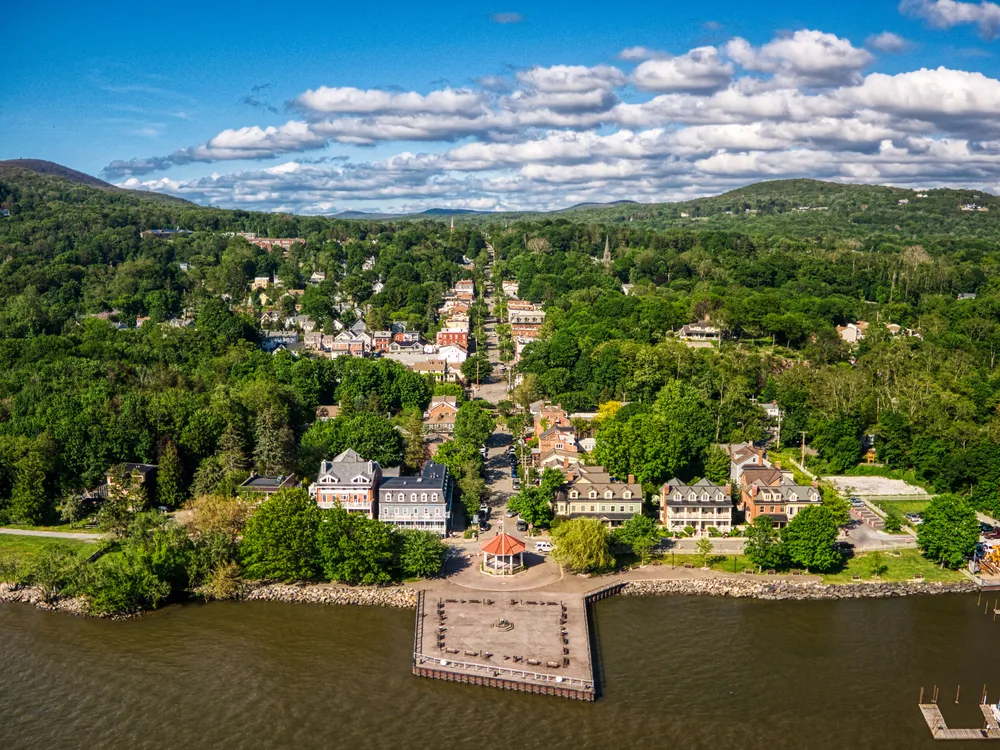
Beacon has become the most visible destination. Klug notes that locals now call it “Beakland” because of the volume of Brooklyn transplants. The town’s main street, which Klug says was dangerous after dark when he was growing up, is now lined with boutiques, breweries, and restaurants. Two-bedroom condos in Beacon can sell for close to a million dollars, a price that would have been unthinkable 25 years ago, when properties there were difficult to sell at any price.
The pattern is not new. Klug traces it back to the aftermath of September 11, when city residents first began leaving in significant numbers. COVID accelerated it further. But unlike the pandemic-era frenzy, when buyers purchased sight unseen and homes routinely sold above asking, the market has normalized. Klug says a home listed at $500,000 two years ago might have sold for $525,000 with no concessions. Today, that same home is more likely to sell for $485,000, and sellers may need to offer concessions.
What the Price Gap Does Not Cover
The migration comes with costs that the per-square-foot comparison obscures. The Hudson Valley is not a subway market. Nearly every errand requires a car, adding insurance, fuel, and maintenance expenses that a Brooklyn renter never carried.
The commute is only truly comparable if a buyer’s office sits near a Metro-North terminal in Manhattan. Remote and hybrid workers have the clearest advantage, and Klug acknowledges that the pandemic-era wave was driven heavily by people who no longer needed to commute daily.
The social infrastructure is also different. Klug describes an area rich in outdoor recreation, rail trails, waterfalls reachable in 30 minutes, roughly 40 miles of continuous bike trails, and cultural draws like the Culinary Institute of America and the Walkway over the Hudson, which attracts close to a million visitors a year. But buyers expecting urban density in a semi-rural setting sometimes find the adjustment harder than expected.
Who is Actually Buying
The buyers making this move successfully share a profile: they are finished with apartment living, they want space, and they have accepted car ownership as part of the deal. Klug describes one current client moving from a small city apartment to a four-bedroom colonial on an acre. “The first thing they say is I want land,” he says.
The age range has shifted upward. Klug says first-time buyers are increasingly priced out. Entry-level homes that sold for $200,000 a decade ago now cost around $400,000. The active buyers tend to be in their mid-thirties to sixties, people with enough equity or income to absorb current prices and interest rates.
A growing share of transactions involves estate sales. Klug says homeowners who locked in mortgages at 2% or 3% five or six years ago are not selling to move laterally within the market. The cost of financing a new home at today’s rates, even a modestly more expensive one, can double their monthly payment. As a result, much of the available inventory comes from families selling after a death or a move to assisted living, not from owners trading up.
Where the Opportunity Sits
For investors, Klug points to rental properties and multi-family homes as the strongest current opportunity. He describes one investor group that owns 137 properties in Poughkeepsie, ranging from two-family houses to former department stores slated for conversion into boutique hotels and restaurants. Commercial real estate remains a tougher market, he says.
For Brooklyn buyers weighing the move, the key variable is how wide the gap remains between city co-op prices and Hudson Valley house prices, and whether their specific commute stays comparable after the switch. Beacon’s own appreciation has narrowed that gap considerably. Buyers willing to look at towns slightly further from train stations may find deeper value, though the commute math becomes less favorable.
About the Expert: Thomas Klug is Broker and Owner of Hudson Valley Premier Properties Realty, a 15-agent brokerage serving Dutchess County and the surrounding Hudson Valley with 26 years of experience in the market. He also sits on Poughkeepsie’s zoning board.
This article is intended for informational purposes only and does not constitute legal, financial, or investment advice. The views and opinions expressed herein reflect those of the individuals quoted and do not represent an endorsement of any company, product, or service mentioned. Readers should conduct their own due diligence and consult qualified professionals before making any investment decisions.