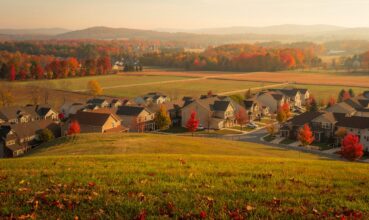
Big Bear, California, has become a bellwether for changes rippling through mountain resort real estate. With over 40 years in the business, Mark Dolan, Broker/Office Manager at RE/MAX Big Bear, has seen the community move from a classic second-home destination to a more complex, year-round market. The trends in Big Bear reflect broader changes in how Americans approach homeownership, work, and lifestyle — particularly in scenic, recreational areas.
From Weekend Getaways to Full-Time Residences
For decades, Big Bear’s housing market was dominated by second homes. Just two hours from Los Angeles and three from San Diego or Las Vegas, it drew buyers seeking a weekend escape. Dolan describes the old dynamic as “the 80-20 rule”: 80% of homes were owned by part-time residents, while just 20% were owned by locals.
That balance began to shift in 2020, as the COVID-19 pandemic made remote work widespread. Dolan notes that more buyers are now moving to Big Bear full-time, a trend that has only accelerated. The shift is driven by people seeking a slower pace and access to outdoor activities in all seasons, now that they can work from anywhere.
The rise of telecommuting has fundamentally changed who can live in mountain communities. Buyers who once needed to stay close to city offices are now prioritizing quality of life over proximity to urban job centers. This has opened Big Bear to professionals and families who want “less hustle and bustle” and year-round recreation.
Market Stability
Big Bear’s market is shaped by its status as a discretionary, largely second-home community. This creates a distinct pattern during economic swings. Because owners are often affluent and do not rely on their Big Bear home as a primary residence, they are less likely to sell in a downturn. If prices fall, many simply keep their property off the market.
This resistance to forced selling has helped Big Bear avoid the sharp corrections seen in some primary home markets. While property values have dropped about 10–15% from their pandemic-era peaks, the decline has been moderate. In 2025, sales volume dipped just 3.8% to 753 transactions, and the average sales price stayed essentially flat at $598,000.
Inventory Shortages
Like much of the country, Big Bear is grappling with a shortage of homes for sale. When Dolan started in 1985, there were about 2,500 properties on the market, including 1,500 homes and 1,000 lots. Today, buyers face a much tighter market, with only about 700 homes available.
Despite perceptions that “everything’s for sale” in Big Bear, Dolan says the reality is different. The limited inventory has divided the market into two active segments: homes under $250,000 and those over $1 million. The middle tier, between $250,000 and $500,000, has seen fewer sales, even though it accounts for nearly half of total dollar volume.
Insurance Costs
The cost and availability of homeowners’ insurance have become major obstacles in Big Bear and other California mountain towns. Dolan points out that rising insurance premiums are now a bigger hurdle for buyers than interest rates.
Over the last two years, many deals have stalled or fallen through because buyers could not secure affordable coverage. While the Big Bear Lake Fire Authority’s fuel reduction and fire safety efforts have improved local insurance ratings, statewide reforms are still needed to stabilize the market and make coverage more accessible.
Vacation Rental Boom
During the pandemic, Big Bear became a top global destination for short-term rentals, briefly claiming the title of “number one Airbnb destination in the world” in 2020 and 2021, according to Dolan. Investors flocked to the area, expecting strong cash flow from vacation rentals.
That surge has faded. Dolan says most short-term rentals now cover only 50–60% of ownership costs, which is more in line with historical norms. As a result, buyers are less likely to purchase purely for investment and are instead prioritizing personal use, with rental income as a supplement.
Local Expertise Is Essential
Mountain resort markets require specialized knowledge that goes far beyond basic real estate licensing. Dolan stresses that local agents understand critical details — such as how snow loads affect roofs, why south-facing homes perform differently in winter, or what construction styles hold up best in the local climate.
This expertise is increasingly important as transactions have become more complex. Where a sale once required a single-page contract, today’s deals can involve around 60 separate documents, reflecting stricter disclosure rules and consumer protections.
Regulatory requirements and market nuances — such as vacation rental regulations, fire codes, and environmental concerns — mean buyers and sellers need guidance from professionals who know the territory.
High-End Activity
Despite broader economic headwinds, Dolan sees encouraging signs in Big Bear’s high-end segment. Multiple sales above $2 million have already closed in early 2026, a notable uptick for the area. He views this as an important signal: when affluent buyers are willing to commit at the top of the market, it often precedes a rebound in the middle tiers.
Dolan believes that the main barrier to a stronger market is psychological. Many potential buyers and sellers are hesitating due to uncertainty rather than underlying weakness. “The only drag on the market right now is fear,” he says, but the underlying indicators point to stability and gradual improvement.
Equity Remains Central
After four decades in real estate, Dolan has seen technology, market cycles, and consumer preferences change — but the core motivation for buyers and sellers remains the same: equity. He sees his job as helping sellers protect their accumulated equity and guiding buyers to purchase with as much positive equity as possible.
This focus on equity is supported by national data showing that homeowners have net worth 44 times that of renters. Even in a market defined by discretionary purchases, the long-term wealth-building potential of real estate continues to drive decisions.
Looking Ahead
Big Bear’s recent history shows how resort communities are adapting to new demographics, work patterns, and economic realities. As remote work becomes permanent for more Americans, mountain towns that once served mainly as weekend getaways are evolving into viable full-time communities.
For real estate professionals, Dolan’s experience highlights the importance of deep local knowledge and an understanding of what drives discretionary buyers. Navigating insurance challenges, vacation rental rules, and seasonal fluctuations is now essential to serving clients in these specialized markets.
The Big Bear story suggests that other mountain resort areas may follow a similar path. As buyers seek more flexible lifestyles and prioritize quality of life, the line between vacation home and primary residence will blur. Success for both buyers and agents will depend on recognizing the unique challenges and opportunities that come with mountain resort real estate — and on making equity, not just lifestyle, the foundation of every transaction.