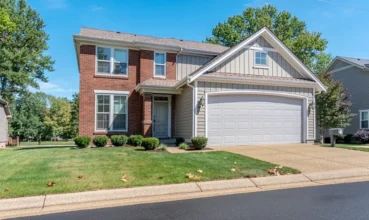
While much of the country is seeing real estate activity cool off, two New Jersey counties are telling a different story. Ocean and Monmouth counties along the Jersey Shore continue to post strong price growth, tight inventory, and sustained buyer demand, trends that stand in sharp contrast to softening markets elsewhere in the nation.
New Jersey led the entire country in home price appreciation last year, averaging 6% growth statewide at a time when the national average sat at just 0.5%. Within the state, the numbers are even more striking at the local level. Monmouth County has risen 13% over the last year and a half, and Ocean County has climbed more than 10% in the last two years, according to Abram Covella, Broker Owner and Team Manager at RE/MAX Revolution. “The growth is still exponentially there and not slowing down,” he says.
A Market With Its Own Momentum
Covella, who has spent 25 years in New Jersey real estate, co-owns RE/MAX Revolution alongside partners Thomas Zdanowicz and Justin Bosak. The brokerage operates three offices across this coastal corridor: Spring Lake in Monmouth County, Brick in northern Ocean County, and Lavallette just blocks from the ocean. Together, they cover the full range of the shore market, from high-end luxury to vacation rentals to primary residences.
The brokerage ranked in the top 500 nationally last year and currently supports around 170 to 180 agents, giving Covella a ground-level view of market dynamics that broader statistics can sometimes obscure.
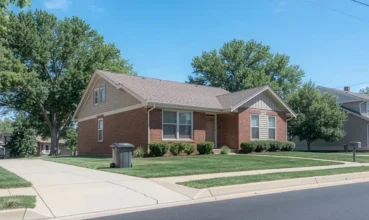
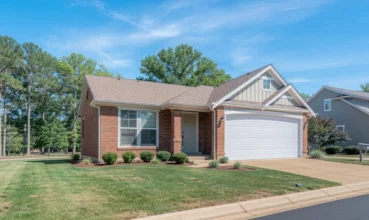
One example: the widely cited average days-on-market figure of around 45 days doesn’t fully capture what’s happening with single-family homes. Single-family ranches and colonials in Brick are selling within a week, Covella says. The average is pulled upward by adult community properties, which take closer to 50 to 60 days to sell, a reflection of a more specific buyer pool rather than broader market weakness.
Luxury and waterfront properties are similarly active. A home in Spring Lake sold for $25 million last year and was under contract in under 30 days.
Who’s Buying and Where They’re Coming From
The buyer profile along the Shore has changed meaningfully in recent years. First-time buyers are getting priced out of many areas as the minimum price point continues to climb. $500,000 to $600,000 range dominates much of the market. Instead, the most active segment consists of relocating buyers from North Jersey and New York City, many of whom are selling high-value properties and arriving with the ability and willingness to meet or exceed asking prices.
At the same time, a portion of existing homeowners are cashing out and leaving the state entirely. Covella estimates that roughly 20 to 25% of his clients who sell are relocating out of New Jersey, with Florida and the Carolinas as the primary destinations. The financial logic is straightforward: sellers can purchase larger homes elsewhere, retain significant equity, and pay far less in taxes.
This outflow, however, is being more than offset by inbound demand from the metro area, keeping the market firmly in the seller’s territory.
Pricing Dynamics
Despite strong conditions, not every transaction closes smoothly. The biggest friction point today is the home inspection process, a reversal from the pandemic era, when buyers routinely waived inspections to compete.
During the height of the market, buyers were willing to skip inspections entirely to secure a property, Covella explains. That’s no longer the case. While the return of inspections is broadly healthy for buyers, it has introduced new points of failure. Deals sometimes unravel over issues that experienced agents on both sides could resolve, but when communication breaks down, or when agents defer entirely to attorneys on inspection items, negotiations stall unnecessarily.
On pricing, the list-price-to-sale-price ratio in Ocean and Monmouth counties still sits just above 102%, reflecting how competitive the market remains. Price reductions do occur, but Covella attributes most of them to sellers who initially list above what the data supports. The pandemic conditioned buyers to treat the list price as a floor rather than a starting point, and some sellers have held onto that expectation even as the market has normalized. “If you list at this higher number, buyers are just going to watch it,” he says. “Once you make the adjustment, suddenly you get the activity, and you get the deal.”
What’s Coming: The Netflix Effect
Perhaps the most significant near-term catalyst for the region is a development that hasn’t yet fully registered in market pricing: the construction of a major Netflix production studio at Fort Monmouth. Phase one is expected to be completed by the end of this year, with the broader project representing one of the largest sound studio complexes in the country. A separate billion-dollar Paramount studio is also underway in northern New Jersey.
Covella has been flagging this to both agents and clients for some time. The studios are expected to bring thousands of jobs to the region and drive a meaningful migration of entertainment industry workers from the West Coast, adding a new and sustained layer of demand to an already supply-constrained market.
“I think over the next five years, you’re going to see New Jersey’s market, specifically Ocean and Monmouth County, outpace any projections,” he says.
A Brokerage Built Around Agent Output
Running a top-500 brokerage in this environment requires more than market timing. RE/MAX Revolution, whose legal entity is Agents First Realty, has built its model around removing operational friction for producers. The brokerage employs 13 staff members, including in-house transaction coordinators, a marketing team, and a dedicated sign and open house setup department. The goal: let agents focus on generating and closing business rather than managing logistics.
The approach stands in contrast to brokerages that carry large numbers of inactive agents. RE/MAX nationally averages 11.7 transactions per agent annually, a figure that reflects a culture oriented toward production. Last year, according to Covella, 70% of agents across the US sold zero homes, making the concentration of active producers within the RE/MAX system a notable differentiator.
For investors and professionals tracking where residential demand is heading, the Jersey Shore corridor offers a case study in what happens when geography, infrastructure investment, and demographic movement align. The fundamentals driving growth here show little sign of reversing, and if the studio projects deliver on their promise, the next phase may be more active still.
About the Expert: Abram Covella is the Broker Owner and Team Manager at RE/MAX Revolution, co-owned with partners Thomas Zdanowicz and Justin Bosak, operating three offices across Monmouth and Ocean counties in New Jersey. He has 25 years of experience in New Jersey real estate, and the brokerage supports approximately 170 to 180 agents across locations in Spring Lake, Brick, and Lavallette.
This article is based on information provided by the expert source cited above. It is intended for general informational purposes only and does not constitute legal, financial, or real estate advice. Readers should conduct their own research and consult qualified professionals before making any real estate or financial decisions.