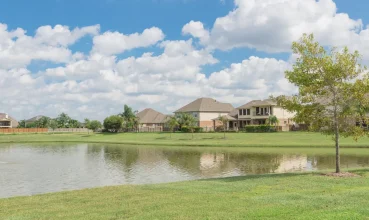
Some sellers in one of the most aggressively developed corridors in Dallas-Fort Worth (DFW) cannot move without absorbing significant losses. According to one North Texas agent, this is a consequence of growth that outpaced demand.
Collin County was among the most sought-after destinations in North Texas during the pandemic-era housing surge, with new subdivisions expanding rapidly into communities like Anna, Van Alstyne, Celina, and Ponder. But Matthew Brown, Team Lead of The Dynamic Group at Coldwell Banker Apex, says the pace of that development has created a supply-demand imbalance that is now trapping some homeowners in place.
“Collin County is probably the one area that’s been affected the most, and it is just due to the absolute explosion of growth that they saw in 2021 and 2022,” Brown says.
Growth Becomes a Liability
The problem Brown describes is not a crash. It is a normalization that feels like one to buyers who purchased at peak prices. Brown says the broader DFW market appreciated 26.8 percent in a single year during the boom. The correction back to a normal appreciation trajectory has left recent buyers with far less equity than they expected.
For sellers in Collin County who need to move, whether because of job changes or other life circumstances, the math has become unworkable. Transaction costs, combined with flat or modest appreciation since their purchase, mean that selling now would require bringing money to the table.
“They’re completely upside down on their house financially,” Brown says. “They’re gonna have to stay in the house for three to four to five years just to kind of break even.”
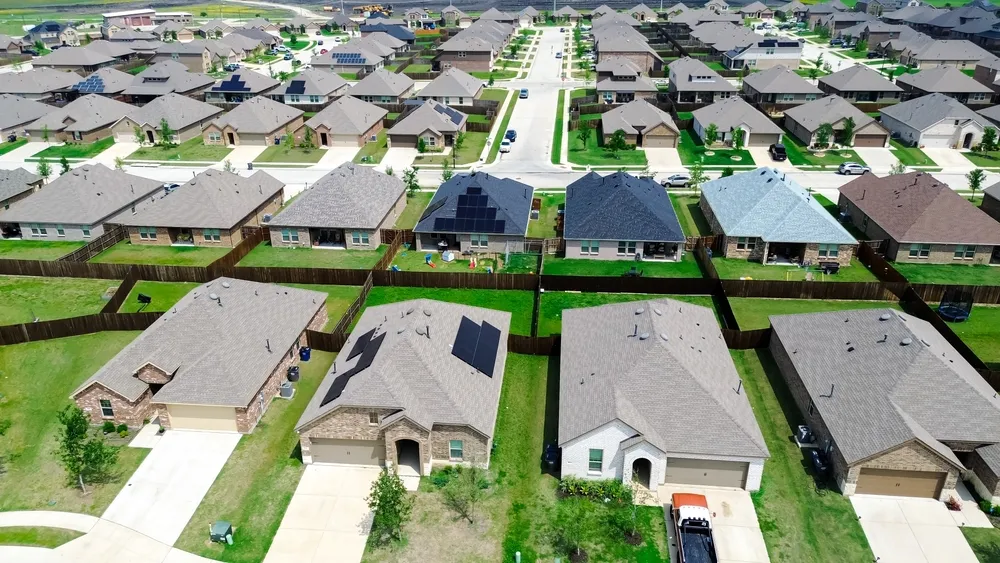
Sellers who cannot afford to sell are not listing their homes. This distorts inventory figures and makes it harder to read the true health of the submarket. At the same time, new construction continues to add supply, further widening the gap between available homes and the buyers actually relocating to the area.
Supply Outpaces Demand
Brown’s concern about Collin County centers on a straightforward supply-demand argument. The region attracted enormous development investment based on projections of continued population inflow. That inflow is still occurring, but Brown says the pace of building has exceeded actual demand. The result is an inventory overhang that suppresses prices and extends days on market.
“If they continue to outpace the growth that we have coming in, there’s not enough demand for the supply,” Brown says. “And when that happens, just simple schematics, something’s got to go down.”
The communities Brown references, Anna, Van Alstyne, Celina, and Ponder, were marketed as destinations for buyers seeking land and space at a relative discount to more established North Texas suburbs. The appeal was genuine, and demand was real. But developers moved into these areas quickly, and combined with the broader market slowdown, some of those communities now have more homes than the current buyer pool can absorb at the prices sellers need.
Cautionary Signal for DFW
Brown’s read on Collin County carries implications for how investors and buyers should evaluate the broader North Texas market. Submarkets with the heaviest new construction exposure are behaving differently from more supply-constrained areas.
“It’s not down. It just went back to expectations,” Brown says. He points to the same imbalance driving the slowdown elsewhere in the region: when new construction continues to outpace incoming demand, prices in the affected submarkets will keep adjusting.
The pattern raises a question for other fast-growing North Texas suburbs on a similar trajectory. Areas that saw comparable waves of development during the pandemic-era boom may be approaching the same correction, even if they haven’t reached it yet.
Brown says the sellers most exposed are in communities where builders kept adding inventory well after the initial wave of buyer demand had already been absorbed. For those markets, the reset Collin County is experiencing now may still be ahead.
For buyers considering Collin County, the current environment requires careful attention to long-term appreciation assumptions. This is especially true in communities where new development is still ongoing and supply has not yet been absorbed.
About the Expert: Matthew Brown is Team Lead at The Dynamic Group with Coldwell Banker Apex, covering North Texas counties including Collin County and the northern Dallas-Fort Worth suburbs.
This article is intended for informational purposes only and does not constitute legal, financial, or investment advice. The views and opinions expressed herein reflect those of the individuals quoted and do not represent an endorsement of any company, product, or service mentioned. Readers should conduct their own due diligence and consult qualified professionals before making any investment decisions.