Eighteen months after the January 2025 fires destroyed roughly two-thirds of Altadena, California, the community’s recovery is moving faster than many expected on permits, yet slower than residents desperately need on the ground. The numbers from the LA County Recovers dashboard tell a story of steady progress. For those living it, the picture is considerably more complicated.
Of the 6,746 buildings destroyed, more than 3,300 permit applications have been submitted, with approximately 2,600 already issued. Over 1,500 structures are currently under construction, and 62 have received certificates of occupancy. By comparison, Pacific Palisades, which lost a significant number of structures in the same fire, has completed just one or two rebuilds. That gap, according to Nic Arnzen, Chair of the Altadena Town Council, reflects how the two communities are governed rather than any measure of relative suffering.
“I would not at all compare our trauma,” Arnzen says. “That would be your biggest mistake after a disaster.”
Navigating Recovery
Altadena’s governance structure shapes every aspect of its recovery. As an unincorporated community of roughly 40,000 residents within Los Angeles County, it has no mayor, no city council, and no municipal departments. Governance runs through the county, with LA County Supervisor Katherine Barger representing a constituency of more than two million people, with Altadena as the largest unincorporated portion.
That structure has both complicated and aided the recovery. The community depends entirely on county infrastructure, county permitting, and county political will. Arnzen compares it to renting instead of owning. On the positive side, Barger, in her final term, has made Altadena’s rebuild a stated priority. “She’s determined to make sure that this is her legacy,” Arnzen says.
The town council itself operates as a liaison body, formally tasked with channeling community concerns to county officials. In practice, the fires expanded that role significantly, pushing Arnzen and his colleagues into direct engagement with state legislators, federal representatives, and advocacy efforts that would not typically fall within a town council’s mandate.
Realities Behind the Numbers
The 122-day average permit processing time sounds slow, but Arnzen points out that only about 30 to 32 of those days are actually spent in county hands. The remaining 90 or so days reflect time on the applicant’s side, gathering documentation, securing financing, and working through design approvals.
Many homeowners rushed to file applications early, driven by anxiety about processing timelines, only to find the system moving faster than anticipated. Permits arrived in three to five months rather than the seven to nine months residents feared. But many of those permit holders are now waiting on money rather than approvals.
Southern California Edison has established a compensation fund that Arnzen describes as “pretty robust,” with an estimated $60 to $100 million already distributed, an implicit acknowledgment of the utility’s role in starting the fire. For many residents, that fund represents a trade-off between immediate relief and a potentially larger legal settlement down the road. “What a privilege for us that we can sit and wait,” Arnzen says of his own family’s decision to hold off. “Other people have to get some compensation right away.”
Insurance Failures
On insurance, Arnzen’s assessment is blunt. In informal conversations with groups of neighbors, he estimates that roughly nine out of ten are experiencing significant claim difficulties. The problems range from bureaucratic exhaustion tactics to the deeply personal burden of itemizing everything lost.
Residents who fled their homes within hours are being asked to sit down months or years later and catalog every possession, room by room, assigning monetary value to items that also carry irreplaceable personal meaning. The emotional cost of that process, Arnzen argues, is rarely factored into discussions about insurance recovery timelines. Many are still in temporary housing, managing ongoing financial stress while producing detailed inventories under deadline pressure.
A Deepening Crisis
Despite the permit numbers, Arnzen describes the current moment as the most difficult since the fires themselves. “The past three months I’ve seen more desperation than I have in the entire year and a half,” he says. Insurance coverage for temporary housing is running out, with policies typically covering 18 months of rental assistance. For those who cannot yet afford to rebuild and cannot find affordable rentals in a tight regional market, options are narrowing quickly.
“I see people walking in this space every day, more desperate for two things in particular: housing and essentials,” Arnzen says. “I need laundry detergent, I need dish soap, I need paper towels.”
The community is also contending with health consequences that will extend well beyond the immediate disaster period. Arnzen and his husband are launching a cancer surveillance program expected to run for five to ten years. He notes that stress-related illness, pulmonary disease, and mental health crises have already contributed to more than 100 deaths attributable to the fire beyond the 19 who died directly.
Developer Pressure
Perhaps the most consequential real estate dynamic now unfolding in Altadena involves state legislation that predates the fires but is being applied in ways its authors likely never intended.
SB 9, passed to address California’s housing shortage, allows lot splits and the construction of multiple units on single-family parcels. With more than 600 parcels currently available for purchase in a community where two-thirds of the housing stock has been destroyed, developers have recognized an opportunity to build at densities these residential neighborhoods were never zoned for. A companion measure, SB 1123, has a similar intent with different eligibility criteria. A third bill, AB 1116, would further ease restrictions.
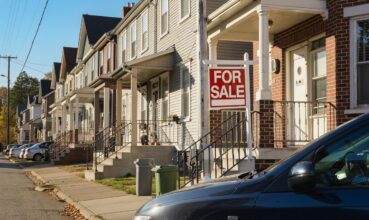
“We have signs all over town saying ‘Altadena is not for sale,'” Arnzen says. “But Altadena is absolutely for sale, and we have very little to fight back with except to beg our neighbors, beg our realtors, and get loud about it.”
State Senator Sasha Perez is reworking legislation to specifically exempt communities decimated beyond a certain threshold from density provisions like those in SB 9. Arnzen is pushing for the exemption to cover future disaster communities as well, reasoning that building statewide legislative support will be easier if other representatives see relevance to their own constituents. SB 1123 applications have largely been voided due to a density requirement that most burned parcels cannot meet, but the fight over AB 1116 is ongoing.
Community Cohesion Under Strain
Altadena’s history as an unincorporated community shaped by successive waves of people pushed out of more established neighborhoods, Black families, Latino families, artists, and others priced out or excluded elsewhere, created an identity that Arnzen believes is both the community’s greatest strength and its most vulnerable asset.
He has been warned by leaders from Paradise, Lahaina, and Santa Rosa that communities tend to fracture in the second and third year of recovery, as different groups feel their needs are being overlooked. He sees early signs of that dynamic and is deliberately working to counter it through community events and coalition-building. “Unless we unite, we can’t compare,” he says. “We have to stay together and listen to each other.”
For real estate professionals, developers, and policymakers watching Altadena, the situation illustrates what happens when disaster recovery intersects with housing policy, displacement pressure, and the limits of local governance. The permit numbers suggest a system that is working. The people inside that system tell a harder story, one where financial exhaustion, developer opportunism, and expiring insurance coverage are reshaping who will ultimately live in Altadena when the rebuilding is done.
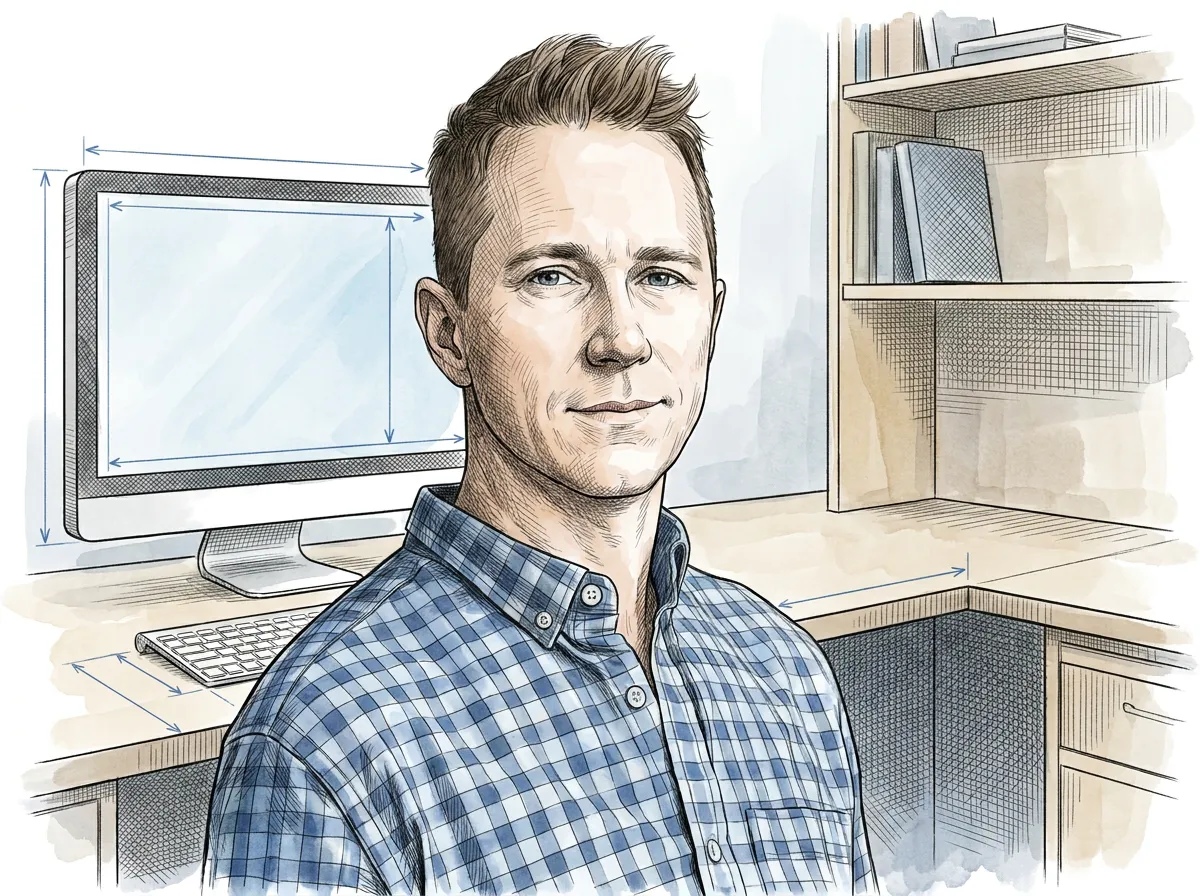
About the Expert: Nic Arnzen is the Chair of the Altadena Town Council, serving the unincorporated community of Altadena in Los Angeles County, California. He has been centrally involved in community advocacy and recovery coordination following the January 2025 fires that destroyed roughly two-thirds of Altadena’s buildings.
This article is based on information provided by the expert source cited above. It is intended for general informational purposes only and does not constitute legal, financial, or real estate advice. Readers should conduct their own research and consult qualified professionals before making any real estate or financial decisions.