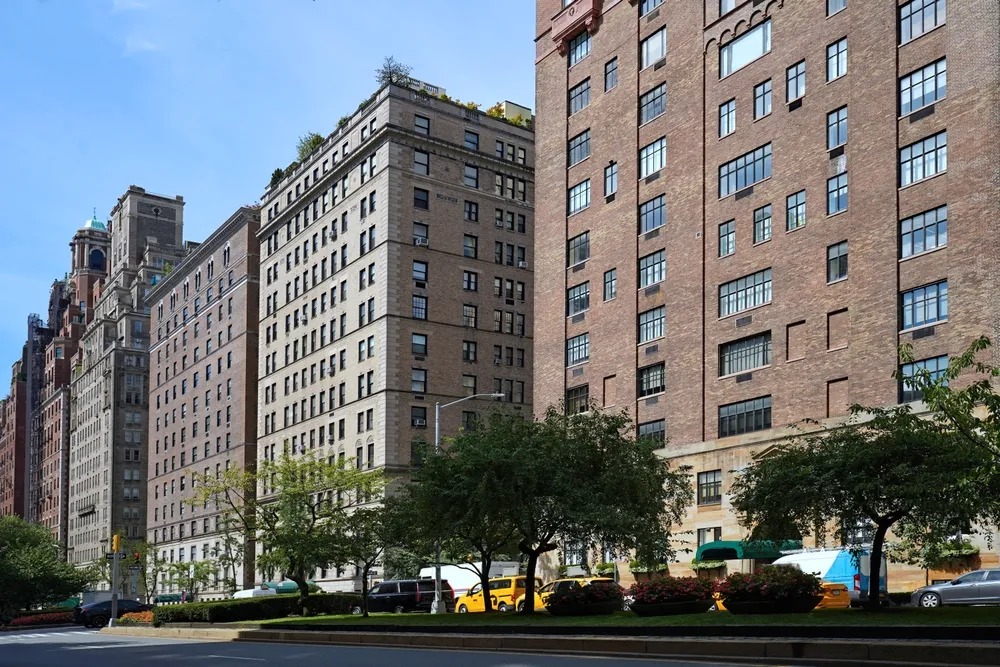
Roughly one-third of residential inventory in Manhattan does not sell on its initial listing and instead cycles through multiple brokers, according to Nikolay Afanasyev, Founder and CEO of City Sphere Property Group, a boutique brokerage covering Manhattan and parts of Brooklyn.
Afanasyev attributes the pattern primarily to sellers pricing properties above what the market will bear. The problem is made worse in a market where every building, street, and neighborhood carries its own distinct value profile.
Overpricing Drives Failed Listings
When deals stall, or listings expire, Afanasyev says the cause is usually straightforward. “There are still a lot of properties that are overpriced, and that’s what’s preventing them from selling,” he says.
A one-in-three failure rate on initial listings means mispricing is not an occasional error. It is a recurring pattern in how sellers and their brokers set asking prices. In a city where two buildings on the same block can sell for dramatically different prices, broad assumptions about appreciation and comparable sales produce asking prices that buyers consistently reject.
The consequences of a failed listing extend beyond relisting. Properties that sit on the market accumulate days-on-market data visible to buyers and their agents, signaling that something may be wrong with the unit, the building, or the price. Even after a price reduction, the stigma of a stale listing can suppress offers and extend the time to close. That delay can cost sellers more than a correctly priced initial listing would have.
Why Sellers Keep Mispricing
Afanasyev says part of the problem is a misconception about what has happened to Manhattan values over the past decade. Many sellers assume the market has continued to appreciate steadily, when significant portions have plateaued or declined from peak levels.
“Perhaps not fully understanding what the price and trends are – maybe thinking that Manhattan kept growing – and in reality that now is an opportunity to get discounts,” Afanasyev says. For buyers who understand the current landscape, he argues, there are genuine opportunities to acquire properties at prices below what sellers paid ten or more years ago. But that opportunity only appears once sellers accept market reality, often after one or more failed listing attempts.
Loss aversion compounds the problem. Sellers who purchased at higher prices are reluctant to accept that their property may not have appreciated, or that it may have declined in net value after accounting for carrying costs. That reluctance produces asking prices that reflect what sellers need to recoup rather than what buyers are willing to pay, creating standoffs that persist for months.
Afanasyev recently handled a sale in a prime area of the city where the sellers lost about 25% of their property’s value because their building’s carrying costs had increased drastically. Inflationary pressure on labor, materials, and building system upgrades has driven maintenance and common charges higher across much of the market. These rising costs erode net equity even when headline prices hold steady.
The Hyperlocal Pricing Problem
One structural reason overpricing is so common in New York City, according to Afanasyev, is that the market defies generalization at almost every level. Borough-level statistics and citywide averages are largely useless as pricing tools because variation between individual buildings can be dramatic.
“You can be on the same block, two buildings, and they can be selling for a completely different price,” Afanasyev says. Building financials, maintenance fee trajectories, co-op board requirements, the age of building systems, and management quality all affect value in ways that aggregate data cannot capture.
For sellers, pricing based on what a neighbor sold for, or what a similar unit in a different building achieved, can produce a materially incorrect asking price. For buyers, apparent comparables may be misleading. Properties priced at a discount relative to nearby sales may be priced correctly rather than opportunistically.
Afanasyev also notes that buyers under $2 million are particularly selective about condition and carrying costs. Move-in-ready inventory in that range is scarce, and properties that need work are harder to sell because buyers are factoring in the full cost of renovation in a city where labor remains expensive. Sellers of such properties who price as though the unit were already updated are setting themselves up for the failed-listing cycle.
Meanwhile, buyers above $4 million remain active. The constraint is concentrated in the middle of the market, where buyers want updated units with manageable carrying costs and the supply of such properties is limited.
How Correct Pricing Works
In practice, correct pricing means treating the first two to three weeks of a listing as a test of buyer response rather than a number to defend. Steady showings and early offers confirm the price is right. Silence is a signal to adjust immediately, before the listing accumulates a track record that itself starts working against the seller. Sellers who react to that signal early avoid the failed-listing cycle rather than working through it after the fact.
“The market is so unique that we kind of got to approach everything individually – building, streets, neighborhoods,” Afanasyev says.
Sellers are also showing more willingness to adjust. Afanasyev says more sellers are coming to terms with price reductions as economic uncertainty persists. Higher interest rates, a contracting economy, and geopolitical instability have made it harder for sellers to hold out for prices the market rejected months earlier.
For sellers entering the Manhattan or Brooklyn market now, the one-in-three failure rate carries a direct implication: a listing priced correctly on day one is more likely to close than one priced optimistically and reduced later. The data that accumulates during a failed listing, including visible days on market, broker changes, and price cuts, works against the seller in every subsequent negotiation.
About the Expert: Nikolay Afanasyev is Founder and CEO of City Sphere Property Group, a boutique brokerage covering Manhattan and parts of Brooklyn.
This article is intended for informational purposes only and does not constitute legal, financial, or investment advice. The views and opinions expressed herein reflect those of the individuals quoted and do not represent an endorsement of any company, product, or service mentioned. Readers should conduct their own due diligence and consult qualified professionals before making any investment decisions.