
The Toronto GTA real estate market has experienced significant changes over the past few years, with Canadians holding approximately $5 trillion in home equity while navigating interest rate...

Philadelphia’s Higher-End Housing Market Is Showing Stronger Year-Over-Year Momentum

Written by:
Date:
09 Sep 2026
Share via Facebook

Share via Linkedin

Share via X

Copy to clipboard

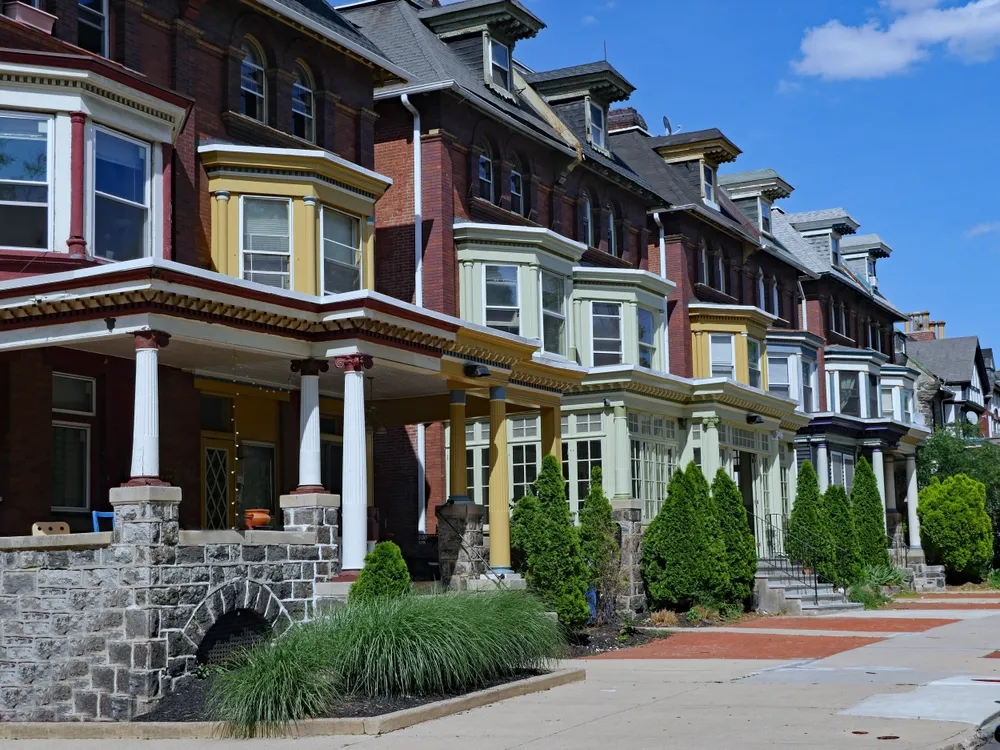
Philadelphia’s residential market has long been known for its relative price stability, modest gains in good years, modest declines in bad ones. But that evenness is masking a widening gap between two buyer pools operating under very different conditions. Homes priced between $700,000 and above a million dollars are moving faster than properties in the $350,000 to $500,000 range, the segment where most of the city’s buyer competition has traditionally concentrated. The split has less to do with the properties themselves and more to do with who is buying them and where their income originates.
A Steady Market With an Uneven Interior
Philadelphia’s average home price sits around $250,000, according to Alona Richardson, a Realtor with OCF Realty, the city’s largest independent brokerage. But that figure spans everything from colonial-era trinities, narrow, one-room-deep houses dating to William Penn’s era, to newly built million-dollar properties in and around Center City. The functional sweet spot for most buyers falls between $350,000 and $500,000. That range draws significant competition, but transactions across the board have slowed.
“Everything is sitting on the market longer than it should,” Richardson says. The exception is the upper end. Homes priced at $700,000 and above are selling more quickly because the buyers at that level are less affected by economic uncertainty. A major driver is the steady flow of relocating professionals from New York, who can commute back on the Acela Express, roughly an hour and a half from 30th Street Station to Penn Station, and only need to be in the office a few days a week under hybrid schedules.
Those buyers arrive with New York salaries and find Philadelphia’s prices sharply lower. “They’re able to afford more because they still are making a New York salary,” Richardson says. Meanwhile, buyers below that price threshold are more exposed to the current economic climate, and their hesitation is showing up in longer days on market and fewer offers.
First-Time Buyers and the Down Payment Wall
At the lower end of the market, the primary constraint for first-time buyers is the down payment. Richardson says she is seeing a specific pattern: parents providing inheritance money early so their children can make an initial purchase. These buyers earn solid incomes but have not been in the workforce long enough to accumulate the savings required for a down payment.
Rate lock-in is compounding the problem on the supply side. Homeowners with low interest rates are choosing to stay and rent rather than sell, which limits the inventory available to entry-level buyers.
The result is a market where sellers are granting more concessions than Richardson has seen before, price reductions, seller assists, and other adjustments. She attributes the increase partly to the speed at which conditions are changing: a price set two months ago may already be out of step with current buyer expectations. For buyers who can clear the down payment hurdle, that softening in seller leverage creates better negotiating conditions than the market offered a few years ago.
Neighborhood Rotation
Philadelphia’s neighborhood dynamics are creating both risk and opportunity. Fishtown, one of the city’s most prominent revitalization stories, has lost momentum. Richardson attributes this to saturation: too many owners listing at once in a market where buyer urgency has cooled. “It’s not as desirable anymore,” she says. “The hype has kind of died down.”
Meanwhile, neighborhoods in the northwestern part of the city – Mount Airy, East Falls, Manayunk – are drawing buyers who want a suburban feel without leaving Philadelphia’s city limits. Mount Airy in particular has been performing well, Richardson says, because it offers more green space and room than neighborhoods closer to Center City.
For investors, Richardson points to a straightforward geographic logic: buy in neighborhoods adjacent to the ones already developed. She names West Kensington, which borders Fishtown, along with Port Richmond and Old Richmond as areas where the development radius from Center City has not yet fully arrived but is heading. The pattern is consistent, as one neighborhood reaches saturation, demand spills into the next ring out.
Cold Feet as a Market Signal
Richardson flags an uptick in buyers walking away from transactions mid-contract, not because of inspection issues, but because of broad economic anxiety. With contract periods running 30 to 45 days, buyers have enough time to reconsider, and some are choosing to forfeit a deposit rather than close.
“I think it’s just like a volatile economy right now and people are concerned about the future,” she says. Some buyers are calculating that losing a deposit now is less costly than completing a purchase that could put them in a worse financial position if conditions deteriorate further. Richardson notes this is not the majority of failed transactions but says the increase is notable compared to prior years.
For sellers, this trend adds a layer of uncertainty beyond pricing. Even an accepted offer carries more risk of falling through than it did when buyer confidence was stronger, which reinforces the case for realistic pricing and concessions upfront rather than extended negotiations that give buyers more time to reconsider.
A Stability Argument for Long-Term Capital
Richardson’s case for Philadelphia as an investment market rests on the same steadiness that can frustrate buyers looking for rapid appreciation. The city does not produce dramatic upswings, but it also does not produce dramatic corrections. That predictability, she argues, makes it easier to underwrite a long-term hold.
She points to the volume of outside capital flowing into restaurants, hotels, and hospitality, including recent Michelin stars and James Beard recognition, as evidence that institutional and entrepreneurial confidence in the city is growing. “You have people spending money, opening businesses and believing in Philadelphia,” she says.
For investors weighing Philadelphia against more volatile markets, the tradeoff is clear: slower appreciation in exchange for a lower risk of sharp corrections. Combined with the adjacency dynamic Richardson describes, where developed neighborhoods push demand into neighboring ones, the city offers a market where entry timing matters less than location selection within the development radius.
About the Expert: Alona Richardson is a Realtor with OCF Realty, Philadelphia’s largest independent brokerage.
This article is based on information provided by the expert source cited above. It is intended for general informational purposes only and does not constitute legal, financial, or real estate advice. Readers should conduct their own research and consult qualified professionals before making any real estate or financial decisions.
Similar Articles
Explore similar articles from Our Team of Experts.