
The ongoing artificial intelligence boom is fueling a surge of ultra-high-net-worth buyers in Silicon Valley, generating record activity in the region’s luxury real estate market. At the s...

In Tampa Bay, Florida, the Math on House Flips Has Changed Faster Than Most Investors Expected

Written by:
Date:
03 Sep 2026
Share via Facebook

Share via Linkedin

Share via X

Copy to clipboard

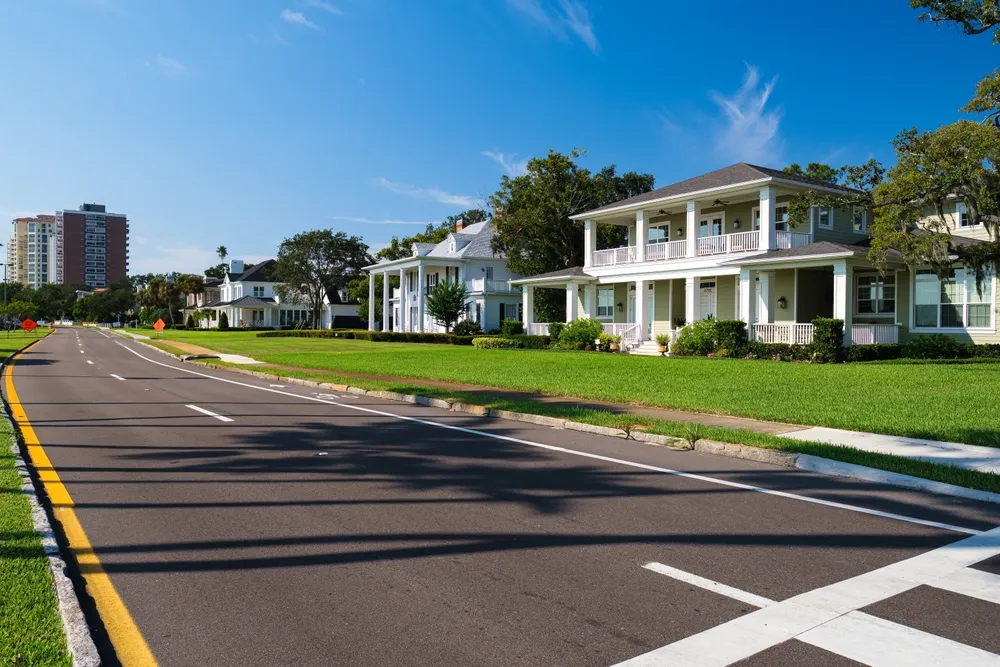
The standard formula for flipping houses, buy low, renovate fast, sell at a premium, depends on assumptions that have eroded in Tampa Bay over the past two years. Insurance costs have spiked after hurricane activity. Days on market have stretched. The spread between acquisition price and after-repair value has compressed to the point where many deals that appear viable on paper no longer work once holding costs, concessions, and closing fees are factored in.
Faith Walston, an agent and investor affiliated with TMWRK Brokerage in Tampa Bay, has flipped eight houses in two and a half years. Her assessment of the current environment is direct: “A lot of deals now are really not deals, especially if you’re borrowing money.”
The Spread Problem
Walston’s first filter on any potential acquisition is the gap between asking price and projected sale price. If that spread is only $100,000, she won’t look at the property. The reasoning is arithmetic: renovation costs, hard money interest, property taxes, closing costs on both ends, and real estate commissions consume that margin before any profit materializes.
The challenge is compounded by sellers, particularly homeowners who have lived in a property for decades, holding price expectations shaped by a market that no longer exists. Walston says many homeowners don’t understand what their property is actually worth in its current state because they haven’t been tracking comparable sales the way active investors do. “When you’re flipping a lot of houses, you know what houses are worth,” she says.
Hard money lenders have responded by extending loan terms to a year or 18 months, acknowledging that fast turnarounds are no longer realistic. But that extended timeline doesn’t eliminate the cost; it makes the calculation more explicit. “You have to kind of say, okay, if I take it 18 months, is this deal still profitable? Maybe not,” Walston says.
Tampa Bay’s Insurance and Hurricane Costs
Beyond spread compression, Tampa Bay faces structural cost pressures specific to coastal Florida. Insurance premiums have risen sharply following recent hurricane activity, and properties damaged in the last storm face elevation requirements, 14 feet off the ground, that many owners cannot afford. The result is inventory that sits unrehabilitated indefinitely.
“A lot of those houses are still not rehabbed,” Walston says. “Florida is not the cheap place to live anymore like it used to be.”
For investors evaluating Tampa Bay from outside the state, Walston frames the situation plainly: property taxes are high, insurance adds substantial expense, and hurricane exposure on Florida’s west coast is not a theoretical risk. “If you’re moving to Florida, you best be ready to understand that’s just what it is on the West Coast.”
Where the Profit Gets Made
Walston’s experience points to a consistent principle: the acquisition price determines the outcome more than anything that happens during renovation. “The magic happens at the purchase,” she says. “A lot of the other things are unknowns.”
Those unknowns are real. On a 1918-era home she recently completed, demolishing a wall revealed that an addition was improperly connected to the main structure, invisible during a walkthrough, and expensive to correct. Her advice to newer investors is to budget conservatively on both time and cost. “If you’re going to do a major rehab, make sure you don’t say it’s going to take less time than it’s really going to take. Make sure you get the price down enough to cover it.”
On the renovation side, she identifies specific items that buyers now treat as non-negotiable: impact windows, a roof in good condition, and an electrical panel upgrade to 200 amps. Insurance requirements are driving some of this; Walston says carriers are requiring AC units under 15 years old as a condition of coverage, even if older units are still functional. For houses built before roughly 1970, these infrastructure upgrades should be assumed as part of the renovation budget.
What Buyers Are Doing Differently
Buyers in this market have leverage they lacked two years ago. “These buyers are smart,” Walston says. “They got a lot of options.” Concessions that sellers rarely considered previously are now routine. Homes sit longer, even well-priced listings in desirable neighborhoods like Tampa Heights, where wildly varied housing stock makes comparable sales difficult to establish.
Walston describes her own listing in Tampa Heights sitting for nearly 30 days despite broad agreement on pricing, simply because the neighborhood’s mix of historic and modern properties, with dramatically different construction years, interior conditions, and price ranges, makes buyer confidence harder to establish. A house can sit next to a million-dollar property on one side and a very different price range on the other, she says, making traditional comps unreliable.
The commission structure changes have added friction as well. Walston says she has seen deals fall apart because a buyer’s agent, having signed a 3% agreement with their client, refuses to close when the seller offers only 2% or 2.5%. The buyer loses the property without fully understanding why. “You can lose the house you want because the real estate agent is not willing to give up some of her money,” she says.
A Shift in Business Model
The cumulative effect of these pressures has prompted Walston to change how she operates. Rather than continuing to manage renovation crews and carry flipping risk, she is transitioning toward space planning services for other investors and private money brokering through Rivlum, LLC, keeping her expertise in the transaction without absorbing the holding costs and timeline risk.
“I’ve been managing crews for over 25 years, and I think I’m a little on the burnout side,” she says. The new model pairs her design and space planning background with TMWRK’s investor pipeline, offering layout optimization that she argues buyers in a competitive market increasingly demand. “Making your space work the best in this market where people have so many choices, a lot of people want to bypass that part. But buyers are more particular.”
For investors still active in Tampa Bay flips, Walston’s trajectory illustrates the pressure the current market places on the traditional model. The deals exist, she says, but the margin for error has narrowed enough that the question is no longer just whether a property can be renovated profitably; it is whether the time, carrying costs, and market risk justify the effort when the spread is thin.
About the Expert: Faith Walston is an agent and investor affiliated with TMWRK Brokerage in Tampa Bay, Florida, and a private money broker and investor space planner with Rivlum, LLC.
This article is based on information provided by the expert source cited above. It is intended for general informational purposes only and does not constitute legal, financial, or real estate advice. Readers should conduct their own research and consult qualified professionals before making any real estate or financial decisions.
Similar Articles
Explore similar articles from Our Team of Experts.