
Scottsdale’s real estate market is no longer moving in unison. While luxury homes in Paradise Valley are setting new price records, condos under $400,000 are losing value and sitting unsol...

Why North Texas Buyers Are Ignoring Past Sales and Watching Active Listings Instead

Written by:
Date:
04 Sep 2026
Share via Facebook

Share via Linkedin

Share via X

Copy to clipboard

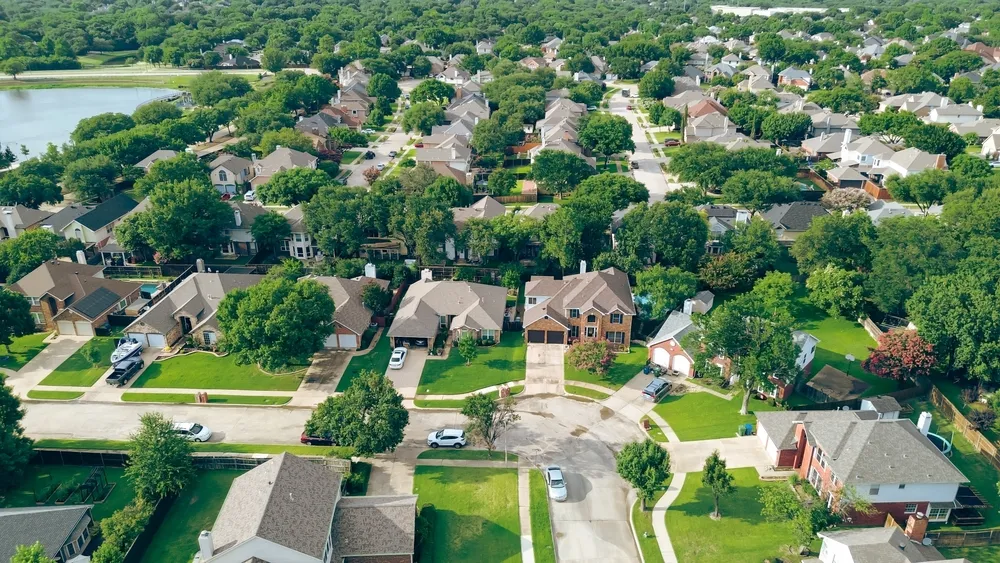
In most housing markets, the question “what did that house sell for?” anchors every negotiation. Buyers pull comps, sellers cite recent closings, and both sides argue over which sale best reflects current value. But in North Texas, a nondisclosure state where sold prices never appear on public records, that anchor barely exists. As of mid-2026, buyers in the Dallas-Fort Worth market have stopped trying to find it altogether, choosing instead to price homes against whatever is actively listed right now.
The shift changes who holds leverage. Crystal Solensky, owner and agent at Luxury Home Team, describes the new buyer mindset directly: “Sold is old and active is the current competition.” Her team, which is listing-heavy across Flower Mound, Southlake, and the broader Denton County corridor, sees this play out in offers daily.
Texas Hides the Receipt
Unlike California or most East Coast states, Texas does not require disclosure of sale prices. If you pull up a Flower Mound home on Zillow, you will see an estimate and an asking price, but no verified record of what the previous owner actually paid. That gap has always existed, but its practical effect intensifies in a shifting market.
When prices were rising fast from 2020 through 2022, the lack of public sale data mattered less. Every new listing was priced higher than the last, and buyers assumed they would pay a premium. Now that appreciation has stalled, and inventory has grown, buyers have no reliable backward-looking anchor to tell them what a home is worth. So they look sideways, at the other active listings in the same neighborhood, and calibrate their offer to the lowest-priced comparable option currently available.
The Seller’s Blind Spot
Sellers, meanwhile, still think in terms of what their neighbor got last year. Solensky says the disconnect is the single biggest source of friction in her current transactions: “What a house was worth in June is not necessarily what a house is worth in August or September.” Sellers anchored to a peak-era number often refuse to adjust until weeks of market time force their hand.
According to Solensky, roughly 35 percent of non-luxury listings in her market are carrying price reductions as of August 2026. The pattern repeats: a home lists at the seller’s desired number, sits without offers, and eventually cuts, sometimes more than once, to reach the range buyers were already signaling from the start.
A Market That Punishes Delay
The cost of overpricing is not just time. In a market where buyers are comparison-shopping active inventory, a stale listing becomes a reference point – but as the overpriced outlier, not the desirable option. Each week on market without a showing reinforces the perception that something is wrong with the home, making a later price cut less effective than pricing correctly on day one would have been.
Solensky frames the tension plainly: sellers are “stuck in the market of the past” and want to sell their house for something that is not necessarily what it is currently worth. For sellers, the only relevant measure of a home’s value right now is what a buyer will choose to pay given their other options today, not what a house down the block closed for four months ago.
What Buyers Can Do With This Knowledge
Buyers in a nondisclosure state like Texas cannot easily verify what homes actually sold for without agent access to MLS data. But they can do what other buyers are already doing: compare the home they want against every active listing in the same area, note which ones have been sitting, and use that context to frame an offer.
The risk is real. Pricing off active inventory works when supply is ample, but if inventory tightens again, the strategy can lead to lowball offers that lose the house entirely. North Texas still carries a supply-demand imbalance that technically favors sellers, even as negotiating dynamics have softened. Solensky notes the market has more inventory now than at any point in the past couple of years, but she still classifies it as a seller’s market overall due to sustained demand.
One concrete detail illustrates how far buyer expectations have moved: roughly 80 percent of offers Solensky’s team receives on listings currently include a request for seller-paid closing costs, a concession that was rare during the frenzy years and that Solensky says sellers are now approving more often than at any point in the past decade.
About the Expert: Crystal Solensky is Owner and Agent of Luxury Home Team at Keller Williams Realty Dallas Preston Road, licensed since 2004 and working the Dallas-Fort Worth market since 2010.
This article is intended for informational purposes only and does not constitute legal, financial, or investment advice. The views and opinions expressed herein reflect those of the individuals quoted and do not represent an endorsement of any company, product, or service mentioned. Readers should conduct their own due diligence and consult qualified professionals before making any investment decisions.
Similar Articles
Explore similar articles from Our Team of Experts.