In a market where inventory is tight and every listing carries real stakes, agents are looking beyond the standard marketing playbook. Professional photography, virtual tours, and social med...

Buying a Hawaii Hotel Now Takes More Equity, More Patience, and a Read on the Union Question

Written by:
Date:
24 Aug 2026
Share via Facebook

Share via Linkedin

Share via X

Copy to clipboard

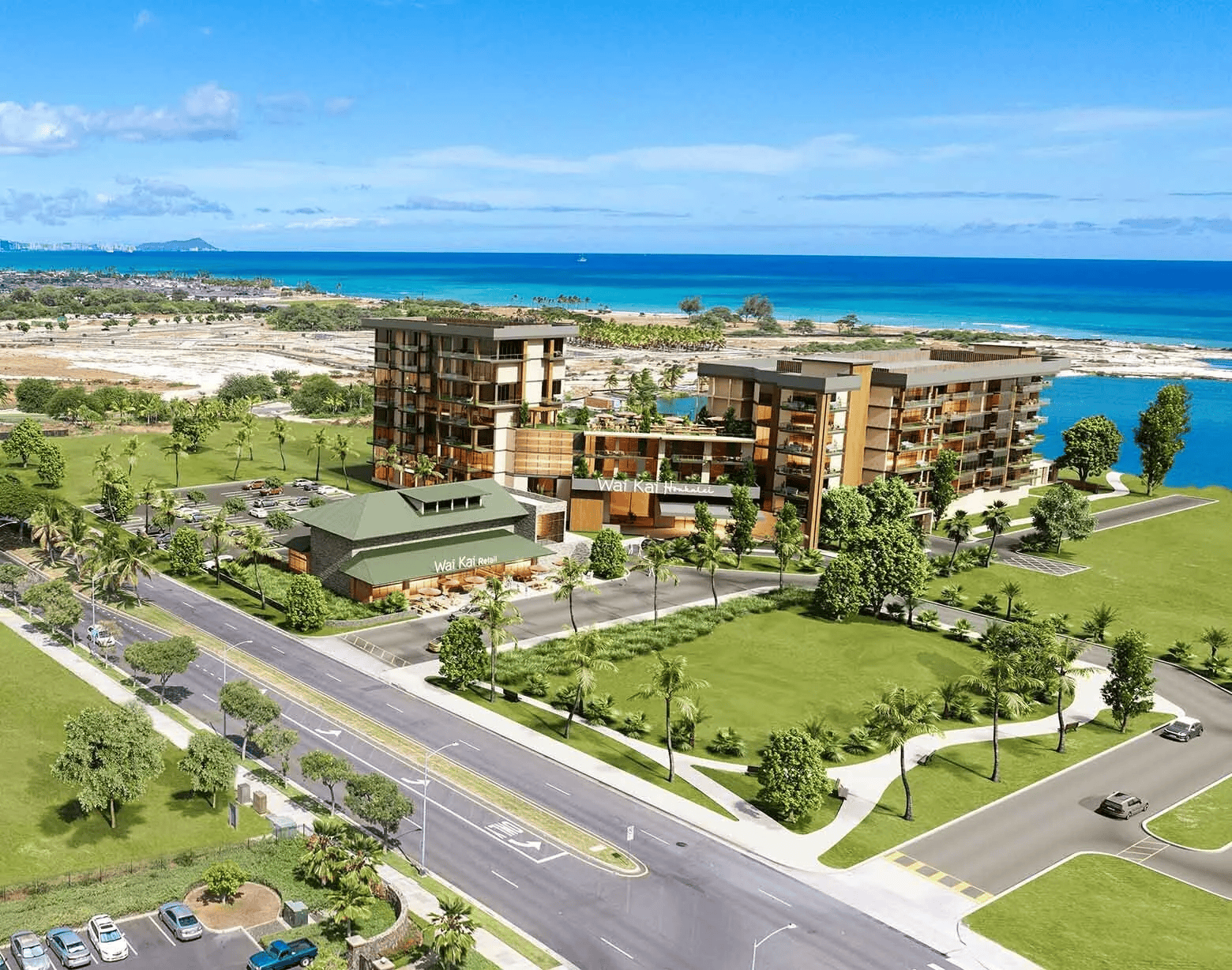
For most of the last decade, the binding constraint on Hawaii hotel acquisitions was availability. There were few properties, fewer sites on which to build new ones, and a buyer pool deep enough that anything genuinely for sale traded quickly. That constraint has loosened. In Waikiki alone, several hotels are currently available to a buyer prepared to accept a first-year return of around five percent.
What has replaced scarcity is a pricing disagreement. The market is largely underwriting closer to a seven percent return, which leaves roughly two points of daylight between what sellers will accept and what buyers will pay. The result is not distress. It is stasis.
The Buyer Pool
Activity is concentrated at the two ends of the spectrum. Independent investors and family offices have moved into the space, drawn by a market they read as structurally strong. At the institutional end, some capital remains active, though noticeably less than five to eight years ago.
The middle has thinned considerably. Publicly traded REITs, in particular, have stepped back – a national pattern rather than a Hawaii-specific one. Many have seen a quarter to a third of their share price erased, which constrains both cash on hand and the ability to raise more.
The distinction is partly about who is holding the risk. “As a stock investor, why not go buy Nvidia?” says Mark D. Bratton, CCIM, of The Bratton Team at Colliers International Hawaii, describing how equity holders in a REIT weigh a hotel position against alternatives. Owner-operators evaluate the same asset differently, because they are underwriting a business they understand rather than a line item in a portfolio.
Two recent transactions illustrate the range. PACIFIC 19 Kona in Kailua-Kona – formerly the Kona Seaside Hotel – was acquired by Nine Brains, a Santa Monica-based hospitality investment firm backed by individual investors and family office capital. At the other end, Host Hotels acquired Turtle Bay Resort and repositioned it under the Ritz-Carlton flag. Both buyers substantially changed the business plan; they simply arrived from opposite ends of the capital market.
The Gap Is Holding
The spread between five and seven percent is not irrational. It reflects the cost of debt.
Positive leverage, where the property’s cash flow meets or exceeds the borrowing rate, is the threshold most buyers are testing against. At a borrowing cost of six and a half percent, a seven percent return produces a modest spread. A five percent return produces a loss on the equity. Buyers are not holding out for a better price so much as declining to buy into negative leverage.
That logic has an important consequence for how deals get done in this market. Most acquisitions in Hawaii are not underwritten on day-one leverage at all. Buyers are pricing to a future position they intend to create.
Equity Requirements
Conventional hotel acquisition financing assumes twenty to thirty percent down. Hawaii transactions are running well above that.
The practical floor is thirty percent equity, with thirty to fifty percent the more common range. There is a secondary benefit to the upper end of that band: at fifty percent down, the terms available on the remaining debt improve materially, because the lender is holding a less exposed position. Buyers who can stretch on equity are often buying cheaper debt as well as a cleaner approval.
The other requirement is time. Supply is visible years in advance in a market this small – new hotels do not appear unannounced – and the deals themselves move slowly. What is currently on the market across Hawaii’s commercial asset classes tends to sit considerably longer than mainland buyers expect. Bratton describes the typical buyer’s posture at closing as accepting a price that feels full in exchange for a plan: a better operating model, a repositioning, a path to positive leverage over two or three years.
The Operations Question
Hotels sit awkwardly inside the standard real estate framework, and buyers coming from other asset classes routinely underestimate the difference.
“I like to describe hotels as a business inside of a piece of real estate,” Bratton says. Apartments and office buildings are leased. A hotel is resold nightly, with staffing, food and beverage, and a full payroll attached. Operating experience is not a nice-to-have in underwriting; it is the variable that most often separates a plan that works from one that does not.
Labor structure is the specific item that surprises mainland buyers most often. Two major unions operate in Hawaii hotels, with renegotiation cycles running every three or four years. Somewhat more than half of the state’s hotels are non-union, and the correlation is with size – larger and legacy properties are far more likely to be organized, in some cases irrespective of ownership.
The investor response splits cleanly. Some buyers will underwrite union properties and price the constraints in. Others will not consider them under any conditions, regardless of the asset. Neither position is unusual. What is costly is discovering the answer after closing.
Leasehold And Fee Simple
A recurring request in the Hawaii market is for fee simple beachfront hotel product. It is close to unavailable.
Much of Waikiki sits on leased land. The families who assembled those positions generations ago did not sell them; they leased them. A buyer specifically seeking fee simple oceanfront ownership is competing for a very small pool, and the frequency of the request bears little relationship to the frequency of the opportunity.
Structuring Around The Gap
Where price expectations diverge, the transactions that close are often the ones that give the buyer control before they give them title.
PACIFIC 19 Kona is the clearest recent example. A Hawaii family with a century and a half of history in the islands took the property back at the expiration of a ground lease in January 2020, with no interest in operating it. Buyers surfaced quickly, and then the pandemic arrived. The seller’s requirement was a 1031 exchange, which meant identifying replacement property in the middle of a period when travel and diligence were effectively impossible.
The structure that resolved it gave the buyer control before it gave them title. Nine Brains took a leasehold position carrying the right to acquire the fee at a stepped-up price, then spent on the order of ten million dollars moving the hotel from two-star to three-star product, rebranding it, and absorbing an adjacent parcel that brought the room count to 150. The fee purchase closed in July 2026 at $23 million, six years after the process began.
The same mechanism has since been applied to a Honolulu office building, where the seller’s expectations exceeded current value and the buyer was willing to fund the improvement that would close the distance. It shows up with some regularity among recently closed Hawaii transactions, particularly on assets carrying deferred capital. For sellers, the trade is time in exchange for a materially better outcome – on the order of thirty percent above what an as-is sale would produce. The risk is smaller than it appears, since a buyer who has spent millions improving an asset they do not yet own has little incentive to walk.
What’s Ahead
The market’s current condition is unusually quiet without being unusually stressed. Debt levels across Hawaii hotel ownership are conservative, which is why a two-point pricing gap has produced a transaction slowdown rather than a wave of forced sales. Owners are absorbing lower distributions rather than facing maturity problems.
That combination – visible supply, disciplined balance sheets, and a spread that closes as soon as debt costs move – describes a market waiting on a catalyst rather than one working through a correction.
About the Expert: Mark D. Bratton (R), CCIM, leads The Bratton Team at Colliers International Hawaii in Honolulu, specializing in hotel, resort, and commercial investment sales.
The Bratton Team is a Hawaii commercial real estate and investment sales group, exclusively contracted to Colliers International HI, LLC. Led by Mark D. Bratton (R) CCIM and Mike Perkins (S), the team has advised buyers and sellers across all Hawaii asset classes for 40 years.
Disclosure: Individuals or companies mentioned may have a commercial relationship with KeyCrew.
Similar Articles
Explore similar articles from Our Team of Experts.