
The gap between perception and data in Tampa Bay’s housing market is wider than usual. With 3.8 months of inventory in Tampa and 4.1 in Orlando – figures that technically describe a ...

Dallas-Fort Worth's Building Boom Has Left Some Sellers Unable to Break Even

Written by:
Date:
07 Sep 2026
Share via Facebook

Share via Linkedin

Share via X

Copy to clipboard

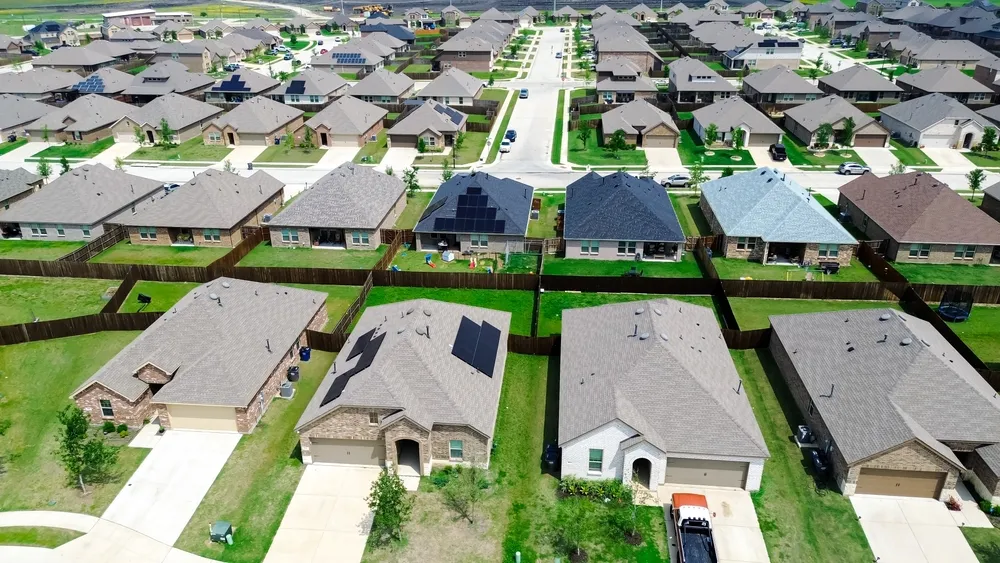
Dallas-Fort Worth continues to attract relocating buyers at a steady pace, but the market’s central tension in 2026 has little to do with demand. The challenge is on the supply side, specifically, the volume of new construction inventory that has accumulated since the post-COVID building boom and is now pulling buyers away from existing homes. For pre-owned sellers, the competition isn’t another resale listing down the street. It’s a builder offering a rate buydown two miles away.
The dynamic is forcing agents and sellers to rethink pricing, concessions, and how they communicate value, particularly in the northern suburban counties where growth outpaced absorption most visibly.
Where the Pressure Is Coming From
The new construction pipeline built during 2021 and 2022 never slowed to match actual absorption, according to Matthew Brown, Team Lead at The Dynamic Group with Coldwell Banker Apex, whose team averages roughly 100 transactions a year across multiple North Texas counties. “They’re building too many developments, too many. There’s too much inventory new-build-wise, and it’s really been affecting the pre-owned market,” Brown says.
The oversupply isn’t uniform. Collin County, which saw explosive growth in 2021 and 2022, has been hit hardest. Newer communities in Anna, Van Alstyne, Celina, and Ponder, areas that attracted buyers seeking space, grew so fast that some homeowners who purchased during the peak are now underwater. Brown says multiple sellers he works with would need to stay in their homes three to five years just to break even.
“They’re completely upside down on their house financially,” he says of sellers facing job changes who cannot afford to move.
Pre-Owned Homes Are Competing on Different Terms
Builders are offering aggressive incentives, rate buydowns to 3.5%, closing cost credits, and other financial levers that pre-owned sellers typically cannot match dollar for dollar. Brown’s approach is to reframe the math rather than try to beat it.
The strategy centers on explaining what happens when a seller raises the purchase price modestly to fund buyer concessions. Every $1,000 added to a 30-year mortgage translates to roughly $6 per month in payment, Brown notes. A $10,000 price increase that funds a rate buydown or closing cost credit amounts to about $60 per month over the life of the loan.
“When you add $10,000 to a home’s price to get $10,000 back in cash, closing cost credits, or a way to do a rate buydown, it’s not $10,000. That’s $10,000 divided by 30 years divided by 12 months,” he explains.
The pitch works best with experienced buyers who can evaluate construction quality. Brown observes that builders have reduced upgrade selections and materials in order to create margin for their incentive programs. “Their upgrade selections and a lot of their homes have gone in the other direction in order to create room to have these incentives,” he says. Features like existing pools, now costing $152,000 to install, according to Brown, give pre-owned homes a tangible value argument that doesn’t show up in a rate comparison.
First-time buyers, however, often still choose the new build. Brown says that makes sense: they’ve never owned a home, they want the warranty, and they’re focused on monthly cost. The concession strategy works with buyers who have owned before and recognize when material quality has been cut.
Momentum Stalled, but Activity Continues
Heading into early 2026, Brown says the market had significant momentum. That shifted when gas prices rose from around $2.60 to $4 in short order. For buyers already stretched on debt-to-income ratios, even modest increases in daily costs can disqualify them from a purchase.
“When the gas prices went from $2.60 to $4 overnight, I think that really just popped the bubble in any momentum that we were having,” Brown says.
Still, his team closed 10 transactions last month and currently carries 36 active listings. The activity is there; it requires more communication and patience. “Everybody that we’re working with does need a little bit more handholding,” Brown acknowledges.
Brown frames the current environment as a return to normal rather than a downturn. He compares market appreciation to a stock chart’s trendline: the 26.8% annual increase the market saw during the boom pushed values far above the long-term trajectory, and prices have now returned to that line without falling below it. “We didn’t go below the line. It’s not 2008,” he says.
That distinction matters for sellers who still carry expectations from 2021, when Brown recalls losing a bid on a Southlake property despite offering $250,000 over asking with a waived appraisal contingency. His team wasn’t even in the top three offers. Sellers who anchor to that period are the ones whose listings sit longest.
What’s Ahead
The variable Brown is tracking most closely is supply relative to incoming demand. Dallas-Fort Worth’s continued corporate relocations and population growth provide a floor, but the builder pipeline shows no clear signs of pulling back. Municipal incentive structures, particularly MUD and PID districts with variable tax rates designed to fund future development, are adding another layer of cost pressure that Brown says isn’t always correlated with actual home values.
He believes a mortgage rate in the 4.75% to 5.25% range would restore healthy appreciation patterns. “I believe if the rates get to 5.25 to 4.75 somewhere in that range, that is a very, very reasonable rate, and I think the values will continue to increase at a normal pace,” Brown says.
For sellers in the current environment, Brown’s message is direct: price to the market as it exists, not as it performed three years ago. “Anybody can put you on the market,” he says. “If you want to sell, this is the price. We got to be in the market, not on the market.”
About the Expert: Matthew Brown is Team Lead at The Dynamic Group with Coldwell Banker Apex, covering North Texas counties including Collin County and the northern Dallas-Fort Worth suburbs.
This article is based on information provided by the expert source cited above. It is intended for general informational purposes only and does not constitute legal, financial, or real estate advice. Readers should conduct their own research and consult qualified professionals before making any real estate or financial decisions.
Similar Articles
Explore similar articles from Our Team of Experts.