

The city of Dearborn, Michigan, is experiencing a housing demand surge that could absorb 3,500 new residential units over the next decade, according to a recently completed market study. Thi...

Houston's Resale Market Tilts Toward Buyers as New Construction Gains Ground

Written by:
Date:
21 Aug 2026
Share via Facebook

Share via Linkedin

Share via X

Copy to clipboard

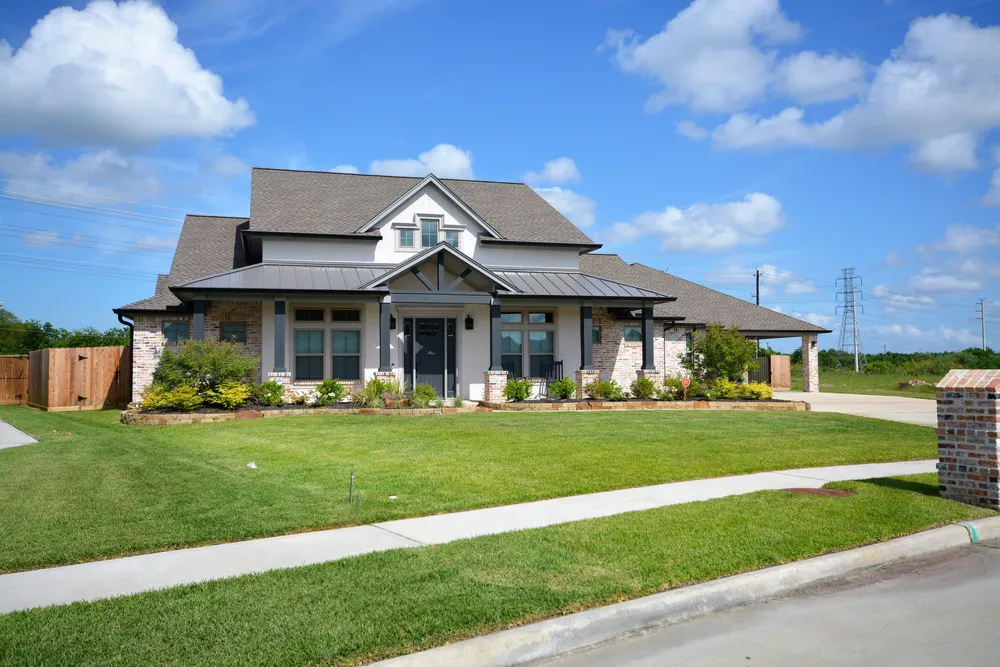
Houston’s housing market sits in an unusual position among major U.S. metros. The fourth-largest metropolitan area in the country has maintained modest positive home price growth while cities like Austin and Dallas have undergone post-pandemic price corrections. But that relative stability masks a growing tension on the ground: resale sellers are struggling to compete with one of the largest new construction pipelines in any major American city, and the resulting pressure is reshaping how homes get priced, marketed, and sold.
Pedro Iznaga, a Senior Agent with Redfin in Houston who has worked in real estate for roughly a decade, describes a market where buyers have options and leverage they haven’t had in years, and where sellers who don’t price correctly from day one risk extended time on market.
New Construction Is Setting the Terms
The central challenge for Houston’s resale market isn’t weak demand. It’s that new construction builders can offer incentives, closing cost credits, interest rate buydowns, that individual sellers simply cannot match. According to Iznaga, Houston likely has the most new construction of any major U.S. city, and that volume directly pressures resale prices. “It definitely puts a stress on me when I’m listing properties, competing with new construction,” he says.
The result is a market where average days on market run 50 to 66 days, and where price adjustments have become routine for listings that don’t attract early interest. Iznaga says he and other listing agents are making frequent price reductions to attract offers. “Buyers have a lot of options, which is great for them but not so much for the sellers.”
For sellers on the resale side, the practical consequence is straightforward: a home priced at the same level as a comparable new build, which comes with builder-paid closing costs and a lower effective interest rate, will sit longer unless the seller adjusts expectations early.
The Sweet Spot
Houston’s median sales price sits between $324,000 and $342,000, according to Iznaga, and the bulk of transaction activity falls in the $250,000 to $500,000 range. But he notes a counterintuitive pattern at the upper end: homes priced above $750,000 are actually moving faster than those in the more competitive middle tier.
“The homes selling over 500 in what we call the luxury tier, 750, over a million dollars, those homes are actually selling quicker than the ones that are priced lower because there’s more competition in those,” he says. The concentration of supply in the mid-range, driven partly by new construction, creates more friction at that price point than at the top, where fewer comparable listings exist.
For buyers in the $250,000 to $500,000 range, this means more negotiating power but also more homework, distinguishing between resale homes priced to compete and those still holding out for peak valuations.
Location Still Sorts Winners From Losers
Not every Houston submarket behaves the same way. Established suburbs with strong school districts, Pearland, Katy, Sugar Land, Cypress, and The Woodlands, continue to perform well. Homes in those areas that have been renovated and well-maintained typically sell within 30 to 60 days, according to Iznaga. Meanwhile, up-and-coming neighborhoods without the same school quality or infrastructure don’t appreciate at the same pace.
“It’s kind of like a hyper-local market,” Iznaga says. “If you go from one side of the freeway to the other, sometimes it’s a whole different market.”
For younger buyers, the preference runs toward urban neighborhoods, the Heights, Montrose, the Washington Corridor, near employment centers like the Texas Medical Center, downtown, and the Energy Corridor. Families tend to move toward the suburbs where school districts drive long-term value retention. Iznaga notes that Houston also draws relocation buyers in energy, tech, healthcare, and aerospace, which keeps demand broad across multiple submarkets rather than concentrated in one corridor.
Galveston and Flood-Prone Areas Face Distinct Pressures
Beyond the metro core, Galveston’s market faces separate headwinds. Iznaga describes an area heavy with rental properties, secondary homes, and short-term rentals where rising insurance costs, driven by repeated storm damage, are weighing on values. For investors considering Houston-area real estate, he advises avoiding flood-prone zones and consulting a local agent before committing capital.
“I see a lot of investors who take a class and then all of a sudden they think they’re experts and they’re jumping into the first deal they see,” Iznaga says. “That could be very risky.”
What Sellers and Buyers Should Know Now
Iznaga’s advice for sellers is direct: pricing discipline matters more in this market than in any recent cycle. “You can’t overprice a home, or it’s gonna sit on the market for an extended period of time,” he says. “You have to be realistic with the market from day one.”
For buyers, he takes the opposite tone, less urgency, more pragmatism. Interest rates around six to six and a half percent remain difficult for buyers who locked in at three or four percent in 2020, but Iznaga frames that as a reality to accept rather than a reason to wait. “Don’t really worry too much about the interest rates because the interest rates could go down, but they could also go higher,” he says. “The homes are still affordable, and there’s a lot of inventory out there to choose from. You can’t time the market.”
The market Iznaga describes is one where patience and pricing accuracy determine outcomes more than timing or luck. Buyers who act now face less competition and more leverage than they’ve had in years. Sellers who acknowledge the new construction reality from day one, rather than testing the market at aspirational prices, are the ones closing within that 30-to-60-day window rather than chasing price reductions for months.
About the Expert: Pedro Iznaga is a Senior Agent with Redfin in Houston, Texas, who has worked in real estate for roughly a decade.
This article is based on information provided by the expert source cited above. It is intended for general informational purposes only and does not constitute legal, financial, or real estate advice. Readers should conduct their own research and consult qualified professionals before making any real estate or financial decisions.
Similar Articles
Explore similar articles from Our Team of Experts.