Two years ago, a lakefront home in the right private community near New York City would sell before most buyers had a chance to schedule a showing. Today, well-priced properties in those sam...

South Jersey Home Prices Have Quadrupled in Some Areas Since 2019

Written by:
Date:
13 Aug 2026
Share via Facebook

Share via Linkedin

Share via X

Copy to clipboard

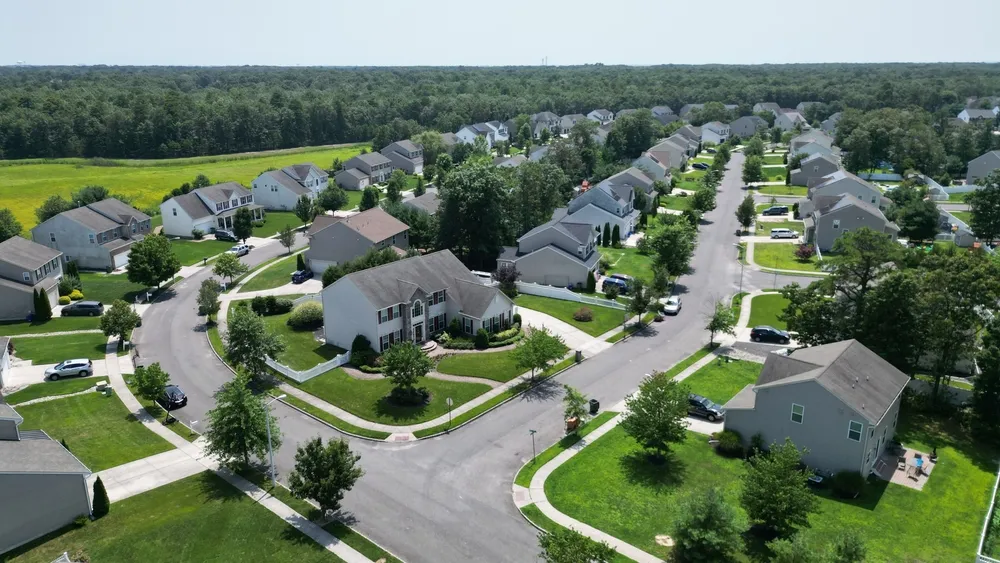
For years, real estate observers in the Philadelphia metro region described South Jersey as undervalued – a suburban stretch with beach access and lower taxes that hadn’t caught up to its northern counterpart. That description is outdated, according to Shelby Morgan, Broker/Owner of Morgan Capital Real Estate in Marlton, New Jersey. Prices in parts of the region have risen so sharply since 2019 that buyers and investors arriving today face a fundamentally different equation than those who entered five years ago.
Morgan, who is also a mortgage loan originator with Acre Mortgage and works across central and south Jersey as well as Pennsylvania, points to one Atlantic City neighborhood of townhomes as a stark example. “Back in 2019, those homes were going for 70, 80, 90,000. The price on those properties now are over 300,000,” she said.
Properties tripling or quadrupling in roughly six years changes the math for anyone considering a purchase in the area today.
The Gap That Attracted Investors Is Narrowing
Part of what drove demand into South Jersey was a simple price difference. Buyers from North Jersey, where equivalent properties cost significantly more, could purchase rental homes or family residences in the southern part of the state at a steep discount.
Morgan described a recent transaction that illustrates the pattern. A repeat client based in North Jersey purchased a townhome in Marlton for $355,000 – a property that would have cost closer to $500,000 in the buyer’s own neighborhood. The client then leased it to a family, generating rental income while holding an asset purchased well below what the same home would cost farther north.
That spread still exists, but it is smaller than it was. Morgan noted that South Jersey was “undervalued anyway compared to the other part of the state” before the run-up began. The correction has been rapid and, so far, uninterrupted. “South Jersey hasn’t been underperforming in a good five or six years,” she said.
Prices Keep Climbing Despite Rate Pressure
Appreciation has continued even as mortgage rates have risen to their highest levels in seven years, according to Morgan. In most markets, higher borrowing costs slow demand and flatten or reduce prices. South Jersey has resisted that pattern.
Morgan frames this as evidence of underlying demand rather than irrational pricing. The region’s proximity to Philadelphia, the New Jersey state capital, and multiple shore communities means buyers have practical reasons to compete for limited housing stock. Philadelphia is reachable in 30 minutes, the shore in an hour, and highway access runs in every direction.
The combination of high prices and high rates creates obvious strain for buyers. A townhome purchased at $355,000 with a rate near 7 percent carries monthly payments that would have been dramatically lower just a few years ago on the same property at a lower price and a lower rate. Morgan acknowledged the tension: “We’re at one of the highest interest rates that we’ve been in seven years and it’s still performing.”
Who Is Buying and What They’re Looking For
South Jersey attracts a mix of families drawn to strong school districts and investors pursuing rental income, rehab-and-sell projects, or new construction, according to Morgan. The suburban character of the region – less congested than Philadelphia, with shopping, restaurants, and highway access – appeals to buyers looking for a family environment without city density.
Morgan says that for investors, opportunity depends on strategy. Underdeveloped areas still offer equity for buy-and-sell investors. Inner-city areas have high rental demand. And farmland throughout the region is attracting builders putting up new construction.
Affordability Pressure on First-Time Buyers
High interest rates have made affordability a top concern, particularly for first-time buyers trying to purchase single-family homes. Morgan noted that buyers who look at townhomes to reduce costs then face homeowner association fees that offset some of the savings.
New Jersey offers first-time homeowner programs providing between $10,000 and $22,000 toward down payment and closing costs, according to Morgan. She said her approach as a loan originator is to collect and evaluate all required documents before issuing any approval – screening buyers against Freddie Mac and Fannie Mae guidelines upfront rather than waiting for underwriting to surface problems. “I haven’t had a deal fail in quite some time,” she said.
Morgan also noted that New Jersey’s governor has been easing permitting requirements to encourage home construction in response to the affordability and housing shortage concerns.
What Buyers Should Weigh
For buyers and small investors evaluating the region, the central question is whether the run-up has already captured most of the value that made the area attractive. A property that cost $80,000 in 2019 and now lists above $300,000 has already delivered extraordinary returns to whoever held it through that period. The person buying at $300,000 is making a different bet.
Morgan noted that new construction is appearing across the region. She is personally involved in a 40-home development of affordable single-family homes in Paulsboro, near the Delaware border. New supply could relieve some pricing pressure – or it could be absorbed by demand that has outpaced building for years.
Morgan did not predict where prices go from here. “I don’t know what’s going to happen in the future,” she said. But for now, a market that was once a well-kept secret is priced like one that no longer is.
About the Expert: Shelby Morgan is a Broker/Owner of Morgan Capital Real Estate in Marlton, New Jersey, and also works as a mortgage loan originator with Acre Mortgage in Marlton. Her firm is developing a 40-home project in Paulsboro, New Jersey.
This article is intended for informational purposes only and does not constitute legal, financial, or investment advice. The views and opinions expressed herein reflect those of the individuals quoted and do not represent an endorsement of any company, product, or service mentioned. Readers should conduct their own due diligence and consult qualified professionals before making any investment decisions.
Similar Articles
Explore similar articles from Our Team of Experts.