

The fourth largest city in Michigan is pioneering a comprehensive strategy to address the challenge of mid-sized commercial vacancies that have become difficult to fill in today’s reta...

Rebuilding After the Los Angeles Fires Is Harder Than It Looks on Paper

Written by:
Date:
21 Aug 2026
Share via Facebook

Share via Linkedin

Share via X

Copy to clipboard

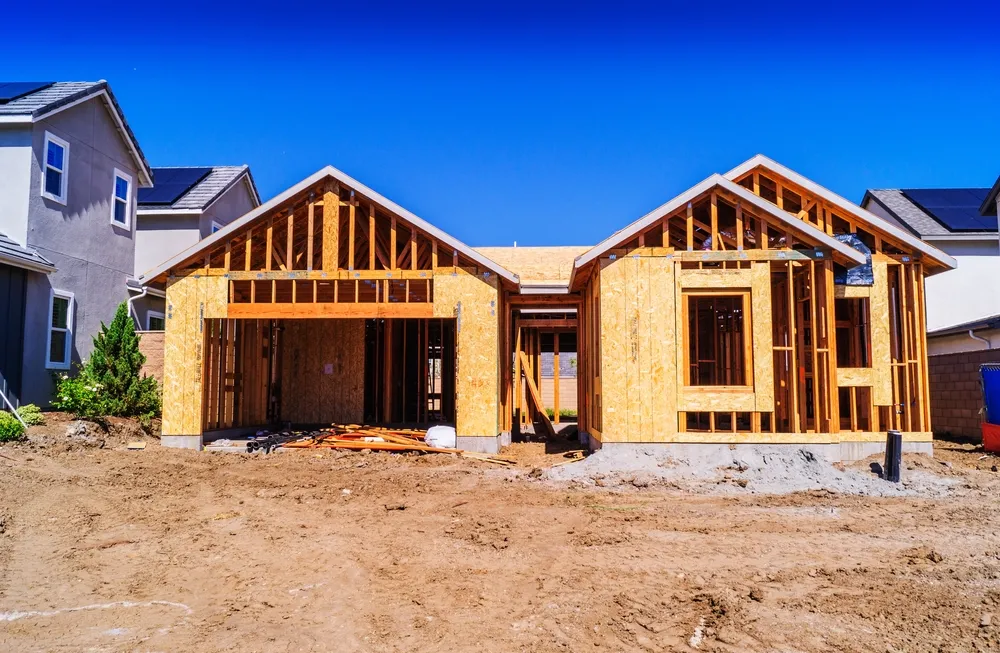
Months after the Altadena fires, the gap between approved permits and actual construction starts points to a bottleneck that has little to do with city bureaucracy. Homeowners with insurance payouts in hand are still not committing to builders. The reason, increasingly, is not approval delays but pricing: most homeowners rebuilding after a fire cannot get a firm, guaranteed number for what the job will actually cost before they sign a contract.
That distinction matters because insurance coverage for a rebuild is fixed. A homeowner working with a traditional builder typically receives a ballpark estimate rather than a locked-in figure, and any gap between that estimate and the final bill has to be absorbed out of pocket or resolved by delaying construction to seek additional bids. For families whose budgets are capped by a payout amount and who may have no reserve to cover overruns, that ambiguity is not a minor inconvenience; it’s the thing standing between an approved permit and a shovel in the ground.
Why Permits Don’t Equal Progress
Coverage of LA’s rebuilding pace has tended to focus on the number of plans submitted or permits approved, treating that figure as a proxy for recovery. It isn’t. The city has moved to accelerate plan review in some categories; ADUs already carry mandatory review timelines, but for single-family homes, that enforcement hasn’t arrived yet, and even where permits clear quickly, financing and contracting frequently don’t follow at the same pace.
Jeff Cheung, Founder & CEO of Buildoly, sees the disconnect from the contractor side. Homeowners may have an approved permit, he says, but they still haven’t contracted with a builder, started construction, or finalized funding with their insurance company. “The primary reason for that is because maybe they don’t have price certainty in knowing exactly how much this rebuild is going to cost,” Cheung says. “Any types of cost overruns pose a great risk to them in being able to rebuild.”
The Price-Certainty Gap
A handful of builders have tried to close that gap with standardized, fixed-price models disclosed before a contract is signed, an approach that took hold first in the ADU market, where smaller footprints, more predictable utility connections, and fewer jurisdictional complications made cost modeling more tractable. Buildoly’s version of this is a set of pre-designed home models with all-in pricing set before signing, an approach the company has extended from ADUs into primary-home rebuilds.
Extending a fixed-price model from ADUs to full homes means accounting for a wider range of site variables, utility locations, slope conditions, and jurisdictional requirements that don’t stay constant from lot to lot the way they largely do with smaller accessory units. “It’s pretty straightforward for us to estimate all the cost of the build itself when it comes to the materials and the labor,” Cheung says. “What’s challenging is being able to identify the variables that are different from one lot to another.” Buildoly addresses this with a database of site-level variables compiled across each proposal; other builders attempting the same shift toward fixed pricing face a version of the same problem, whether or not they’ve solved it the same way.
Where Fixed Pricing Meets the Insurance Process
Fixed, upfront pricing changes more than the homeowner’s risk calculus; it also changes how insurance carriers evaluate a rebuild. When a proposal lays out all costs before a contract is signed, a carrier can often fund the project without the back-and-forth that typically accompanies construction draws against an open-ended budget. That difference is part of why price-certainty models have found early traction in fire-affected areas specifically: insurance financing is central to nearly every rebuild, and any model that removes uncertainty from that conversation has a direct effect on how quickly a project can move from permit to construction.
Fire-Resistant Standards Are Becoming the Floor, Not the Ceiling
Post-fire policy changes across California are pushing builders toward fire-resistant construction more broadly; materials and design standards that were previously optional in many jurisdictions are increasingly becoming baseline expectations for new residential construction in fire-prone areas. Cheung says Buildoly’s designs already incorporated fire-rated construction before the Altadena fires, which he attributes to building for aging-in-place and multigenerational households where long-term resilience was already a design priority. As those standards tighten statewide, the pricing-certainty problem and the fire-resistance problem are converging: homeowners rebuilding now need cost predictability and construction that meets a moving regulatory bar at the same time.
What This Means
The permitting pipeline in fire-affected areas will keep moving on its own timeline, shaped by city review capacity and policy changes like AB 1033, which allows homeowners to sell ADUs as standalone condominium units and is expected to expand to more of California in the coming years. But permitting speed addresses only one half of the bottleneck. The other half is financial: as long as most rebuild contracts carry open-ended pricing, homeowners with fixed insurance payouts will keep sitting on approved permits rather than breaking ground. Whether that changes will depend less on how fast cities can approve plans than on whether fixed-price and other cost-certainty models move from a niche offering into a standard practice across the builders serving fire-affected homeowners.
About the Expert: Jeff Cheung is the Founder and CEO of Buildoly, a construction company offering fixed-price ADU and home rebuild models in fire-affected areas of California.
This article is based on information provided by the expert source cited above. It is intended for general informational purposes only and does not constitute legal, financial, or real estate advice. Readers should conduct their own research and consult qualified professionals before making any real estate or financial decisions.
Similar Articles
Explore similar articles from Our Team of Experts.