
Across Los Angeles County, the conversation around housing affordability has settled into a familiar shape: rents keep climbing, and the leap to homeownership feels further out of reach with...

Ocean City, New Jersey Flood Insurance Costs Less Than Most Buyers Expect

Written by:
Date:
11 Aug 2026
Share via Facebook

Share via Linkedin

Share via X

Copy to clipboard

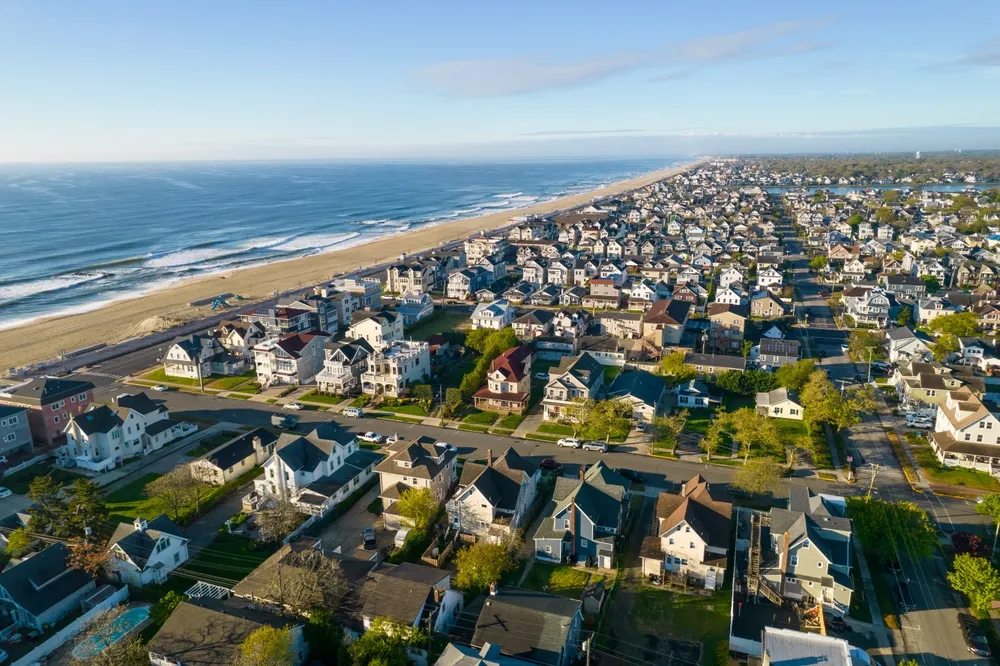
National headlines about soaring flood insurance have made barrier-island buying sound like a financial minefield. But in Ocean City, New Jersey, buyers routinely arrive bracing for five-figure annual premiums and find the actual cost far lower. That gap between perception and reality, according to one agent with 37 years in the market, may be steering cautious buyers away from properties they could comfortably afford to insure.
James Monteleone, a real estate agent with Berger Realty who has sold homes on this Cape May County island for 37 years, says flood insurance rarely dominates his client conversations. “You don’t have as many conversations about that as you would think,” he says. Buyers acknowledge the requirement because they are purchasing on a barrier island. But the topic does not lead negotiations or kill deals the way financing problems or inspection disputes do.
What Buyers Pay
The disconnect, Monteleone explains, comes from media coverage that spotlights worst-case scenarios: severe flood zones, high-value coastal mansions, and properties in states hardest hit by FEMA repricing. In Ocean City, the reality for a typical property is more modest. Monteleone says buyers often discover their actual policy costs roughly a thousand dollars annually. That figure surprises people who expected something far higher.
This insurance cost adds to carrying costs alongside property taxes, HOA fees, and maintenance. But it is a different order of magnitude than the tens-of-thousands figure that dominates online discussions about coastal real estate risk. For a buyer weighing whether to enter this market, the insurance line item may turn out to be one of the smaller costs rather than the largest.
Where Costs Climb
Monteleone notes that the low-cost picture does not apply uniformly. Properties in more severe flood zones or at the very high end of the price spectrum can face meaningfully higher premiums. Ocean City’s market spans a wide range, from condos in the mid-six figures to new-construction single-family homes above $10 million.
Buyers at the top of that range should expect insurance to scale accordingly. Those shopping in the most flood-vulnerable sections of the island should request elevation certificates and prior claims history before assuming the thousand-dollar benchmark applies.
What Kills Deals
If flood insurance is not the deal-breaker buyers anticipate, what is? Monteleone points to two factors that collapse transactions far more often: financing issues and home inspection disputes. Financing problems often arise when documentation requirements trip up buyers who assumed they were fully approved. In a market where sellers have leverage, inspection negotiations can escalate quickly. Monteleone says sellers with strong properties in good locations will simply move on to the next offer rather than negotiate repairs.
That dynamic matters for anyone approaching Ocean City with a budget shaped by flood-insurance fear. The costs that actually derail purchases tend to be hidden in the financing process or in deferred maintenance, not in the annual insurance bill. Buyers who budget thousands more than necessary for flood coverage based on national reporting may be surprised. Their actual premium is often a fraction of that amount, which means they have more purchasing power than they assumed.
Market Absorbs Costs
Ocean City’s rental market helps explain why flood insurance, even at higher levels, does not suppress demand the way it might in a purely owner-occupied market. Monteleone says beachfront rentals now command $9,000 to $15,000 per week in peak season. For owners who rent even a few weeks annually, that revenue dwarfs the insurance carrying cost. This makes the premium a minor line item relative to income.
The broader market remains active despite headwinds from interest rates, geopolitical uncertainty, and gas prices. Monteleone describes buyer sentiment as “cautiously optimistic.” Prices have not dropped, and well-located, well-finished properties still attract multiple offers. Single-family homes in particular have appreciated significantly, with properties that sold for $1 million to $1.7 million three years ago now trading at $2 million to $3 million, according to Monteleone.
For buyers considering Ocean City, the practical takeaway is straightforward: flood insurance deserves attention but not outsized fear. The actual cost for most properties falls well below national worst-case figures. The financial risks more likely to affect a purchase are tight financing requirements, inspection surprises, and competition from limited inventory of quality properties.
About the Expert: James Monteleone is a real estate agent with Berger Realty in Ocean City, New Jersey, specializing in residential sales and investment properties along the Cape May County shore.
This article is intended for informational purposes only and does not constitute legal, financial, or investment advice. The views and opinions expressed herein reflect those of the individuals quoted and do not represent an endorsement of any company, product, or service mentioned. Readers should conduct their own due diligence and consult qualified professionals before making any investment decisions.
Similar Articles
Explore similar articles from Our Team of Experts.