

The Chicago residential market shows stability in early 2026. Affordability concerns and slower sales affect housing markets nationwide. However, local agents report steady buyer interest, e...

In New Jersey, Multifamily Properties Sell Before They Reach the Open Market

Written by:
Date:
18 Aug 2026
Share via Facebook

Share via Linkedin

Share via X

Copy to clipboard

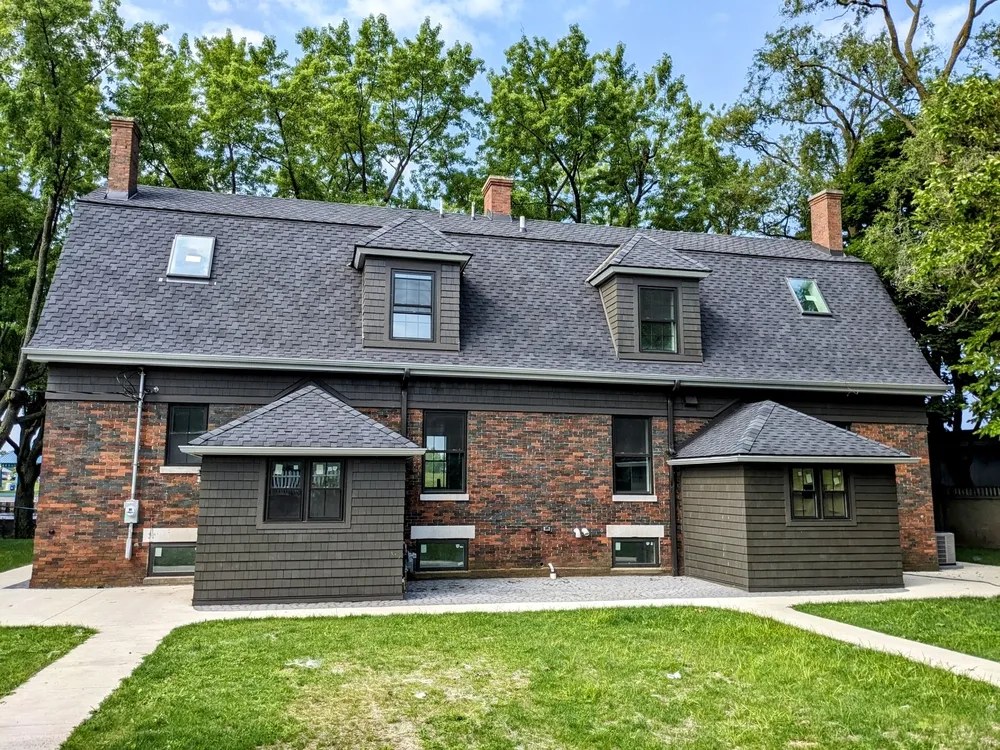
Most first-time buyers in New Jersey are competing against investors for the same homes – not single-family houses, but small multifamily properties with two to four units. Both groups want them for the same reason: rental income from the additional units either justifies the investment or makes the mortgage affordable. The result is that correctly priced multifamily listings often sell before they are publicly marketed, according to Lodi Tannios, Founder, Owner, and Real Estate Broker at Trinity Realty, a brokerage covering North, Central, and South Jersey.
“Anything between two and four, they get taken off the market like that, before we even announce that they’re in the market,” Tannios says. “Obviously, with the right strategy, with the right pricing, with the right timing.”
The pattern holds regardless of location within the state. Whether a two-family is listed in North Jersey, Central Jersey, or further south, the absorption rate for correctly priced multifamily homes outpaces single-family homes in the same areas.
Why First-Time Buyers Are Competing With Investors
Rising rental costs across New Jersey have pushed a segment of first-time buyers toward owner-occupied multifamily purchases. A buyer who cannot afford a mortgage alone can live in one unit and rent the other to cover part of the payment. That demand sits on top of traditional investor interest, compressing days on market for small multifamily listings.
The dynamic creates a pricing environment where motivation and strategy matter more than broad market conditions. Properties that linger, in Tannios’s experience, are almost always mispriced, often because agents defer to seller expectations rather than conducting independent analysis of market value. “If you price it right and you market it right, it’s gonna be sold very fairly quick,” she says.
The distinction matters for sellers considering a multifamily listing. A property priced according to comparable sales data will attract competing offers from both investors and owner-occupants. A property priced according to the seller’s hopes will sit, regardless of how strong the underlying demand is.
The Rate Expectations Problem
One factor slowing single-family transactions is a persistent gap between current mortgage rates and buyer expectations. Rates in the high fives and sixes, which were standard before the pandemic, now feel elevated to buyers who remember the two and three percent environment of 2020 and 2021.
“People are still holding on to the 2 and 3%,” Tannios says. “And that’s causing a little bit of an issue for people who are not really aware of why this is not going to come possibly ever again.”
Investor buyers, by contrast, are largely unbothered. They treat the rate environment as a solvable problem, either through refinancing later or through cash-flow math that accounts for current borrowing costs. First-time buyers require more education on why waiting for lower rates may cost them more in appreciation than they save in interest.
Tannios describes the agent’s role in these conversations as essential: explaining that current rates are historically normal, that refinancing remains available if rates decline, and that the purchase itself builds equity regardless of borrowing cost. “The realtor is always going to be the glue holding the whole transaction together,” she says. “If the realtor is not educated enough about real estate and what they’re working with, they are not going to be a good addition for their buyers.”
Migration Patterns Are Still Shaping Demand
New Jersey continues to absorb buyers from New York and Staten Island – a migration pattern that intensified during the pandemic and has not reversed. The appeal is straightforward: proximity to New York City employment without city-level housing costs, combined with more physical space.
Within the state, a secondary migration is underway. Buyers priced out of North Jersey’s denser, more expensive markets are moving toward Central and South Jersey, where land is more available, and prices per square foot are lower. “The more south you go, the more you get for your money,” Tannios notes.
For sellers in Central and South Jersey, this internal migration means a growing pool of buyers arriving with North Jersey budgets, buyers accustomed to higher pricing who may perceive southern listings as relative bargains.
What Investors Should Understand About the New Jersey Market
For investors evaluating New Jersey, the opportunity depends entirely on strategy. Fix-and-flip economics vary by acquisition price and renovation cost. Rental income viability depends on which submarkets generate enough rent to justify the hold. Building, whether on raw land or by adding to an existing structure, introduces a different set of variables.
Tannios’s approach to investor clients involves running the numbers before presenting a listing – estimating renovation costs, projected sale price, and expected profit. “I’m not just sending him a listing that I came across,” she says. “I have done my homework; I have done my numbers.”
Seller Concessions Depend on Individual Circumstances
Whether sellers are offering credits or price reductions depends less on broad market conditions and more on individual motivation. A seller who listed speculatively – hoping for top dollar without urgency – is unlikely to concede anything. A seller who has already purchased a home in another state has little leverage to hold firm.
Tannios describes a deal closing this week in which a seller initially refused all inspection credits on an as-is sale, then agreed to $4,000 in credits after purchasing a property in Florida. “She went from ‘don’t ask me for credit’ to eventually giving my buyer $4,000 in credit,” she says.
The pattern reinforces a broader point about the New Jersey market: conditions vary deal by deal rather than shifting uniformly across geographies. The question for both buyers and sellers is not what the market is doing in aggregate but what the other party’s motivation looks like in a specific transaction.
Looking Ahead
Tannios says this year is performing better than last year, though not as strong as two years ago. The external variable he is watching most closely is geopolitical, specifically, how ongoing conflict affects gas prices and interest rates. “If it continues to grow, obviously it’s going to affect us negatively here,” she says. “If it slows down or stops, it’s going to affect us positively.”
About the Expert: Lodi Tannios is Founder, Owner, and Real Estate Broker at Trinity Realty, a brokerage serving North, Central, and South Jersey with a focus on multifamily and residential transactions.
This article is based on information provided by the expert source cited above. It is intended for general informational purposes only and does not constitute legal, financial, or real estate advice. Readers should conduct their own research and consult qualified professionals before making any real estate or financial decisions.
Similar Articles
Explore similar articles from Our Team of Experts.