

South Florida’s real estate market remains a magnet for investment, even as national conditions tighten. Community banks play a pivotal role in financing development projects that larger b...

In Northwest Houston, Resale Homes Compete Against Builder Incentives Most Sellers Can't Match

Written by:
Date:
18 Aug 2026
Share via Facebook

Share via Linkedin

Share via X

Copy to clipboard

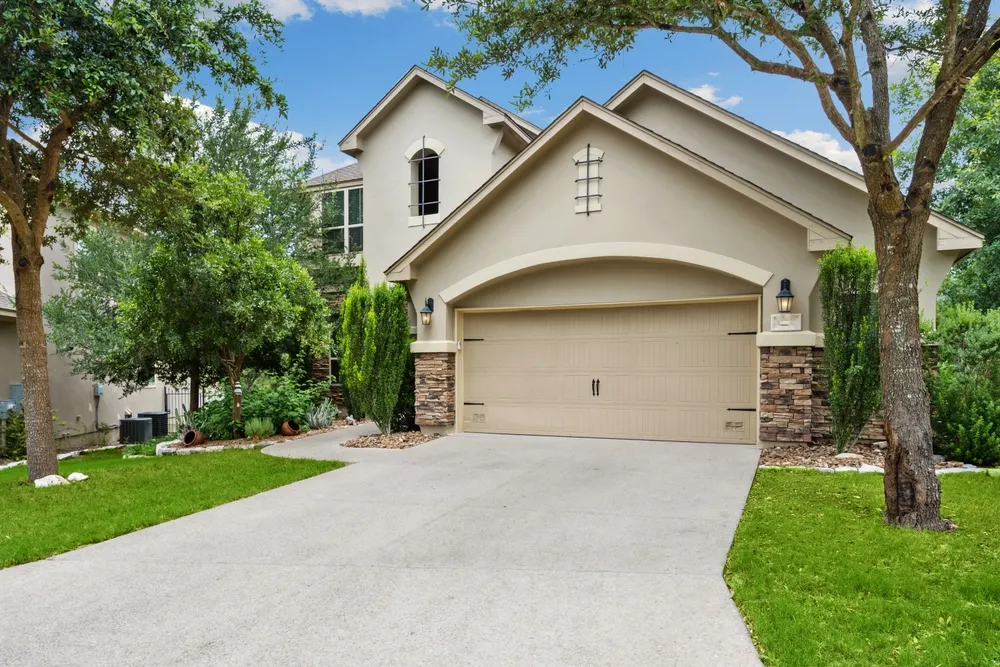
The Northwest Houston resale market faces competitive pressure that has little to do with interest rates or buyer demand. New construction communities ringing the area offer aggressive buyer incentives, closing cost coverage, design center upgrades, and boosted agent commissions that pull qualified buyers away from established neighborhoods. For investors and agents working the resale side, the challenge is not finding buyers. It is convincing them that a renovated home in a proven neighborhood is worth choosing over a brand-new one down the road.
Steven Kjol, Realtor & Team Lead with The Fidelis Group at Coldwell Banker Realty, works primarily with fix-and-flip investors in northwest Houston and the Lake Conroe corridor. His read on the market is that resale homes can still compete, but only when renovations are executed well enough to stand next to new builds offering bundled incentives.
Cooling Without Collapsing
Average days on market in the area have stretched to roughly four months, according to Kjol, and listings sitting for six months or more are no longer unusual. By his measure, a market crosses into true buyer’s market territory only when average days exceed six months – meaning northwest Houston is close but has not tipped.
“You could talk to ten Realtors and get ten different stories,” he says. “Yes, as a whole, I’d say it’s cooled off only because average days on market have lengthened. But in my opinion, it’s still a bit of a seller’s market.”
The shift is visible in buyer behavior. Agents are now touring qualified buyers through 20 to 30 homes before they narrow to a top five, a contrast to the 2021 environment where hesitation meant losing a property entirely. Sellers, meanwhile, are starting to offer either price reductions or concessions, though typically not both. “It’s on the path there,” Kjol says of a full buyer’s market. “It’s just not full tilt yet.”
New Construction as the Real Competitor
Houston’s northwest corridor has an outsized volume of new construction, and the incentive structures builders deploy create a pricing dynamic that does not follow traditional market logic. Builders start phases at the low end of their range, then raise prices incrementally as communities fill in and amenities materialize. Kjol says the best investment for a buyer in new construction is to be the first house built, because by the time the community is complete, base prices alone may have risen by $30,000 to $50,000.
“I honestly don’t know what regulates new construction pricing,” Kjol says. “It’s really hard to base a resale house off of what new construction is doing because it’s apples to oranges.”
The practical effect for resale listings is that they compete not just on price but against packages – closing cost concessions, design upgrades, and boosted buyer-agent commissions that builders can absorb more easily than individual sellers. Kjol uses this knowledge defensively, understanding what his listings are up against, and notes that some buyers simply will not consider what they call “a used house.” For sellers in established neighborhoods, the implication is direct: cosmetic updates alone may not close the gap when a builder two miles away is covering a buyer’s closing costs outright.
Where Investors Should Focus
For capital looking to enter northwest Houston, Kjol points to school district quality as the single most reliable demand driver, regardless of whether buyers actually have children. In a data-saturated environment where buyers research extensively before contacting an agent, school ratings and tax rates have become primary filters.
“If you’re going to pay a high tax on your property, you want to make sure that it’s for a good school district,” he says. Outperforming areas include Cypress, The Woodlands, and Conroe, the latter particularly strong due to its highly rated school district. Underperforming pockets include parts of Spring, Humble, and Atascocita, where concessions and price adjustments are more common.
The lack of uniformity is a defining feature. “You go two blocks over, it’s a completely different story,” Kjol says. When evaluating acquisition targets, Kjol says the criteria he applies with his own investor clients are days on market, school rating, and general area knowledge, not automated valuations, which he considers unreliable due to discrepancies between tax assessments and actual market sales.
A Foreclosure Wave That Has Not Arrived
One trend Kjol is watching closely is distressed inventory, specifically, a foreclosure surge he expected but that has not materialized at scale. What he is seeing are investment properties coming to market through wholesalers, often cases where accidental landlords purchased a second home when rates were low, expecting rental income to cover the mortgage.
Many of these owners were unprepared for tenant issues and, in some cases, pandemic-era lease moratoriums that halted rent payments while their mortgage obligations continued. The result, Kjol says, is properties where tenants were evicted as the landlord was simultaneously being foreclosed on.
Tax foreclosures are also appearing more frequently, though many are being canceled by investors stepping in before auction. Kjol notes increased activity on the HUD home store, a platform he describes as having been a primary acquisition channel in the early 2010s that had gone quiet.
“If there weren’t enough investors or buyers to take them on, that was the condition that I think I and a lot of people expected to happen after Covid, but hasn’t seemed to come yet,” he says. “That’s what I’m waiting on.”
For investors positioned to act quickly, the current environment offers a narrow window: distressed properties are trickling in rather than flooding the market, which means less competition per deal than a full foreclosure wave would bring, but also fewer opportunities to choose from.
What Holds the Market Together
Kjol frames Houston’s resilience as a historical pattern rather than optimism. After 2008, he says, the area experienced a price dip that lasted less than a year before returning to normal. After Hurricane Harvey in 2017, investment opportunities surged but pricing held. The post-pandemic equity gains of $50,000 to $100,000 per home in his market have not reversed even as other parts of Texas see prices slide.
“Houston’s market’s gonna stabilize faster than the rest of the nation,” he says. Whether that stabilization comes through policy changes or through investor activity absorbing distressed supply, Kjol says the outcome for northwest Houston is the same: a market that bends but does not break.
About the Expert: Steven Kjol is a Realtor and Team Lead with The Fidelis Group at Coldwell Banker Realty, serving the northwest Houston and Lake Conroe corridor with a focus on fix-and-flip investors and resale residential transactions.
This article is based on information provided by the expert source cited above. It is intended for general informational purposes only and does not constitute legal, financial, or real estate advice. Readers should conduct their own research and consult qualified professionals before making any real estate or financial decisions.
Similar Articles
Explore similar articles from Our Team of Experts.