The Tampa Bay real estate market has been making national headlines lately, mostly for the wrong reasons. But on the ground in Pasco County, the picture is more nuanced than the broad strokes suggest. For agents working this market daily, the story is less about dramatic collapse and more about a gradual return to something resembling normal, with a few notable exceptions.
Keith Mathias, a Realtor with RE/MAX Champions operating across Pasco and Hernando Counties, has spent years building a practice around one of the area’s most consistent demographic forces: senior homeowners navigating life transitions. His background in finance and accounting gives him a data-driven framework for reading price corrections that most agents navigate by instinct.
From Artificial Peak to Realistic Pricing
The COVID-era market created conditions that were always going to be difficult to sustain. Low interest rates, suppressed inventory, and surging demand pushed prices to levels that were not anchored to long-term fundamentals. Buyers overpaid to lock in low monthly payments, and by 2023, prices had peaked. Since then, Mathias estimates values in parts of his market have come down roughly 20 percent.
The harder challenge has been managing seller expectations shaped by that peak. Many homeowners watched neighbors sell at record prices and anchored their own expectations accordingly. “For the last 20 or 30 years, we haven’t really seen a lot of years where houses deflated in value,” Mathias notes.
What has changed over the past year is seller awareness. News coverage of Tampa Bay’s market struggles has made those conversations somewhat easier. Still, some sellers who held out last year, hoping for a rebound, are now facing numbers lower than what they were offered twelve months ago. “There’s no guarantee we’re going back up to those inflated values,” Mathias says. “The boat is still kind of leaving.”
His accounting background shapes how he approaches pricing. Rather than relying on instinct, he builds cases from comparable sales data, factoring in broader economic signals to arrive at a number that will generate activity. In Pasco County’s current environment, overpriced listings are sitting for 60-plus days before sellers cut – by which point buyer interest has often moved on.
Inventory Growth, Not an Inventory Surge
Media coverage has framed Florida’s inventory situation as a sudden surge, but the buildup has been gradual. “There are more sellers than buyers every day, so every day our numbers are growing a little bit,” Mathias says.
The data tells a specific story. At the start of 2022, Pasco County had roughly 500 active listings. By the end of 2025, that number had climbed to around 2,600. A fivefold increase sounds dramatic, but Mathias puts it in context: that 2,500 to 3,000 range was considered a balanced market before the pandemic. “When our homes were appreciating three percent a year, nothing crazy, we just had a balanced market. That was normal.”
The concern is not today’s inventory level, which still resembles pre-pandemic norms, but whether continued imbalance between sellers and buyers pushes it into oversupply territory. For now, the market is closer to historical norms than the headlines imply.
What Is Moving and What Is Sitting
Within the broader market, performance varies considerably by property type and price point.
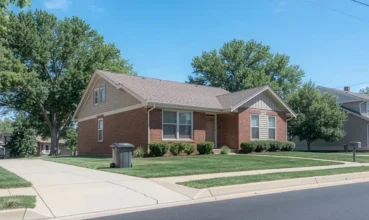
Family homes – particularly three-bedroom-plus properties – are moving well heading into the summer season. Pasco County has two highly regarded public school districts, JW Mitchell and River Ridge High School, which continue to draw families to the area. Higher-end and newer construction homes are also finding buyers, supported in part by out-of-state purchasers.
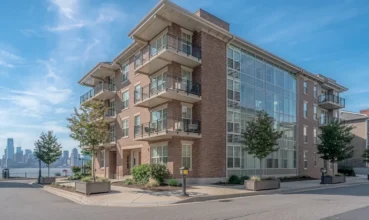
Condos are a different story entirely. The 2021 collapse of the Champlain Towers in Surfside triggered new state regulations requiring engineering assessments for buildings over four stories. Many of those buildings needed repairs, and the resulting costs have driven monthly association fees from around $400–$500 to roughly $1,000. For seniors on fixed incomes, that shift has effectively priced them out of a housing option that previously made financial sense.
The price declines have been steep. A waterfront condo that would have sold for around $300,000 before the regulatory changes recently moved for $125,000. In a golf course community where Mathias does regular business, condos that fetched $200,000 a couple of years ago are now trading closer to $100,000. “Really, nothing has changed with them. There’s been no issues with them,” he notes. For buyers who can absorb higher HOA fees or are less dependent on resale liquidity, those prices represent a significant entry-point opportunity.
Senior Downsizing
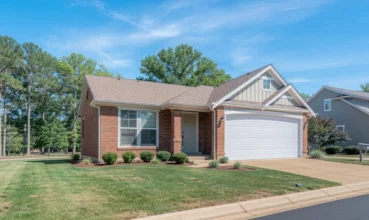
Much of Mathias’s practice centers on a transaction type most agents encounter only occasionally. Senior downsizing – whether into a smaller home, a 55-plus community, or an assisted living facility – involves layers of complexity that go well beyond a standard sale.
The most common challenge is logistical. Adult children are often scattered across the country, unable to be present for the practical work of clearing out a home that may have accumulated decades of belongings. Mathias has built a network of estate sale companies, handymen, and contractors to handle deferred maintenance and cosmetic updates. One recent transaction involved a widow whose family members were out of state; Mathias coordinated the estate sale, managed repairs, and brought the home to market in move-in condition.
The emotional dimension matters just as much. Seniors have often lived in their homes for decades and react to negotiations differently than other sellers. One pattern Mathias repeatedly sees involves buyer requests for closing-cost assistance. Sellers, particularly seniors, often react more strongly to this than to a straightforward price reduction – even when the net financial impact is identical.
His approach is to reframe the conversation around net proceeds. If a seller agrees to contribute $5,000 toward closing costs, the purchase price can be adjusted upward by the same amount, leaving the seller’s bottom line unchanged. When sellers hold too firmly on this point, they risk losing buyers to comparable homes. “A lot of times they just will buy the different one,” Mathias says.
One factor missing from most market data is how inflation has squeezed fixed-income retirees’ capacity to act on housing decisions at all. For retirees living on Social Security or pensions, rising grocery and fuel costs directly affect how much flexibility exists for major decisions like a home sale or purchase. That reality is causing some seniors who might otherwise be ready to move to hold off, which affects the supply side of the market in ways that aggregate statistics do not capture.
A Market Finding Its Footing
Pasco County is not in freefall, but it is not a seller’s market either. What it increasingly resembles is a market settling back toward the conditions that existed before an unusual set of circumstances temporarily pushed it somewhere else.
For buyers, there are genuine opportunities, particularly in the condo segment, where regulatory-driven price declines have created value that may not persist indefinitely. For sellers, the window for holding out in hopes of a return to 2022 or 2023 prices appears to be narrowing. The market is rewarding realistic pricing and penalizing delay – and the agents who succeed in it are the ones solving practical problems rather than riding momentum.
About the Expert: Keith Mathias is a Realtor with RE/MAX Champions, serving Pasco and Hernando Counties in the Tampa Bay area. He brings a finance and accounting background to his practice, which is focused significantly on senior homeowners navigating life transitions.
This article is based on information provided by the expert source cited above. It is intended for general informational purposes only and does not constitute legal, financial, or real estate advice. Readers should conduct their own research and consult qualified professionals before making any real estate or financial decisions.