

Amid soaring coastal real estate prices, investors from across the country and internationally are discovering exceptional value in Detroit’s historic housing stock, according to a vet...

Small Investors in Monmouth County, New Jersey, Should Look South for Better Value

Written by:
Date:
06 Aug 2026
Share via Facebook

Share via Linkedin

Share via X

Copy to clipboard

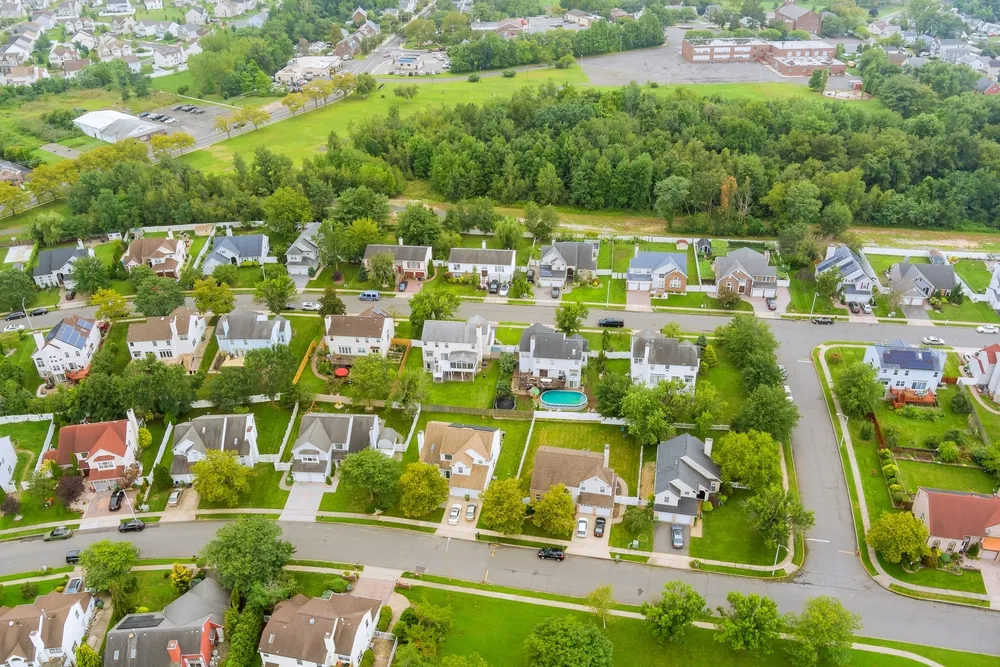
In central New Jersey’s Monmouth County, where bidding wars and over-asking sales are routine, the hottest zip codes are not always where the best investment math lives. According to Jonathan Gruebel, a Realtor with Coldwell Banker Realty who has worked the Monmouth County market for more than 30 years, value increases as buyers move south, away from the towns closest to New York City. He uses it as a rule of thumb when guiding investors: “The further south you go, the more value you’ll get.”
That does not mean southern towns are bargain markets. It means the gap between price and what a buyer gets – lot size, square footage, condition, widens in the buyer’s favor as distance from the northern edge of the county increases. For small investors trying to find deals in a market where distressed properties are scarce and competition is fierce, that geographic awareness can separate overpaying from finding a workable entry point.
Why Proximity Alone Does Not Explain the Gradient
The obvious explanation for the north-south price gradient would be commuting distance to Manhattan. Closer to New York means higher prices, a pattern visible across most of the tri-state area. But Gruebel pushes back on that as the complete explanation: “I don’t want to say it’s exactly tied to being closer to New York, because I’m not so sure that’s the sole driving force.”
Northern Monmouth County towns have established reputations, deeper school-system awareness among relocating families, and denser concentrations of buyers who refuse to look elsewhere. That concentration of demand inflates prices beyond what pure commuting logic would dictate. A town 20 to 30 miles further south may offer similar access to transit and highways but without the same intensity of buyer competition.
The Investor Landscape is Shifting
Gruebel observes that experienced investors in Monmouth County have become more selective, not because opportunities have vanished entirely, but because the math has gotten harder. Seasoned investors decline to compete when prices get bid up past their comfort zones. Meanwhile, newer investors are filling the gap. Gruebel says “there’s more investors coming in that are less experienced, that might be more aggressive with paying up,” and experienced investors “are not going to compete with those people.”
That dynamic creates a specific risk for small investors with limited capital. Competing against aggressive newer buyers in the most popular towns is a losing proposition when those buyers are willing to pay premiums that experienced investors would not accept. The alternative is geographic flexibility, the same adjustment that successful end-user buyers eventually make, applied to investment strategy.
Why Supply Keeps the Market Tight
The broader context driving competition across Monmouth County is a persistent supply shortage. Gruebel says the market is “immune to economic data,” meaning that factors like interest rates and political uncertainty, which typically soften demand, have not loosened this market. What drives prices instead is the imbalance between buyers and available homes.
Gruebel describes a recent listing he represented: within a week, the property drew nine written contracts, six or seven over asking price, with the accepted offer more than 10% above list. The buyers were predominantly younger families, either with no children or very young ones, looking in a price range around one million dollars. That level of competition is not unusual in the current environment, and it shows no sign of easing.
Finding Deals Requires Creativity
Distressed properties – the traditional investor entry point – exist in Monmouth County but are not plentiful. Gruebel describes them as “few and far between,” often not publicly marketed. Finding them requires off-market networking and patience rather than scanning listings.
His broader counsel for investors in this environment: “You have to be very creative and think outside the box.” That might mean targeting towns that adjacent-market buyers overlook, pursuing properties that need cosmetic work rather than full renovation, or surfacing deals through relationships rather than the MLS.
For small investors evaluating Monmouth County, the consideration is whether the premium in northern towns reflects durable value or compressed competition among less disciplined buyers. Gruebel notes that experienced investors already treat southern geography as their hunting ground, and that the opportunities still require creativity, not just a willingness to drive an extra 20 miles.
About the Expert: Jonathan Gruebel is a Realtor with Coldwell Banker, with more than 30 years of experience in New Jersey real estate serving the Monmouth County market.
This article is intended for informational purposes only and does not constitute legal, financial, or investment advice. The views and opinions expressed herein reflect those of the individuals quoted and do not represent an endorsement of any company, product, or service mentioned. Readers should conduct their own due diligence and consult qualified professionals before making any investment decisions.
Similar Articles
Explore similar articles from Our Team of Experts.

Real Estate Investment, Perspectives, Residential Real Estate, Commercial Real Estate, Market Analysis & Policy
Declining values in Miami office properties have made adaptive-reuse conversions financially viable for the first time in years. This opens new opportunities for developers as construction c...