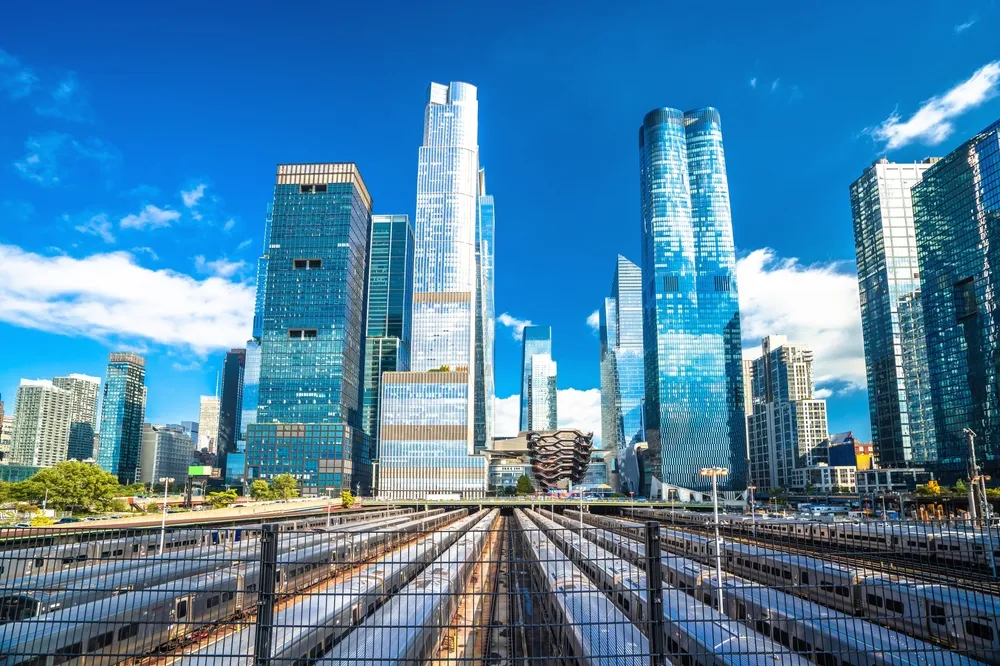
When a city converts office buildings into housing, the headline usually celebrates new apartments. What gets less attention is what happens to the businesses that now have fewer places to lease. In Manhattan, residential conversions have removed enough supply to shift the power balance between landlords and tenants, and the effect is accelerating, according to Bert Rosenblatt, Managing Principal at the New York City office of Cresa, a commercial real estate firm that exclusively represents tenants.
Rosenblatt estimates that roughly 10 million square feet of office space has disappeared from the market through residential conversions over the past two years. That figure, concentrated heavily in downtown Manhattan, represents space that will never return to the office market.
The conversions help explain why Manhattan’s office vacancy rate has dropped sharply. Rosenblatt estimates the rate has fallen from around 25 percent to roughly 15 percent since late 2024 – a compression he attributes to both rising demand and this permanent supply reduction. “The vacancy rate’s gone down almost 10 percentage points,” he said.
A Shift Rosenblatt Underestimated
Two years ago, Rosenblatt did not expect conversions to meaningfully reshape the market. Downtown Manhattan, where many of these conversions have occurred, held some of the city’s most stubborn vacancies during the pandemic recovery. Those buildings, older, less amenity-rich, difficult to lease at competitive rents, became prime candidates for developers looking to add housing stock.
But each conversion removes options for tenants shopping in that price range. “I didn’t think it was going to be that big a deal two years ago, but I think it is,” Rosenblatt said.
For small and mid-size businesses that might have looked at Class B or C office space downtown as an affordable alternative to Midtown trophy towers, the math is changing. Fewer available buildings means less leverage in negotiations, fewer concessions from landlords, and less room to wait for a better deal.
Rising Rents With No Relief Valve
The supply reduction is compounding at a moment when demand is already surging. Manhattan leased more than 40 million square feet last year, a dramatic rebound from the roughly 8 million square feet leased during the worst of the pandemic disruption. With demand strong and supply permanently reduced, landlords are raising prices aggressively. Rosenblatt described one landlord raising rates every week.
That weekly escalation may not be typical across the entire market, but it signals a dynamic that tenants accustomed to pandemic-era concessions may not be prepared for. The leverage that tenants enjoyed when vacancy hovered near 25 percent, free months, generous buildout allowances, below-asking rents, erodes as vacancy tightens.
The Class B and C buildings that have not been converted are filling with tenants that were not major players in pre-pandemic Manhattan. Rosenblatt says nonprofits, talent agencies, and businesses connected to Broadway, film, and television are absorbing much of this inventory. These creative-sector tenants are taking space that smaller traditional businesses might otherwise have occupied, further narrowing options for companies looking for affordable office space.
The Risk for Tenants Who Wait
Rosenblatt’s concern is specific: tenants with leases expiring in the next 12 months who assume the market will soften may find themselves facing significantly higher costs by the time they act. “If they have a lease coming up in the next year or so, I think they should get going,” he said, not because of a temporary spike, but because the structural supply reduction makes a return to pandemic-era pricing unlikely.
Interest rates remain elevated, and some building owners facing refinancing pressure may be forced to sell. But Rosenblatt views that scenario as a change of hands rather than a market correction. “Somebody’s going to buy that building, and the person that buys that building is going to make money,” he said. The new owner will still price space to the current market.
Pockets of relative softness remain – Rosenblatt pointed to the Garment Center and parts of downtown Manhattan – but even those submarkets are tightening as nonprofits and creative firms absorb available Class B and C inventory. For tenants without dedicated real estate teams, the practical implication is that Manhattan’s office market has structurally fewer options than headline vacancy numbers suggest. The 10 million square feet converted to housing is not coming back, and neither are the lease terms that vacancy level once supported.
About the Expert: Bert Rosenblatt is Managing Principal at Cresa’s New York office, specializing in commercial office tenant representation in Manhattan.
This article is intended for informational purposes only and does not constitute legal, financial, or investment advice. The views and opinions expressed herein reflect those of the individuals quoted and do not represent an endorsement of any company, product, or service mentioned. Readers should conduct their own due diligence and consult qualified professionals before making any investment decisions.
Major real estate companies are increasingly restricting access to their proprietary databases. Data ownership now outweighs transaction volume or brand recognition as the primary source of ...
Manhattan’s cooperative apartments, which make up about 65 percent of the city’s housing stock, are seeing a sharp drop in demand and prices compared to condominiums. According to Steven...
The South Florida condominium market is experiencing a major crisis as maintenance fees soar, reshaping buyer behavior and property values. According to Arkadiy Abdurakhmanov of United Realt...
Not every Boston suburb that rezoned for new apartments will actually get them. The towns that treated a recent state mandate as a genuine opportunity are already attracting developers. The ...
In Scottsdale, where desert landscapes dominate, and summer heat regularly climbs above 100 degrees, homes with water views have always been rare and desirable. But over the past year, deman...
A new surge of social media-driven investment activity is inflating retail property values across the DMV region, creating conditions that could lead to a bubble similar to the multifamily i...