

The rise of remote work has altered where people choose to live, and central New Jersey stands out as a clear example. Once overlooked in favor of more densely populated suburban corridors, ...

In New York's Capital Region, Modular Construction Puts New Homes Within Reach for First-Time Buyers

Written by:
Date:
11 Aug 2026
Share via Facebook

Share via Linkedin

Share via X

Copy to clipboard

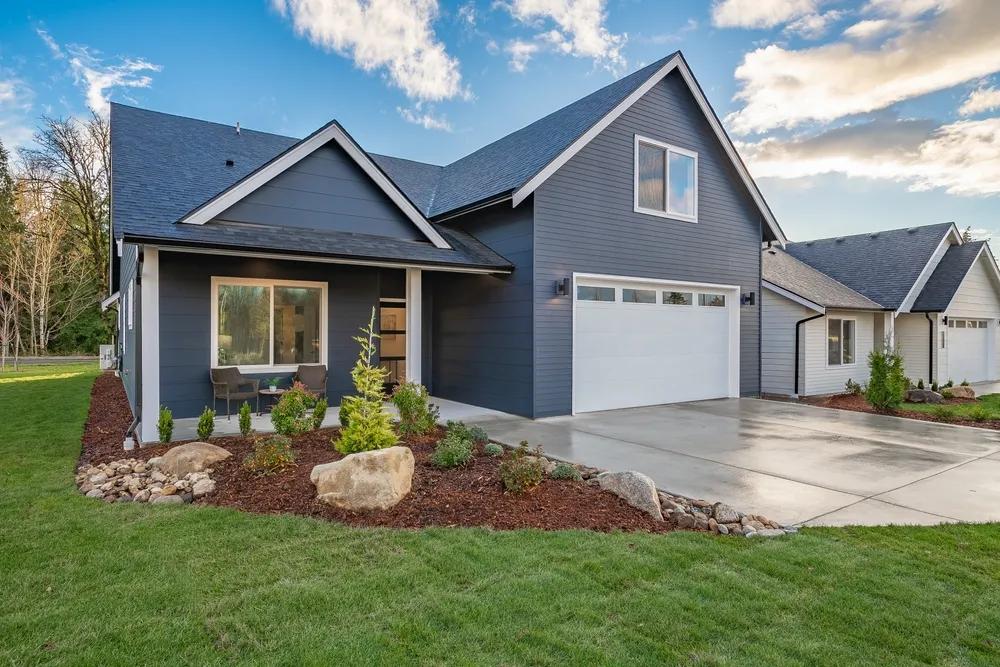
Most first-time buyers in the Northeast assume new construction is out of reach. In the Capital Region of upstate New York – the sprawling metro area anchored by Albany, Schenectady, and Saratoga – that assumption is being tested by modular home developments priced to compete directly with older existing inventory.
The dynamic is straightforward: buyers who expected to spend years saving for homeownership are discovering that factory-built homes in communities like Johnstown can cost about the same as their current rent, according to Sarah Itterman, a Realtor with Sterling Real Estate Group. The tradeoff is within a comfortable commuting distance of the Capital Region. For a growing share of buyers relocating to the area for work, that exchange is easy to accept.
Why Johnstown Is Drawing Attention
Johnstown sits at the foot of the Adirondacks, north of Albany, in a part of New York State that most people outside the region don’t associate with growth. But the local economy has been expanding steadily over the past decade. Historic downtown revitalization, new retail, and a $3.2 million Amazon facility going in just south of town are reshaping the job market and housing demand simultaneously.
“A lot of people are coming into the state for work, for family,” says Itterman, whose brokerage – an independent firm based in Ballston Spa – voted best real estate office of Saratoga for the past 4 years and top 10 independent brokerage in the Capital Region. “Albany and the surrounding areas, there’s a lot of new jobs coming to the area.”
The result is a buyer pool that skews heavily toward first-time purchasers and out-of-state relocators, many of whom have never visited upstate New York and arrive expecting something closer to New York City pricing and density. What they find instead are new construction homes starting in the mid-$300s on lots exceeding a third of an acre.
The Modular Advantage
The price accessibility is made possible by modular construction, specifically, homes built 85% complete in a climate-controlled factory roughly 17 miles from the development site. The manufacturer, Bill Lake Modular Homes, builds to regional and local municipal code, not the federal standards that govern mobile or manufactured housing – a distinction that matters for financing, appraisal, and long-term value.
Michael Caruso, who works alongside Itterman on the Aspen Hills development in Johnstown, says the most common question from prospective buyers is whether modular means mobile. “If you rolled into the community and saw the homes we currently have up, you wouldn’t even be able to tell they’re modular,” he says.
The factory timeline runs six to eight weeks from production start, offering a level of predictability that site-built construction struggles to match – particularly in a region where snowstorms can halt framing for weeks. Quality control is tighter as well: materials that don’t meet moisture-content thresholds are rejected before they enter the build process, and every stage of production is inspected by both the manufacturer’s team and a third-party engineering company before delivery.
Caruso says the efficiency and predictability of modular construction is what draws buyers who are already interested in new builds. Plans are approved by the state and a third-party engineering firm before production begins, and the controlled factory environment eliminates weather-related delays and material degradation that affect traditional site-built homes.
What First-Time Buyers Are Weighing
Interest rates remain the primary concern Itterman hears from first-time buyers. But the conversation shifts once buyers compare the total cost of a new modular home against an existing home that may need a roof, windows, or mechanical systems within a few years.
“When you are a brand new homebuyer, the last thing you want to worry about is putting a new roof on top of your mortgage and raising a family,” Itterman says. “We can say, look, you can purchase a brand new house and not have to worry for several decades about those things.”
The warranties that come standard with new construction – absent from homes that are 30, 40, or 50 years old – reduce the ongoing financial risk that first-time buyers are least equipped to absorb. For buyers already stretching to qualify at current interest rates, knowing that major systems are covered for years removes a layer of uncertainty that older homes carry by default.
A Seller’s Market With a Geographic Split
The broader Capital Region has been running as a strong seller’s market since late March. Listings are going under contract within a week in many areas, and price reductions have been uncommon. Clifton Park, the Rensselaer area, and Schenectady remain consistently active.
Summer brought a slight slowdown in listing volume, but buyer demand has held. “We still have a lot of active buyers wanting to purchase homes in the area,” Itterman says. Whether new construction competes directly with resale depends largely on geography and commute tolerance; buyers focused on downtown Albany or Schenectady aren’t cross-shopping Johnstown, within a comfortable commuting distance of the Capital Region
Itterman says that encouraging buyers to consider the fuller picture – a brand new house, lower taxes, and long-term peace of mind against an extra 15 minutes of commute – has been a deciding factor in pushing people toward communities like Aspen Hills.
Looking Ahead
The Amazon facility and other employers moving into the Capital Region are expected to sustain both job growth and inbound migration. Itterman sees that momentum reinforcing demand for communities like Aspen Hills that offer attainable pricing without sacrificing quality or space. “It’s still just a growing economy here,” she says, “and yet people don’t want to be in the middle of it. They want to be able to go home and escape it on the weekend or at night after work.”
For first-time buyers priced out of closer-in neighborhoods, the Capital Region’s outward expansion – driven by factory-built homes that deliver faster and cost less than their site-built equivalents – offers a path that didn’t exist a decade ago.
About the Expert: Sarah Itterman is a Realtor with Sterling Real Estate Group, an independent brokerage based in Ballston Spa.
This article is based on information provided by the expert source cited above. It is intended for general informational purposes only and does not constitute legal, financial, or real estate advice. Readers should conduct their own research and consult qualified professionals before making any real estate or financial decisions.
Similar Articles
Explore similar articles from Our Team of Experts.