
In recent years, the steady flow of affluent buyers from New York to South Florida has created a more integrated luxury real estate corridor between the two regions. What were once distinct ...

In the Hudson Valley, Listings Increasingly Come From Life Events, Not Choice

Written by:
Date:
10 Aug 2026
Share via Facebook

Share via Linkedin

Share via X

Copy to clipboard

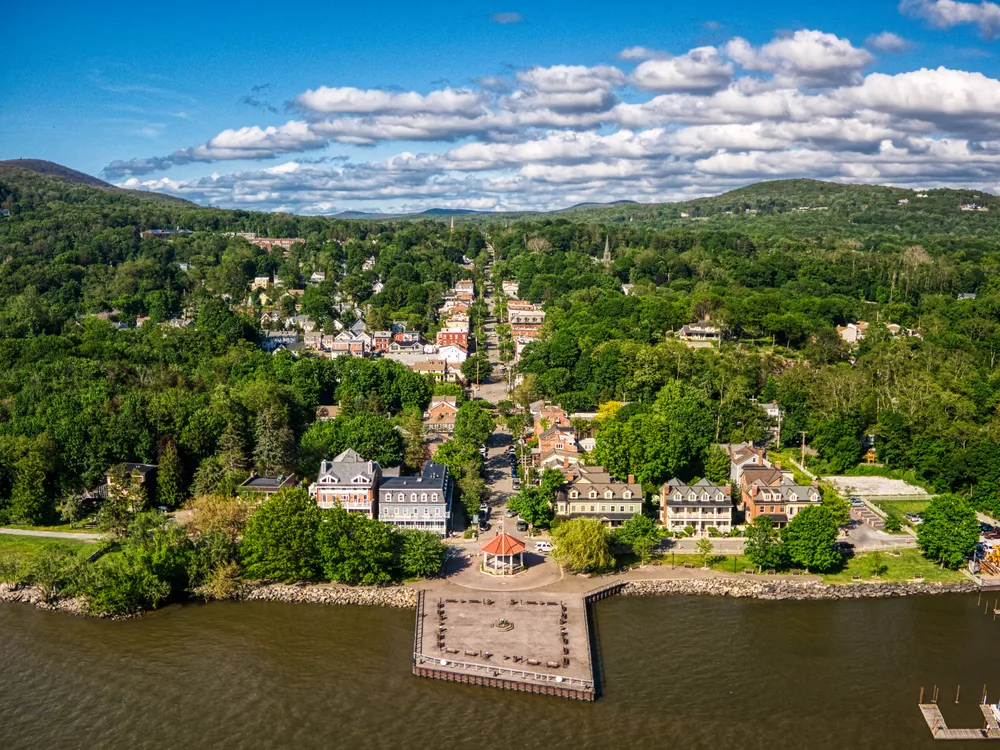
The Hudson Valley real estate market isn’t short on demand. It’s short on sellers willing to move. In Dutchess County and the surrounding area, roughly halfway between New York City and Albany, homeowners who locked in mortgage rates of 2% to 3% five or six years ago are staying put, even when their families outgrow their homes. The result is a market where inventory increasingly comes from estate sales, nursing home transitions, and relocations rather than the traditional move-up cycle that once kept listings flowing.
Thomas Klug, Broker & Owner of Hudson Valley Premier Properties Realty, has watched this shift unfold over 26 years in the market. His brokerage of 15 agents serves a region that draws heavily from New York City’s commuter population, buyers willing to trade a subway ride for a Metro-North train in exchange for more space at a lower cost.
“You don’t see the lateral moves,” Klug says. “Even if you go to a $400,000 house, your mortgage payment might be double for that extra $100,000 because the interest rates are higher.”
A Market That Normalized Without Crashing
Two years ago, homes listed at $500,000 in the Hudson Valley might sell for $525,000 with no concessions. Today, according to Klug, that same listing is more likely to close around $485,000. Prices haven’t fallen – he estimates annual appreciation has slowed from roughly 20% during the pandemic surge to something closer to 5% to 10% – but the bidding-war dynamic has faded.
Sellers are beginning to offer concessions, though the market hasn’t softened enough to produce seller-paid closing costs. “If the market turns and gets bad, you might see that,” Klug says. “Right now it isn’t that kind of market.”
The shift has made pricing strategy more consequential. One of Klug’s listings sat without a viable offer at $629,000. After dropping the price to $599,900, below what he calls a “magic number” threshold where search filters cut off, an offer came within five days. “Computers are very literal,” he says. “610 is not 600.”
Who’s Actually Buying
The buyer pool has aged. Where first-time purchasers once entered the market in their 20s or early 30s, Klug now sees buyers predominantly in their mid-30s through 60s. The affordability math has moved the entry point: homes that cost $200,000 a decade ago now sell for $400,000.
The commuter value proposition remains the market’s primary draw. A buyer spending a million dollars on a one-bedroom co-op in Brooklyn could purchase a house with a yard in the Hudson Valley for $500,000 and face a comparable commute time via Metro-North. “It’s not a deep thought,” Klug says. “People are just doing it.”
One town in particular illustrates the transformation. Beacon, in Dutchess County, was a place where property couldn’t be given away 25 to 30 years ago. Today it’s filled with boutiques, breweries, and restaurants, with two-bedroom condos selling for up to a million dollars. Klug attributes much of the area’s broader growth to a deliberate effort by county government to attract new businesses after IBM downsized roughly 25 years ago, a strategy that prevented the economic contraction many expected.
Where Investors Are Deploying Capital
For investors, multifamily rentals represent the strongest opportunity in the region, according to Klug. Commercial remains a tougher market with less activity, but residential rental demand is strong. In the city of Poughkeepsie, one investment group has accumulated 137 properties ranging from two-family houses to former department stores slated for conversion into boutique hotels and restaurants.
Klug sits on Poughkeepsie’s zoning board and reports substantial new development activity coming through approvals. The pattern he describes is a town-by-town revitalization moving northward, Cold Spring first, then Beacon, now Poughkeepsie, each following a similar arc from overlooked to in-demand.
What Keeps Homes Sitting
When a property lingers, the cause is almost always price or condition. Klug describes a current listing that has been on the market since February after a home inspection revealed extensive attic mold. The issue was remediated, but the extended days on market created its own stigma. “People are like, oh, it’s been on the market that long,” he says.
Buyer expectations have also shifted. Klug describes what he calls the “HGTV syndrome,” buyers rejecting homes over cosmetic issues like wall color or carpet condition that would be fixed after closing. On the seller side, the same media environment creates unrealistic pricing expectations. One current client insists on listing above $400,000 for a home needing substantial work; Klug says he was surprised to receive an offer at $380,000.
The Constraint That Matters Most
The rate-lock effect is the dominant force shaping inventory in the Hudson Valley. Without the traditional move-up cycle generating listings, the market depends increasingly on life events – deaths, health transitions, relocations – to produce supply. First-time buyers face the compounding pressure of higher prices and higher rates simultaneously, pushing homeownership later in life.
“I can’t tell you how many houses you see when you look at the owner and it’s like ‘the estate of,'” Klug says. “That’s more of what you’re seeing, not John Smith selling his house because he wants a bigger house.”
For buyers weighing a move to the Hudson Valley, the practical consequence is a market where competition concentrates on a thinner pool of available homes. The commuter economics still work – space, cost, and quality of life all favor the region over downstate alternatives, but finding the right listing takes longer when so few homeowners have a financial reason to sell.
About the Expert: Thomas Klug is Broker and Owner of Hudson Valley Premier Properties Realty, a 15-agent brokerage serving Dutchess County and the surrounding Hudson Valley with 26 years of experience in the market. He also sits on Poughkeepsie’s zoning board.
This article is based on information provided by the expert source cited above. It is intended for general informational purposes only and does not constitute legal, financial, or real estate advice. Readers should conduct their own research and consult qualified professionals before making any real estate or financial decisions.
Similar Articles
Explore similar articles from Our Team of Experts.