

Artificial intelligence is reshaping how homebuyers interact with online listings, moving the search experience beyond static photos toward something more personalized and interactive. As vi...

Along Florida's 30A Corridor, Two Markets Are Forming – and Only One Is Moving

Written by:
Date:
30 Jul 2026
Share via Facebook

Share via Linkedin

Share via X

Copy to clipboard

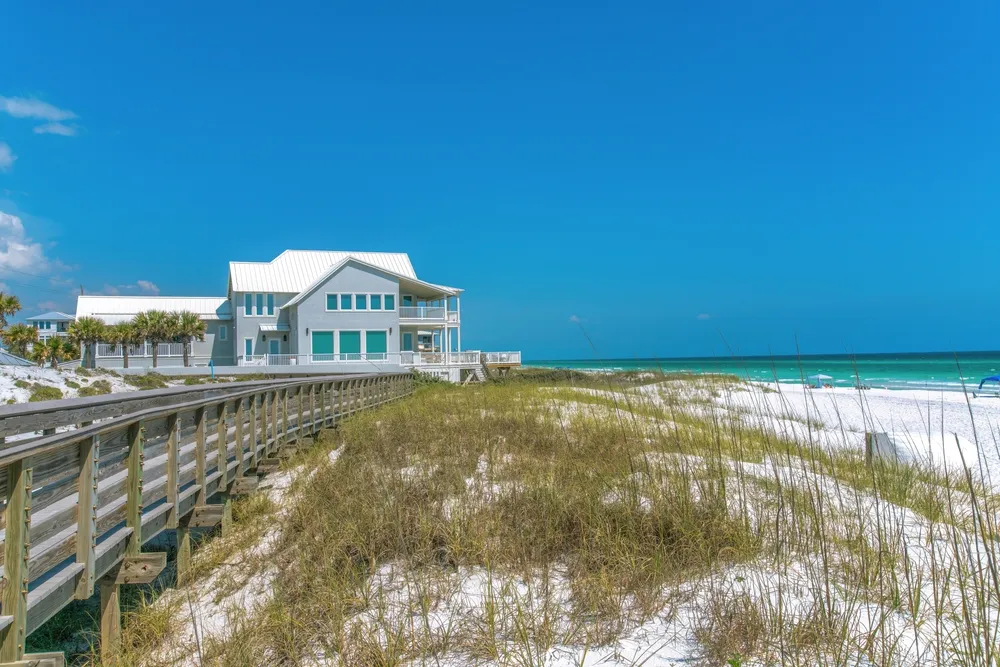
The luxury vacation-home market along Florida’s 30A corridor is splitting into two distinct tiers. Newer, well-built homes in desirable communities are commanding strong prices and attracting buyers quickly. Older homes that need work are sitting. The divergence is reshaping how buyers, sellers, and agents approach a stretch of coastline where every purchase is discretionary.
Richard Jabbour, Founder & Broker Associate of The Jabbour Luxury Group with Scenic Sotheby’s International Realty, describes the separation directly. “It is becoming clear that there are two markets, good homes that people want to have and can experience, and homes that are just not going to make the grade anymore,” he says. “Older homes not in good shape, that need a lot of work, are struggling to find buyers.”
On the other side, brand-new homes in communities like Alys Beach, updated homes in WaterColor, and new construction in Seaside – the community that started the 30A movement – are getting what Jabbour calls “extraordinarily good pricing.”
Volume Is Back to Normal
One of the more misunderstood dynamics along 30A is the relationship between transaction pace and market health. Monthly unit volume is now running 20 to 30 percent higher than a year ago, according to Jabbour, but that increase represents a return to pre-pandemic norms, not a surge. Current volumes are tracking close to 2017, 2018, and 2019 levels.
What has changed is days on market. The pandemic-era expectation that a home should sell within days has given way to historical norms of 153 to 190 days. Buyers have adjusted to that timeline. Sellers, in many cases, have not. “Sellers have still not realized that that’s normal for this market,” Jabbour says. “They still think something’s wrong after 30 days.”
The result is a gap in expectations. Buyers feel they have time and choice on their side. Sellers are struggling to determine when to accept an offer. Jabbour says the two sides are beginning to get closer together but adds, “We still have a little ways to go before buyers and sellers are on the same page of the playbook.”
For sellers listing older or unrenovated homes, this expectation gap compounds an already difficult position. A home that needs work, priced based on pandemic-era comparable sales, faces both buyer disinterest in its condition and seller frustration with a timeline that is actually normal for the corridor.
Insurance Reinforces Quality Divide
Florida’s improving insurance environment is showing up along 30A, but selectively. Homes built after 2010 – with newer windows, roofs in good condition, and hurricane-rated construction – are benefiting from significantly better rates and easier underwriting. Older homes with aging roofs or outdated building standards are not seeing the same relief.
Jabbour says buyers are more sensitive to the newness of a home than they once were: they want to confirm it meets newer building standards, that the roof is not too old, and that inspections will support a good insurance rate. “A new home has no question marks about it,” he says. “It’s built right, it’s built new. It has all the proper hurricane designs, and they get very, very good rates.”
The insurance picture is confirming rather than creating buyer preference. Buyers already favored newer homes for aesthetic and experiential reasons; favorable insurance terms now add a measurable cost advantage to that preference.
The Recovery Is Uneven
Within 30A’s named communities, conditions vary considerably. WaterColor appears to be regaining momentum, with limited good inventory, pricing that has stabilized to flat or slightly up, and a liquid market where correctly priced homes move quickly. Seaside is having a slower transaction year, but the homes that are trading tend to be new construction or substantial remodels. Rosemary Beach remains quiet, though Jabbour attributes that more to seller patience than buyer absence; he sees few meaningful list-price reductions there.
“If you price right in WaterColor, you’ll bring buyers and sellers together quickly,” Jabbour says. The same cannot be said of every community along the corridor. In Rosemary Beach, sellers appear willing to wait rather than reduce, which keeps transaction counts low without necessarily indicating weak demand.
The pattern across all three communities is consistent with the broader split: well-maintained or newly built homes find buyers at strong prices, and everything else waits.
Interest Rates and the Wealth Threshold
For homes above $3 million – which includes most of Jabbour’s practice, where the team’s average sale price runs above $2.5 million – interest rates are largely irrelevant. These buyers have the liquidity to purchase without financing. Below that threshold, persistently high rates are holding some buyers back.
Jabbour, who describes himself as an economist by trade, expects the 30-year Treasury bond to reach 6 percent before it reaches 4 percent. The implication for 30A is that the market will continue to separate along wealth lines. “Persistently high interest rates are going to hold some people back,” he says. “But that same dynamic will cause those people that have the liquidity and financial net worth to do these kinds of things to just go on and experience their lives.”
His team’s pipeline reflects that expectation. After a period with no new-construction inventory coming to market, approximately 21 new homes will begin delivering starting in September and continuing through 2027 and 2028, with average pricing around $5.6 million and a couple of beachfront listings at $21 million.
The buyers entering 30A’s upper tier are not weighing rate environments or calculating rental yields. They are making lifestyle decisions with capital they do not need to borrow. For sellers in that tier with well-built, newer homes, the market remains receptive. For sellers below that wealth threshold – or those holding older inventory that does not meet current buyer expectations – the corridor’s return to normal timelines and its preference for quality will require either patience or price adjustment.
About the Expert: Richard Jabbour is Founder and Broker Associate of The Jabbour Luxury Group with Scenic Sotheby’s International Realty.
This article is based on information provided by the expert source cited above. It is intended for general informational purposes only and does not constitute legal, financial, or real estate advice. Readers should conduct their own research and consult qualified professionals before making any real estate or financial decisions.
Similar Articles
Explore similar articles from Our Team of Experts.