
The structural pressures reshaping real estate – brokerage-platform deals, AI-driven marketing tools, and shifting listing distribution models – are forcing independent boutique brokerag...

Commercial Real Estate Investors Assume Stable Income After Disasters – That's Now Indefensible
Share via Facebook

Share via Linkedin

Share via X

Copy to clipboard


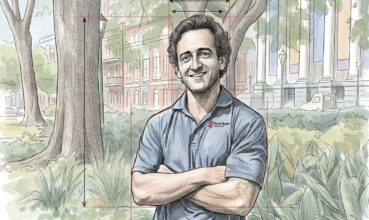
Most commercial real estate underwriting treats net operating income as stable, even for coastal properties where a single flood or wind event can eliminate cash flow for months. According to Albert Slap, a real estate professional and founder of RiskFootprint, the problem is not a lack of data. It is a persistent refusal to model what happens to debt service when a property sustains major damage and goes offline. Slap argues that investors who fail to quantify hazard exposure before committing capital are taking on risks they cannot see.
The Stable-NOI Assumption Breaks Down
Slap uses a straightforward scenario to illustrate the gap between traditional underwriting and hazard-informed analysis. A coastal commercial property generating $1.2 million in annual NOI with $900,000 in annual debt service looks serviceable on paper. But run that same property through a 500-year coastal flood scenario using Hazus, FEMA’s publicly available engineering model, and the picture changes sharply.
Under that scenario, the model may show 12% structural damage, 8% contents damage, and nine months of restoration time. NOI drops by 75%, wiping out the ability to cover debt service. Add structural and contents damage costs, factor in uninsured losses that drain cash reserves, and the stressed debt service coverage ratio drops below 1.00. The borrower cannot service debt during the restoration period. Traditional underwriting would not have caught this.
The problem compounds in markets where insurance is tightening. Slap describes an environment where hazard frequency is rising, deductibles are increasing, exclusions are expanding, premiums are volatile, and business interruption coverage is shrinking, all simultaneously. Each variable erodes the financial cushion investors historically relied on to absorb event-driven losses.
Expected Annual Loss as a Commercial Real Estate Due Diligence Input
Slap argues that quantifying hazard exposure should begin with Expected Annual Loss calculations, a metric that translates probabilistic hazard data into annualized financial terms. Using FEMA’s National Risk Index building-specific EAL rates, investors can estimate what a given hazard costs a property on average each year.
A building with a $50 million replacement cost and a hurricane wind EAL rate of $444 per million dollars of value produces an estimated annual loss of roughly $112,600, according to Slap. Over a 10-year hold period, that figure exceeds $1 million, before accounting for contents losses, business interruption, or reputational damage to tenants. “This is ROI-ready intelligence,” Slap says.
For investors evaluating coastal acquisitions, Slap contends this natural hazard risk assessment should be standard, not supplemental. The question is not whether a property will face a hazard event. It is how much that event is likely to cost, and whether the investment thesis survives it.
From Qualitative Concern to Quantified Decision
Slap draws a distinction between the sustainability framing that dominated coastal real estate conversations previously and the ROI-driven approach he sees gaining traction now. “Every sustainability or resilience action has a cause and an effect,” he says. “The cause is the decision to invest. The effect is the benefit, reduced losses, improved continuity, lower operating costs, or enhanced market value.”
That framing, Slap argues, makes resilience investments defensible to investment committees, lenders, and partners. Investors asking whether a resilient retrofit will pay back need quantified exposure data to answer the question. Without it, Slap says, decisions default to intuition, and intuition cannot substitute for risk modeling in a market where hazard severity is accelerating.
Investors who integrate hazard modeling into acquisition underwriting will identify impaired assets before purchase, price risk more accurately, and make capital improvement decisions with a clearer cost-benefit basis, according to Slap. Those who do not will continue to discover hazard-driven losses after the fact.
How the Property Resilience Assessment Works in Practice
RiskFootprint, Slap’s firm, has built a platform that aligns with the ASTM International Property Resilience Assessment Standard (E 3429-24). That standard structures hazard analysis across three stages: hazard exposure modeling, vulnerability and value-at-risk assessment, and feasible mitigation measures with cost-benefit analysis. According to RiskFootprint’s internal documentation, the platform covers more than 34 hazard exposure types for every U.S. property and incorporates multiple flood models, including Swiss Re/Fathom pluvial, fluvial, and coastal data, FEMA FIRM maps, NOAA SLOSH storm surge, and NOAA/NASA King Tide projections.
“If the comparison yields a positive number, then the Benefit/Cost owner/investor will have a reasonable basis to investigate the investment in risk mitigation measures in greater detail,” Slap says of the cost-benefit stage. The platform’s integration of first-floor elevation estimates for more than 300 million buildings – a key variable in flood vulnerability – allows investors to move from exposure identification to financial impact modeling without commissioning custom engineering studies.
For coastal CRE investors, the practical consequence is that hazard-driven financial stress testing, effectively a deal-level climate risk assessment, is now available as an automated input rather than a custom consulting engagement. Slap says pressure from lenders and secondary markets to require this type of analysis is already building.
Disclosure: Individuals or companies mentioned may have a commercial relationship with KeyCrew.
Similar Articles
Explore similar articles from Our Team of Experts.