
A house on the water in New Jersey used to be out of reach for most buyers. That is changing. Waterfront properties that were selling for $600,000 a year ago are now moving closer to $375,00...

Kit Homes Can Save You Money – or Cost You More If You Overestimate Your Skills

Written by:
Date:
26 Jul 2026
Share via Facebook

Share via Linkedin

Share via X

Copy to clipboard

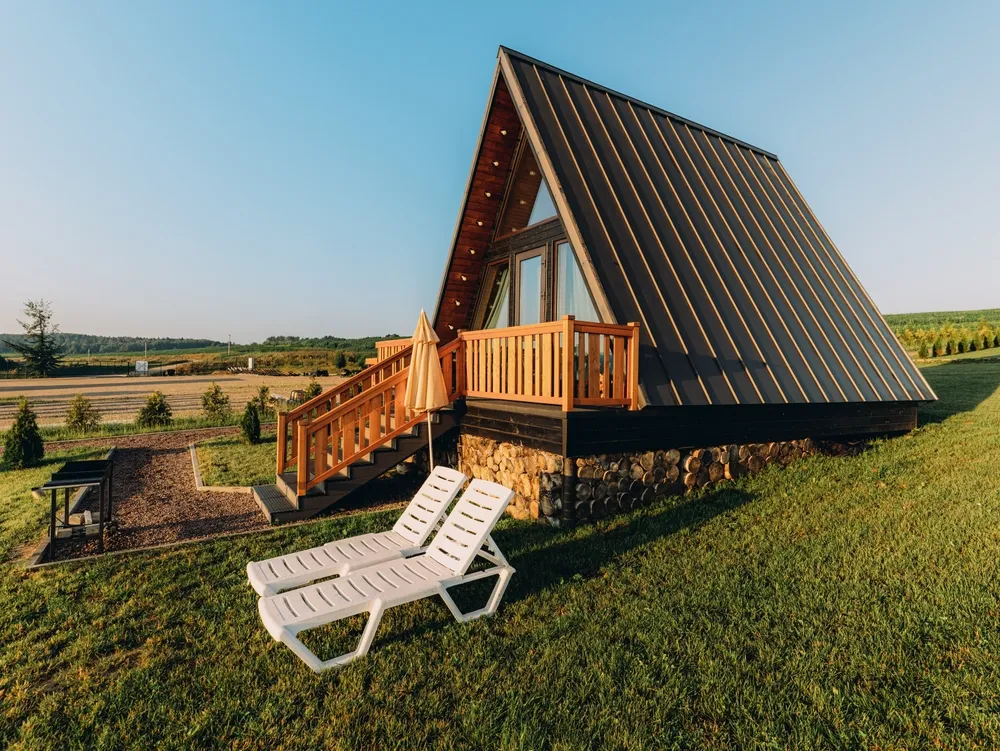
The appeal of building your own home from a kit is simple: skip the general contractor, save tens of thousands, and end up with a house you assembled with your own hands. Younger buyers priced out of traditional construction are increasingly drawn to this path. But the savings only materialize if you honestly assess one thing before you order – whether you actually know how to build.
Indrek Kuldkepp, Founder & Managing Director of Avrame, an Estonia-based manufacturer of A-frame home kits that ships to roughly 28 countries, compares the experience to buying furniture from IKEA – then multiplying the complexity dramatically. A kit home arrives as components and materials, not as a finished structure. The buyer is responsible for turning those components into a livable home.
Kuldkepp has watched this play out across markets from Canada to Germany to remote islands. The results divide sharply between buyers who have genuine hands-on skills and those who assumed enthusiasm would substitute for experience.
The IKEA Analogy, Taken Seriously
Kuldkepp uses IKEA furniture as a deliberate comparison point. “When you buy a bed from IKEA, you actually don’t get a bed,” he says. You get a box of parts. You assemble them, realize you still need a mattress and bedding, go back to the store, and eventually end up with a functional piece of furniture. A kit home follows the same logic – except the stakes are a roof over your family’s head.
The kit is the structural skeleton. Site preparation, foundation work, utility connections, insulation, interior finishing – these are all separate tasks the buyer must either complete themselves or hire out. Buyers who budget only for the kit price and assume the rest will sort itself out are the ones who run into trouble.
When DIY Goes Wrong
The risk Kuldkepp sees most often is not mild inconvenience – it is irreversible damage. “You can screw it up really badly. You can screw it up beyond repair,” he says. A buyer who does not know which end of a hammer to grab can turn a cost-saving project into something that requires professional remediation or a full restart.
His benchmark for who should attempt a self-build is practical rather than professional. “You don’t have to be a builder, but you do have to know how to use tools,” he says. Among his successful DIY customers are a policeman in Germany who built one for his daughter and a preacher in Canada who built one for himself. Neither was a professional contractor. Both were comfortable with hand tools and willing to follow detailed instructions.
For buyers who lack that comfort level, Kuldkepp’s advice is direct: hire a builder to do the assembly. The kit still saves money compared to a fully custom build, but the assembly itself should not be treated as a learning exercise.
Who This Works For – and Who It Does Not
The rising interest in DIY kit homes is driven by economic pressure, according to Kuldkepp. Traditional construction costs have climbed to the point where younger families cannot afford the conventional path. The kit home becomes attractive not because people love the building process, but because they have no other affordable option.
This is where the risk concentrates. A buyer motivated primarily by financial desperation rather than genuine building aptitude is the buyer most likely to damage components beyond repair. Unlike a botched IKEA bed – which requires a replacement trip to the store – a botched home build can consume the entire project budget, leaving no usable structure to show for it.
Kuldkepp notes that for some buyers, particularly those in remote locations, kit homes are not one option among several – they are the only option. His company has shipped to the Azores, Madeira, and the Falkland Islands. One home in northern Canada was delivered by dog sled. In areas where no general contractor will travel, a kit home solves a logistics problem that no traditional builder addresses.
The Honest Self-assessment
For buyers considering this route, the self-assessment matters more than the price comparison. If you have used power tools on projects before, can read construction drawings, and are willing to spend months on the build, the savings potential is real. If your experience with assembly stops at flat-pack furniture and you are choosing this path solely because you cannot afford a contractor, the math may work against you.
Hiring a local builder to assemble the kit adds cost but protects against the scenario where inexperience destroys materials that cannot be replaced without reordering. Kuldkepp draws the line clearly: being handy is the minimum threshold, not the ideal. Buyers who fall below that line and proceed anyway are the ones he sees turning affordable projects into expensive failures.
About the Expert: Indrek Kuldkepp is Founder and Managing Director of Avrame, an Estonia-based manufacturer of A-frame kit homes that ships to 27 or 28 countries, with Canada as its largest market and a U.S. manufacturing partner serving domestic buyers.
This article is intended for informational purposes only and does not constitute legal, financial, or investment advice. The views and opinions expressed herein reflect those of the individuals quoted and do not represent an endorsement of any company, product, or service mentioned. Readers should conduct their own due diligence and consult qualified professionals before making any investment decisions.
Similar Articles
Explore similar articles from Our Team of Experts.