
The rush to implement artificial intelligence risks missing the fundamental point about technology adoption, according to one industry expert with deep experience in both AI and real estate....

Why 3D-Printed Concrete Homes Make More Sense in Florida Than Anywhere Else

Written by:
Date:
31 Jul 2026
Share via Facebook

Share via Linkedin

Share via X

Copy to clipboard

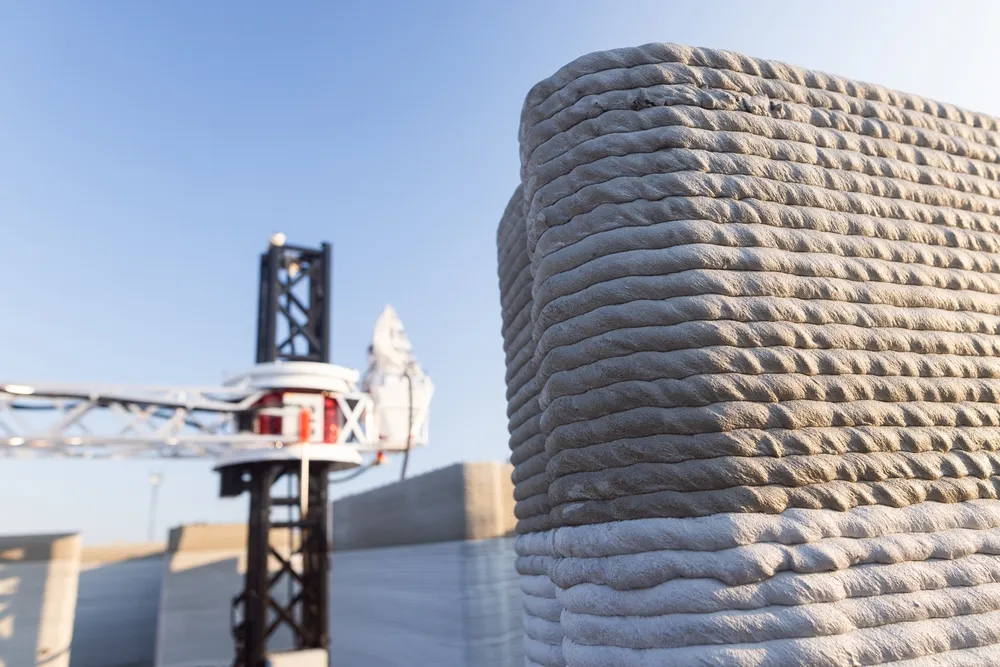
In hurricane-prone parts of the US, the case for 3D-printed housing rests less on speed or novelty than on what the walls are made of. Concrete homes printed by robots carry specific resilience advantages over stick-built wood framing, advantages that matter most in markets where storms, termites, and wildfire threaten conventional structures.
Boris Kozlov, Founder & CEO of AC3D – a Delaware-incorporated construction 3D printing company operating in the UAE and preparing to launch US projects – has spent years comparing 3D-printed concrete structures against both conventional concrete and wood-frame buildings. His assessment of where the technology creates the greatest gap is direct: “In US construction automation definitely will have more impact than, for example, in the Middle East.”
The reason is straightforward. In the UAE, where Boris currently operates, cheap and abundant labor makes traditional concrete construction already efficient and affordable. In the US, those conditions are reversed.
The Labor Problem
Wood framing dominates American residential construction because it’s fast, the supply chain is mature, and the labor pool – while shrinking – still knows how to do it. Concrete homes are more durable, but they traditionally require more labor, more time, and more specialized skill. That has kept concrete residential construction a premium product in most US markets.
Boris says US construction labor is not only expensive but also in shortage. A 3D printer operated by two or three people can produce concrete walls that would otherwise require a much larger crew. The technology doesn’t just reduce cost; it sidesteps a workforce bottleneck that is worsening.
For buyers in storm-prone markets like coastal Florida, this matters because it potentially brings concrete construction closer to price parity with wood framing. Not cheaper, necessarily, but competitive enough to consider.
What Concrete Gives You
The material advantages of concrete over wood in high-wind environments are well established. According to Boris, 3D-printed concrete is fire-resistant, termite-resistant, wind-resistant, and flood-resistant. These aren’t theoretical benefits; they map directly onto the specific threats that drive insurance costs and replacement risk in Florida, the Gulf Coast, and wildfire-prone Western states.
3D printing adds something beyond standard concrete construction. Because the printer can produce complex curved and angled geometries without the cost penalty of custom formwork, Boris argues that printed structures can be shaped to shed wind more efficiently. Traditional concrete buildings use flat, rectangular wall panels. A 3D-printed structure can incorporate aerodynamic curves that reduce wind load – a design advantage that would be prohibitively expensive to achieve with conventional forming and pouring.
The technology also allows internal wall geometries to be customized for insulation performance. Rather than adding insulation as a separate layer, the printer creates internal cavities calibrated to a specific thermal value. “You can create any internal shapes of the walls tailored to a certain amount of R-value,” Boris says. In South Florida, where cooling costs drive a significant portion of homeownership expense, that precision could translate into measurable energy savings.
No Resale Data and Limited Inventory
None of these advantages have been tested by time in the US market. According to Boris, roughly 150 3D-printed single-family homes have been completed nationwide, with perhaps 200 to 300 more under construction, concentrated in a handful of planned communities. There is essentially no resale data. A buyer purchasing a 3D-printed home today cannot point to comparable sales to understand how the market values the technology.
Insurance is another unresolved factor. While concrete construction generally qualifies for lower premiums in high-wind zones, 3D-printed concrete is new enough that individual insurers may not have standardized their underwriting for it.
Boris acknowledges the technology is still proving itself commercially. Developer trust has been slow to build, partly because the industry went through a period of overpromising. He describes the current phase as more realistic, with more modest and better-calculated claims about cost and speed advantages. “Developers expect it to be almost for free, which is unrealistic,” he says. A more accurate framing, in his view, is that 3D printing delivers repeatability, cost efficiency, and labor reduction, not a dramatic price collapse.
The cracking problem also remains unsolved. Boris identifies it as the single issue he would fix if he could: thin printed concrete layers are subject to shrinkage cracks that, while not structural, damage buyer perception of the finished product.
For a Florida buyer weighing options today, the resilience case for 3D-printed concrete is genuine, but the track record is thin. The first 3D-printed communities in the US are only now reaching the age where long-term performance data will start to accumulate.
About the Expert: Boris Kozlov is Founder and CEO of AC3D (Automated Construction 3D), a Delaware-incorporated company currently operating out of Dubai that both manufactures 3D construction printers and operates as a specialized subcontractor on building projects.
This article is intended for informational purposes only and does not constitute legal, financial, or investment advice. The views and opinions expressed herein reflect those of the individuals quoted and do not represent an endorsement of any company, product, or service mentioned. Readers should conduct their own due diligence and consult qualified professionals before making any investment decisions.
Similar Articles
Explore similar articles from Our Team of Experts.