Property taxes are now the primary factor for buyers deciding among Florida’s rural counties, according to local real estate expert Josée Lindner. In a recent interview, Lindner explained...

New Construction in California's High Desert Sounds Easy – the Permits Say Otherwise

Written by:
Date:
21 Jul 2026
Share via Facebook

Share via Linkedin

Share via X

Copy to clipboard

Unincorporated land with minimal zoning restrictions, relatively affordable lots, and a creative culture that celebrates architectural experimentation, on paper, the Southern California high desert looks like a developer’s playground. But Hargo Khalsa, a Realtor & Developer with Joshua Tree Modern who recently completed his first ground-up new construction project in Pioneertown, says the permitting reality is far more punishing than the open landscape suggests. Buyers drawn to new construction should factor in timelines that can erode their investment thesis.
Khalsa’s takeaway from building in the region is blunt: “It’s not for the faint of heart.”
The core issue is jurisdictional. Much of the high desert – including Joshua Tree, Pioneertown, and Landers – falls under San Bernardino County, which Khalsa notes is the largest county by land mass in the country. Building in unincorporated territory means dealing with a county apparatus that moves slowly and offers no local shortcut to expedite approvals.
That slowness creates a paradox. The same absence of municipal government that keeps regulations looser also means there is no responsive local building department to push things forward. Khalsa describes the tradeoff plainly: “There’s a little more flexibility here than you might experience in other places,” but that flexibility comes paired with timelines and bureaucratic friction that can stall a project indefinitely.
For buyers imagining they will purchase raw land and build a striking desert home – either as a personal retreat or a high-end short-term rental – the gap between vision and execution is wide. Khalsa says he regularly steers clients away from new construction entirely: “I actually talk a lot of clients out of doing that because of my own experience.” The time, capital reserves, and tolerance for uncertainty required are substantial, and many buyers underestimate all three.
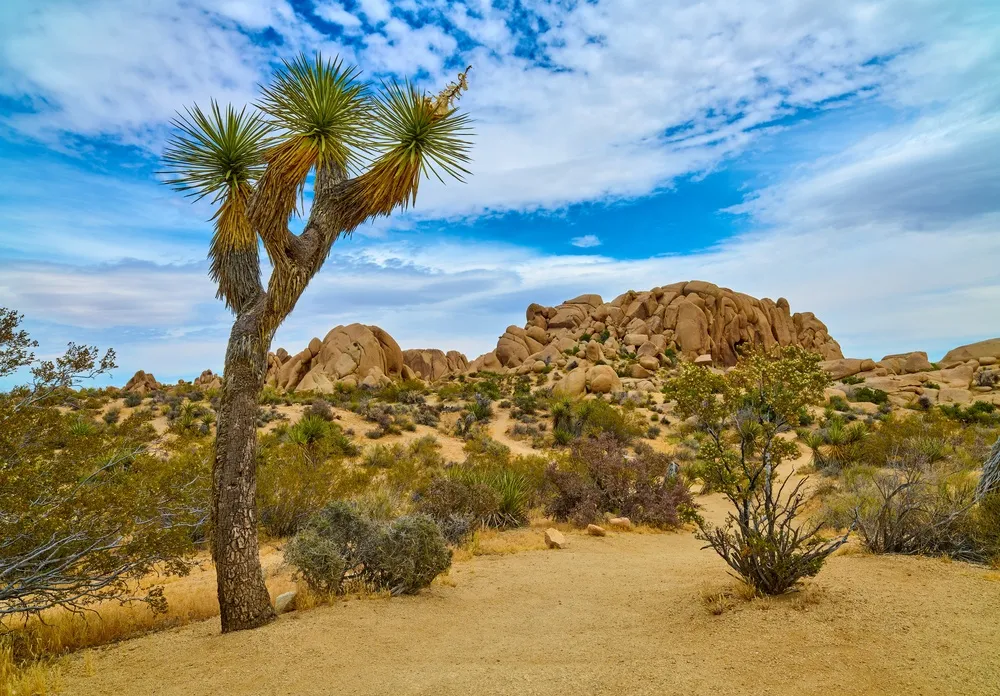
A newer layer of complexity involves environmental regulation. Joshua trees – the iconic species that gives the area its name – are now listed as endangered. That designation has triggered litigation between developers, environmentalists, and the state over what can be built on land where these trees grow. For a buyer eyeing a lot with Joshua trees on it, development may be restricted regardless of the property’s zoning.
Khalsa says buyers need to be mindful of the tree regulations, but the rules do not apply uniformly. Different parcels face different constraints, and there is no single answer a buyer can get before making an offer on undeveloped land; the picture emerges only through site-specific due diligence, which itself takes time and money.
None of this means new construction is impossible. Khalsa’s own completed Pioneertown project proves it can be done, and the results of building in an area with creative latitude are visible across the high desert in architecturally distinctive homes that command premium short-term rental rates and resale prices. The freedom to build something unusual – rather than conforming to a strict municipal design code – is a genuine advantage for the finished product.
But the path to that finished product is where buyers miscalculate. They see the affordable lots, the low density, and the lack of a homeowners’ association, and they assume the process will be comparably relaxed. It is not. The county’s scale and staffing limitations create delays that do not show up in initial cost projections.
Khalsa’s broader observation about the region applies here: “People come here, and they just see the desert, and they don’t realize how different each of these areas actually is.” That distinction extends beyond the difference between Joshua Tree and Twentynine Palms as short-term rental markets – it applies to the difference between buying an existing home and building one from scratch. The incorporated towns of Yucca Valley and Twentynine Palms have their own permitting processes, separate from the county’s, with different timelines and requirements. A buyer who assumes the process is the same everywhere in the high desert may choose the wrong parcel for their project.
For anyone considering a ground-up build in unincorporated San Bernardino County territory, Khalsa’s experience points to one consistent theme: confirm jurisdictional requirements, tree survey obligations, and any active litigation on the parcel before closing on land, not after.
About the Expert: Hargo Khalsa is a Realtor and Developer with Joshua Tree Modern, serving the high desert communities of Joshua Tree, Yucca Valley, Twentynine Palms, and Pioneertown in California’s San Bernardino County since 2018.
This article is intended for informational purposes only and does not constitute legal, financial, or investment advice. The views and opinions expressed herein reflect those of the individuals quoted and do not represent an endorsement of any company, product, or service mentioned. Readers should conduct their own due diligence and consult qualified professionals before making any investment decisions.
Similar Articles
Explore similar articles from Our Team of Experts.