

Philadelphia’s rental market is facing major disruption as a wave of new luxury apartments floods the city, forcing property managers and landlords to rethink their approach. Matt Bremner,...

In Hawaii, Maui's Short-Term Rental Legislation Has Knocked 30% Off Condo Values

Written by:
Date:
09 Jul 2026
Share via Facebook

Share via Linkedin

Share via X

Copy to clipboard

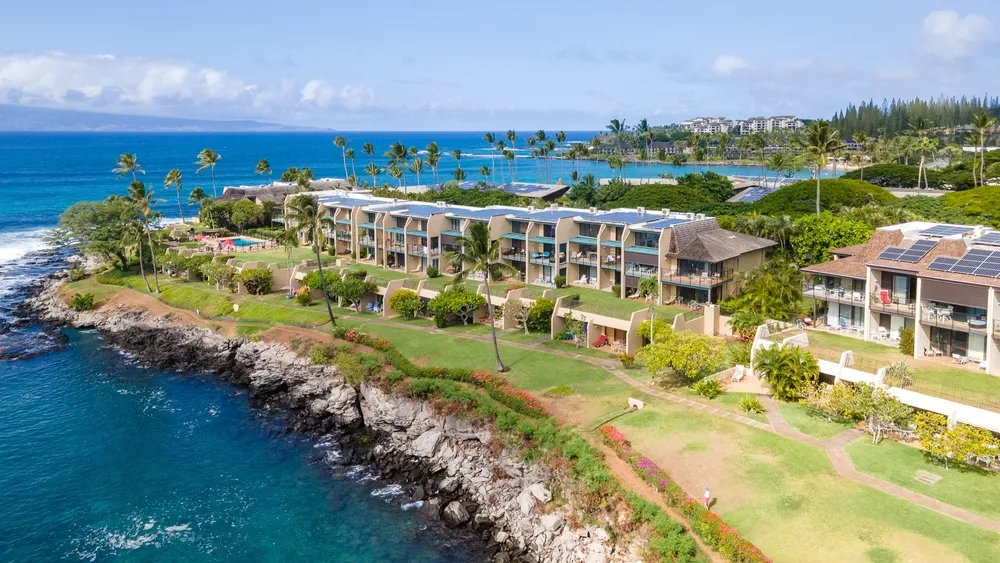
Two years of legislative debate over short-term rental rights on Maui have driven down prices in affected condo complexes by roughly 30% since 2023, according to Evan Harlow, a Realtor and Luxury Real Estate Agent with Maui Elite Property. The properties in question are still legally rentable through 2031. No rights have been revoked. No legal challenges have been resolved. Yet the market has already priced in a worst-case scenario that may never arrive.
That disconnect, between what the law currently allows and what buyers and sellers believe is coming, has created an unusual dynamic across South and West Maui’s condo market, where inventory has swelled, panic sellers have exited, and deal hunters are circling without quite pulling the trigger.
A Two-Year Regulatory Saga
The process began with Bill 9, when Maui’s mayor announced plans to phase out short-term rental rights in approximately 7,000 units. The bill targeted properties whose rental rights had been codified through a prior judicial decision. What followed were dozens of county council meetings and a drawn-out public debate.
Many of the complexes targeted for conversion to affordable housing are older buildings with high HOA fees, two-bedroom, one-bath units at 660 square feet with one parking space and no closets. “That was definitely meant for transient accommodation,” Harlow said. The selection criteria, in his view, were arbitrary and failed to account for whether units were actually feasible as affordable housing.
The county then passed Bill 88, which creates new hotel zoning and establishes criteria for complexes to apply for reclassification. A subcommittee produced a list of properties that may be fast-tracked into the new zoning. But the legal picture remains unsettled: Bill 9 has not yet faced its anticipated legal challenge, and a class action lawsuit is expected from complexes that are not permitted to upzone.
Harlow’s read is that Bill 88 may have been designed partly to dilute that lawsuit’s strength; if some complexes retain their rights through upzoning, they drop out of the class action, leaving the remaining properties with less collective leverage.
Price Drop Reflection
The 30% decline in value within affected complexes traces directly to the gap between short-term rental income and second-home utility. According to Harlow, a two-bedroom condo in Wailea that can generate $100,000 to $150,000 or more annually as a short-term rental commands 20 to 30% more than an identical unit without that right. When rental rights appeared threatened, that premium evaporated – even though rentals remain legal for years.
“Prices came down dramatically, and now they’re in a place where it starts to look like a deal,” Harlow said.
But the opportunity is not as straightforward as that suggests. Current occupancy rates have dropped since both the Lahaina fires and the legislative confusion. Headlines declaring that Maui banned short-term rentals discouraged visitors who didn’t read past the headline, sending them to other islands or keeping them home entirely. Hotels in Wailea and Kanapali run upward of $1,000 per night, and many of these condo units served as the more budget-friendly alternative in the $200 to $500 per night range. That reduced visitor traffic means pricing in affected complexes still tracks against diminished income, not just sentiment.
For sellers in complexes that are not expected to receive the upzoning designation, the situation is most difficult. They have lost roughly 30% of the value their properties held in 2023, according to Harlow. Buyers who purchased 10 years ago are still above their purchase price, but the recent erosion is significant.
Buyer Caution
One counterintuitive pattern has emerged: buyers are more cautious now than they were during the seller’s market of 2021-2022.
“There’s not too much FOMO in the market right now,” Harlow said. “It’s like, let’s play it safe and let’s make a good decision and let’s take our time.”
That caution extends to rate expectations. Some buyers are waiting for mortgage rates to decline, creating a holding pattern. Meanwhile, the investor profile has shifted. When rates were around 3%, the financial math worked on its own; borrowing at that rate for 30 years against rental income made sense as a pure investment. At current rates, Harlow said, a property needs to fit into a buyer’s lifestyle, time spent on Maui, personal use, or 1031 exchange tax benefits, rather than penciling out purely as a cash-flow play.
For buyers considering a purchase in this environment, Harlow’s advice is to start with a personal connection to an area or complex rather than treating the search as purely financial. Of the prospective buyers he works with who express interest in owning on Maui, roughly one in ten actually follows through, often because the rest lack the familiarity or lifestyle connection that makes the commitment make sense at current prices.
What Comes Next
The central question, whether Bill 9’s phase-out will survive legal scrutiny, has not been answered. If the class action succeeds or the bill is struck down, prices in affected complexes could recover some or all of their lost premium. If it stands, the deadline becomes binding and values may have further to fall. Whether Bill 88’s upzoning path proves accessible to a broad range of complexes, or only to a select few on the subcommittee’s list, will determine which owners are protected and which are left exposed.
For buyers and sellers navigating this market today, the practical reality is that nothing has legally changed, units remain rentable, income still flows, and the timeline before any actual restriction takes effect stretches years into the future. The market has moved ahead of the law, and the gap between current prices and current rights represents either a buying opportunity or a warning, depending on which version of 2031 arrives.
About the Expert: Evan Harlow is a Realtor and Luxury Real Estate Agent with Maui Elite Property, affiliated with Coldwell Banker, specializing in the South and West Maui condo and luxury residential market.
This article is based on information provided by the expert source cited above. It is intended for general informational purposes only and does not constitute legal, financial, or real estate advice. Readers should conduct their own research and consult qualified professionals before making any real estate or financial decisions.
Similar Articles
Explore similar articles from Our Team of Experts.